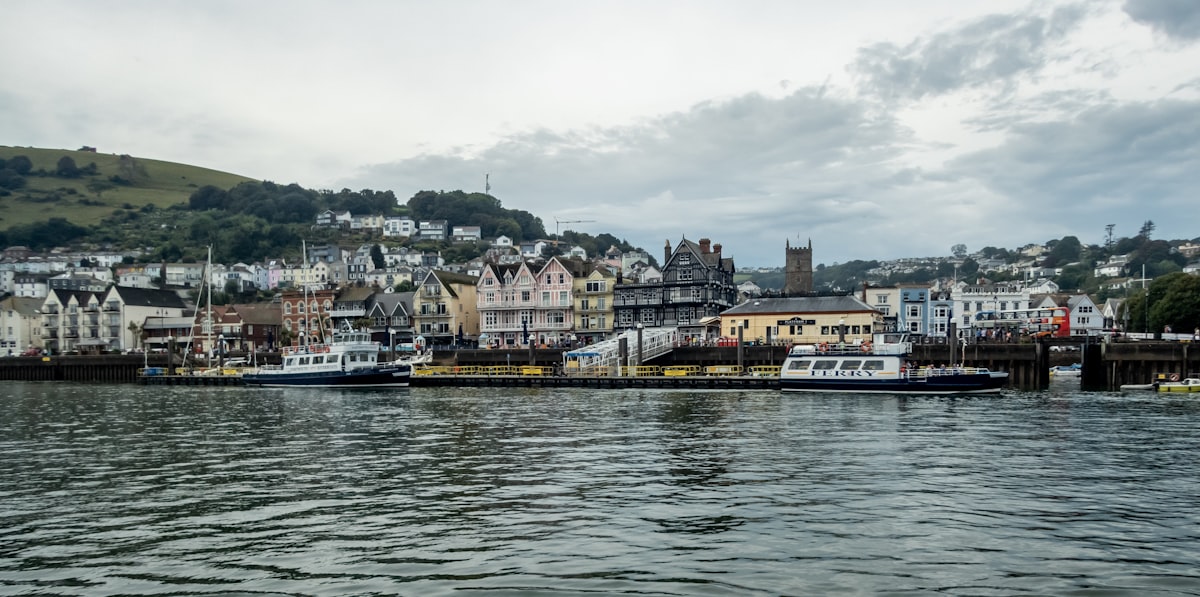
Daylight requirements in South Hams sit within an unusual planning arrangement and an exceptionally protected landscape. South Hams District Council is the local planning authority (LPA) for the district, but it does not have a Local Plan of its own. It works to the Plymouth and South West Devon Joint Local Plan — a single development plan shared with Plymouth City Council and West Devon Borough Council. Layer on top of that the South Devon National Landscape, five tidal estuaries and a string of historic coastal towns, and you have a district where daylight, sunlight and design questions are rarely straightforward. This guide explains how the rules work for schemes in Totnes, Dartmouth, Kingsbridge and the wider South Hams.
Daylight requirements in South Hams and the joint-plan arrangement
The Plymouth and South West Devon Joint Local Plan (the JLP) was adopted in March 2019 — South Hams District Council adopted it on 21 March 2019, with Plymouth City Council and West Devon Borough Council following on 26 March 2019. It runs from 2014 to 2034. The three councils took the unusual step of preparing one plan together, with shared strategic and development management policies, while each authority continues to determine applications in its own area. For a homeowner or developer in South Hams, this means your application is decided by South Hams District Council, but the policies it is judged against are jointly owned by all three authorities.
Most of South Hams falls within the JLP's Thriving Towns and Villages (TTV) Policy Area, which sets a different spatial strategy from the urban Plymouth Policy Area. The district's main towns — Totnes, Dartmouth, Kingsbridge, Ivybridge and Salcombe among them — act as the focus for development, while the surrounding countryside is heavily protected. That spatial pattern has a direct bearing on daylight: development is often concentrated within or beside existing built-up frontages, where the relationship to neighbours is tight and the daylight tests below matter most.
The amenity policies: DEV1, DEV10 and DEV20
Three JLP policies do the heavy lifting on daylight and sunlight:
- Policy DEV1 (Protecting health and amenity). Clause DEV1.1 requires new development to provide “satisfactory daylight, sunlight, outlook, privacy and the protection from noise, vibration and odour disturbance for both new and existing residents, workers and visitors.†Daylight and sunlight are named amenity considerations, and applicants must show they have been considered.
- Policy DEV10 (Delivering high quality housing). This addresses the standard of accommodation for new homes, including the expectation that principal habitable rooms receive adequate natural daylight and that single-aspect dwellings are generally avoided.
- Policy DEV20 (Place shaping and the quality of the built environment). This covers design quality, with building heights and massing required to respond to their surroundings and to avoid harmful overshadowing and overlooking.
The technical tests: what South Hams officers apply
The detailed methodology behind these policies is set out in the Plymouth and South West Devon Joint Local Plan Supplementary Planning Document (the JLP SPD), which South Hams District Council adopted on 16 July 2020. Appendix 1, on residential extensions and alterations, contains the practical tests.
The 45-degree daylight guideline
The SPD states plainly that “extensions should not result in a significant loss of daylight or sunlight to habitable rooms of neighbouring properties, such as kitchens, living rooms or bedrooms,†and that proposals causing a harmful loss “will be refused.†The principal tool for testing this is the 45-degree guideline. An imaginary 45-degree line is drawn in plan from a point in the window of the closest ground-floor habitable room of the neighbouring property, across the proposed development. When that line is elevated to 25 degrees above the horizontal, it shows the maximum width and depth an extension can reach without unreasonably obstructing light.
The SPD specifies that the line is taken from the mid-point of the window for a single-storey extension, and from the quarter point nearest the boundary for a two-storey extension. Extensions are “normally only considered acceptable if they do not cross the 45 degree line when elevated to 25 degrees.†The guideline may be relaxed for lightweight, transparent structures such as conservatories, where property orientation is favourable, where ground levels differ, or where a high boundary wall already separates the two properties.
Separation and outlook distances
The SPD's separation standards protect both light and privacy:
| Relationship | Minimum distance |
|---|---|
| Habitable room windows facing each other (two-storey) | 21 metres |
| Habitable room windows facing each other (three-storey, or where levels reduce privacy) | 28 metres |
| Main habitable room window to a blank wall (two-storey) | 12 metres |
| Main habitable room window to a blank wall (three-storey) | 15 metres |
Where there is a difference in ground levels — common in the steep, valley-and-estuary topography of South Hams — distances should be increased, normally by an extra 3 metres for every 2 metres of additional height. The SPD also recognises that in tightly developed historic cores, such as the older parts of Totnes or Dartmouth, expected privacy levels may reasonably be lower, with solutions such as obscured glazing or oriel windows considered acceptable.
BRE BR 209 and numerical targets for larger schemes
For major applications, South Hams District Council's local validation list — prepared as the LPA in line with the Joint Local Plan — asks for a quantitative and qualitative daylight and sunlight report following the methodology in the Building Research Establishment guide Site Layout Planning for Daylight and Sunlight: A Guide to Good Practice (BRE BR 209). The validation guidance references a Vertical Sky Component (VSC) of 27 per cent as a good target, treating a lower figure as acceptable where it retains at least 80 per cent of the existing VSC, and asks applicants to set out how daylight and sunlight have been optimised where site constraints make the targets hard to meet. The current edition of BR 209 (2022) and the British Standard BS EN 17037 are the recognised basis for these calculations.
The South Devon National Landscape and coastal context
What sets South Hams apart from its joint-plan partners is the extent of protected landscape. A large share of the district lies within the South Devon National Landscape (the statutory designation that replaced the Area of Outstanding Natural Beauty name in November 2023), and the entire National Landscape coast is treated as a coastal preservation area. JLP Policy DEV25 requires the conservation and enhancement of the natural beauty of these areas, giving great weight to landscape character.
This matters for daylight in two ways. First, landscape sensitivity constrains building heights and massing, which can limit how much can be built before overshadowing a neighbour — so a daylight assessment cannot be read in isolation from the design constraints. Second, the estuary towns of Dartmouth and Kingsbridge, and the historic core of Totnes, combine steep topography, dense plot patterns and conservation-area status, which makes the interaction between new development and existing windows particularly acute. Robust daylight and sunlight evidence, prepared early, helps a scheme demonstrate that it respects both its neighbours and the protected setting.
How Fortress Associates can help
Fortress Associates prepares daylight and sunlight assessments for sites throughout South Hams and across the UK. Our daylight and sunlight report service delivers reports to BRE BR 209 (2022) and BS EN 17037, assessed against the relevant Joint Local Plan policies, so your application meets what South Hams District Council expects to see. We work to a 4–5 working day turnaround and require no advance payment, and we also produce Building Regulations drawings when a project needs them. If your site lies in the neighbouring authority, see our companion guide to daylight requirements in West Devon, which shares the same plan. To discuss a project in Totnes, Dartmouth, Kingsbridge or elsewhere in the district, get in touch.
Sources & further reading
Need help with a UK planning project?
Fixed-fee daylight reports and Building Regulations drawings — delivered in 4–5 working days. No advance payment.
Request a free quote