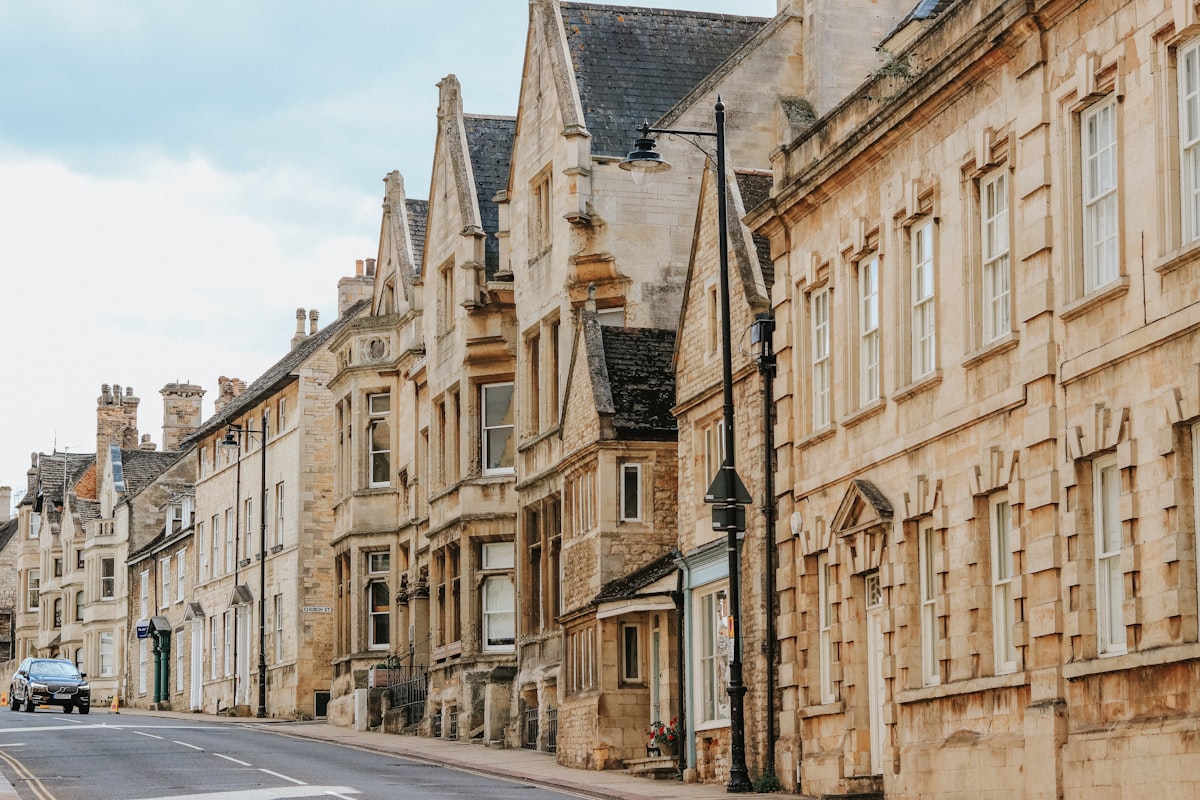
Daylight requirements in South Kesteven are a recurring consideration for householders, developers and architects working across Grantham, Stamford, Bourne and the surrounding villages. Whether you are planning a two-storey rear extension in a Stamford conservation area or a small infill housing scheme on the edge of a village, the impact of your proposal on the daylight and sunlight enjoyed by neighbouring homes will be weighed by South Kesteven District Council as the local planning authority. This article explains how those judgements are made locally, which adopted policies and guidance apply, and where the nationally recognised technical standards fit in.
Who decides planning applications in South Kesteven
South Kesteven District Council is the local planning authority (LPA) for the district. Lincolnshire County Council is the upper-tier authority and deals with matters such as highways, minerals and waste, but it is the district council that determines householder and residential planning applications and judges amenity issues such as loss of light. The district covers the market towns of Grantham, Stamford and Bourne together with a large rural hinterland, so the character of what is being protected varies considerably from one application to the next.
The adopted development plan: South Kesteven Local Plan 2011-2036
The principal policy document is the South Kesteven Local Plan 2011-2036, which was adopted in January 2020. It forms the statutory development plan against which planning applications are determined, alongside the National Planning Policy Framework (NPPF). Two policies are particularly relevant to daylight and sunlight matters.
Policy DE1 - Promoting Good Quality Design
Policy DE1 is the key amenity and design policy in the adopted Local Plan. Among its criteria, it requires that all development proposals ensure there is no adverse impact on the amenity of neighbouring users in terms of noise, light pollution, loss of privacy and loss of light, and that sufficient private amenity space is provided suitable to the type and amount of development proposed. The reference to "loss of light" is the explicit hook in the local policy framework through which daylight and sunlight impacts on neighbouring properties are assessed. Policy DE1 also asks proposals to make a positive contribution to local distinctiveness and the character of the area, reinforcing local identity without harming the streetscene or settlement pattern.
Spatial strategy policies
Policies in the spatial strategy section, such as those dealing with infill development and development on the edge of settlements, also require schemes to be well designed and appropriate in scale, layout and character, and not to cause unacceptable impact upon the amenity of adjacent properties. In practice, when officers assess a proposal they consider its impact on the character and appearance of the area and, separately, its impact on the residential amenities of neighbouring occupiers, which is where overbearing impact, overlooking and loss of light are tested.
Local design guidance: the Rutland and South Kesteven Design Guidelines SPD
South Kesteven does not publish a standalone daylight and sunlight supplementary planning document. Instead, the relevant local guidance sits within the Design Guidelines for Rutland and South Kesteven, a Supplementary Planning Document (SPD) adopted in November 2021. As an SPD it is a material consideration in the determination of planning applications and supplements Local Plan Policy DE1.
The SPD provides practical guidance on amenity and the impact on neighbours. For infill development it directs applicants to its amenity section as a guide and sets out separation distances: as a general benchmark it seeks a 14 metre distance from a habitable room or principal window to a blank two-storey elevation, and a 21 metre separation from window to window between facing habitable rooms. These distances are intended to protect privacy and help maintain reasonable levels of light between dwellings. They are guidance rather than rigid rules, and the council will exercise judgement according to context, topography and the relationship between buildings.
Where the BRE and British Standard guidance fit in
Because there is no separate local daylight SPD, the recognised national technical methodology is applied through the Local Plan and the NPPF. The standard reference for assessing daylight and sunlight is the Building Research Establishment guidance BRE BR 209, Site Layout Planning for Daylight and Sunlight: A Guide to Good Practice (2022 edition). This sets out the established tests, including the Vertical Sky Component (VSC), the no-sky line or daylight distribution check, and the Annual Probable Sunlight Hours (APSH) assessment for sunlight to neighbouring windows and gardens.
Alongside BR 209, BS EN 17037 Daylight in Buildings sets out target daylight provision within new habitable rooms. The NPPF supports making efficient use of land while securing a high standard of amenity for existing and future occupiers, and reminds decision-makers that policies should avoid applying daylight and sunlight standards in an unnecessarily rigid way where that would inhibit appropriate development. A well-prepared daylight and sunlight report uses these methods to demonstrate, with numbers, whether a proposal satisfies the "loss of light" test in Policy DE1.
When you are likely to need a daylight and sunlight assessment in South Kesteven
- A rear or side extension close to a neighbouring boundary, particularly two-storey extensions in the tightly built historic streets of Stamford or central Grantham, where a neighbour has windows facing the proposal.
- Infill development or backland plots within established settlements, where the SPD separation distances and the effect on existing dwellings will be scrutinised.
- New residential schemes in Bourne and the villages where the layout must protect the amenity of both existing neighbours and future occupiers.
- Proposals where a neighbour or the case officer has raised loss of light as an objection and an objective, BRE-based assessment is needed to resolve it.
Providing a clear assessment up front can help avoid delays, support pre-application discussions and give the case officer the evidence needed to balance amenity against the policy support for new homes.
How Fortress Associates can help
Fortress Associates prepares daylight and sunlight reports to BRE BR 209 (2022) and BS EN 17037, written to address the specific policies that apply in South Kesteven, including Policy DE1 and the Rutland and South Kesteven Design Guidelines SPD. Find out more about our daylight and sunlight report service, or visit our services page. We work nationwide with a typical turnaround of four to five working days and no advance payment required. To discuss a project, please contact us.
Sources & further reading
- South Kesteven District Council - The South Kesteven Local Plan
- South Kesteven District Council - Design Guide SPD (Design Guidelines for Rutland and South Kesteven)
- BRE - BR 209 Site Layout Planning for Daylight and Sunlight (2022)
- GOV.UK - National Planning Policy Framework
- See also our guides to daylight requirements in South Holland and daylight requirements in Boston.
Need help with a UK planning project?
Fixed-fee daylight reports and Building Regulations drawings — delivered in 4–5 working days. No advance payment.
Request a free quote