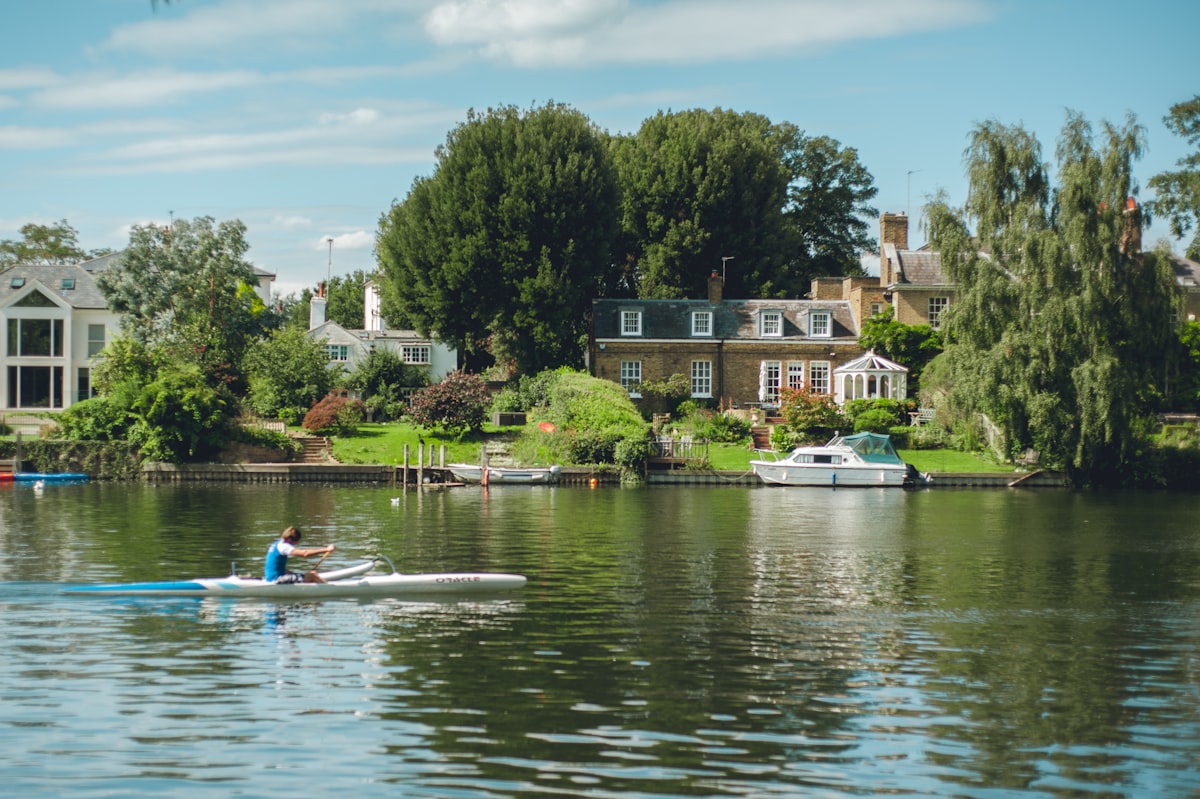
If you are planning an extension, a new home or a residential scheme in Henley-on-Thames, Didcot, Thame, Wallingford or the surrounding villages, understanding the daylight requirements in South Oxfordshire will help your application run smoothly. South Oxfordshire District Council is the local planning authority (LPA) for the district. Oxfordshire County Council covers the wider county but is not the planning authority for this kind of householder and residential development. This guide sets out how daylight and sunlight are assessed locally and which adopted policies apply.
Who is the planning authority?
South Oxfordshire District Council decides planning applications across the district. The county council handles highways, minerals, waste and education, but the question of how a building affects a neighbour's daylight, sunlight and living conditions is determined at district level against the adopted Local Plan. That distinction matters: it tells you whose policies and whose validation requirements your scheme must satisfy.
The adopted Local Plan 2035 and its amenity policies
The principal development plan document is the South Oxfordshire Local Plan 2035, adopted by Full Council on 10 December 2020. It replaced the previous South Oxfordshire Local Plan 2011 and the 2012 Core Strategy and now forms the starting point for decisions across the district.
Two design policies are central to daylight and sunlight:
- Policy DES1 (Delivering High Quality Development) requires all new development to be of high quality and to respond to its character and context. It tests proposals against a broad set of measures, including the efficient use of land and the relationship between buildings — both of which bear directly on light and spacing.
- Policy DES6 (Residential Amenity) is the key amenity policy. It seeks to protect the amenity of existing and future residents, and notably also references the dark sky character of the area's setting. South Oxfordshire is unusual in giving explicit weight to dark skies, reflecting the district's sensitive landscapes, and this sits alongside the more familiar daylight, sunlight, outlook and privacy considerations.
Together, DES1 and DES6 mean that a proposal which would unacceptably reduce a neighbour's daylight or sunlight, or harm their outlook, can be resisted — and that good light to new homes is expected as part of high-quality design.
The Joint Design Guide SPD
South Oxfordshire's design policies are supported by the Joint Design Guide Supplementary Planning Document (SPD), adopted in June 2022 and shared with neighbouring Vale of White Horse District Council. The Joint Design Guide is a material consideration in deciding applications and applies to all scales of development, from a single householder extension through to large residential schemes. It sets out design principles that encourage well-spaced, well-orientated buildings that respect neighbouring amenity — the practical foundation for protecting daylight and sunlight on the ground.
Local context also shapes how these policies bite. South Oxfordshire is home to the Didcot Garden Town and the Henley and wider river-corridor settlements along the Thames, and large parts of the district fall within the Chilterns and North Wessex Downs protected landscapes. In these sensitive and often tightly built historic settings, the careful handling of building heights, spacing and overshadowing is given particular scrutiny.
How daylight requirements in South Oxfordshire are measured
South Oxfordshire does not publish a bespoke numerical daylight metric of its own. Instead, where daylight or sunlight is in question, officers rely on the recognised national methodology applied through the Local Plan:
- BRE BR 209 — Site Layout Planning for Daylight and Sunlight: A Guide to Good Practice (2022, third edition), which sets out the established tests, including the Vertical Sky Component (VSC), the No Sky Line / daylight distribution test, the Annual Probable Sunlight Hours (APSH) test, and overshadowing of gardens and amenity areas.
- BS EN 17037 (Daylight in Buildings), used to assess the daylight provided within new habitable rooms.
- The National Planning Policy Framework (NPPF), which requires a good standard of amenity and efficient use of land, delivered locally through Policies DES1 and DES6.
Where a proposal could materially affect a neighbour's light, a Daylight & Sunlight Report prepared to BRE BR 209 (2022) is the clearest way to demonstrate that the scheme meets the council's amenity tests.
When a daylight and sunlight report is worthwhile
Consider commissioning a report where your proposal involves:
- A two-storey or rear extension close to a boundary in a constrained Henley, Thame or Wallingford street;
- A new dwelling or infill plot overlooked by, or overlooking, existing homes;
- A larger residential development where internal daylight to new homes must be shown under BS EN 17037; or
- A case where a neighbour or officer has raised a specific loss-of-light or overshadowing concern.
Although a daylight and sunlight report is not a fixed validation requirement for every application, providing one early — where the relationship to neighbours is sensitive — can avoid delay and gives officers the evidence they need to support the scheme.
How Fortress Associates can help
Fortress Associates offers our daylight and sunlight report service to homeowners, architects and developers across South Oxfordshire and the rest of the UK. Our reports are prepared to BRE BR 209 (2022) and BS EN 17037 and are written to address the amenity and design policies in the adopted Local Plan 2035. We work to a 4–5 working day turnaround with no advance payment. You can review our services or contact us to discuss your site.
Where a project also needs technical drawings, we prepare Building Regulations Drawings for the construction stage. For a neighbouring authority, see our guide to daylight requirements in Vale of White Horse.
Sources & further reading
Need help with a UK planning project?
Fixed-fee daylight reports and Building Regulations drawings — delivered in 4–5 working days. No advance payment.
Request a free quote