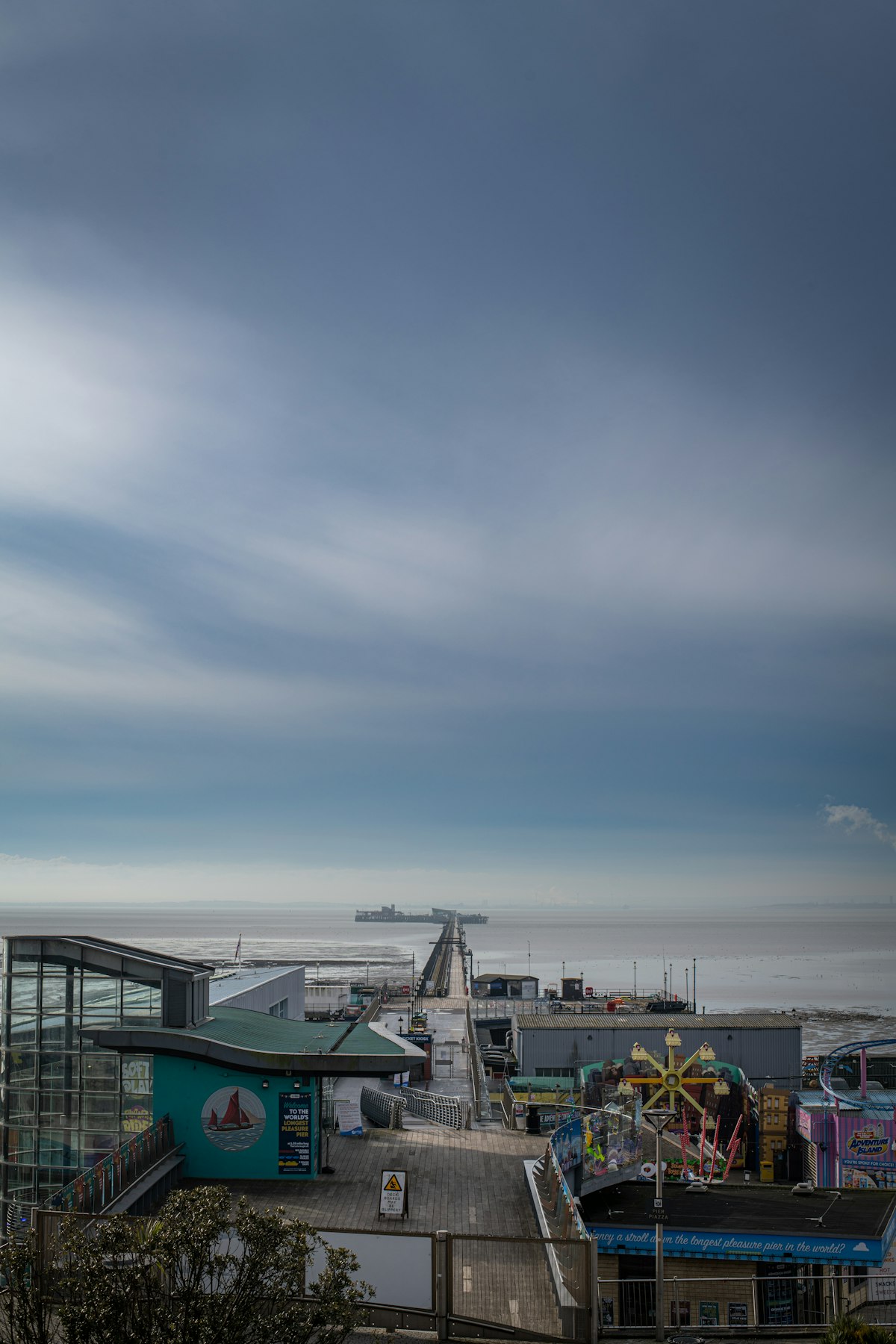
If you are planning a development, extension or new home in Southend, understanding the daylight requirements in Southend-on-Sea will help you put together a stronger planning application. Southend-on-Sea is a unitary authority, so the City Council acts as the local planning authority and assesses proposals against its own adopted plan and supplementary guidance. This article explains which documents apply, how daylight and sunlight are treated locally, and where the recognised technical standards fit in.
Daylight requirements in Southend-on-Sea: the planning framework
Southend-on-Sea sits along the Thames Estuary and is well known for its seafront and the longest pleasure pier in the world. The town was granted city status in 2022. It is a compact, densely developed coastal authority with significant pressure for new housing and intensification, particularly along and behind the seafront — a context in which daylight, sunlight and overshadowing frequently become material considerations.
Southend's adopted development plan is made up of several Development Plan Documents. The principal ones for residential proposals are:
- The Core Strategy (DPD 1), adopted in December 2007, which sets the spatial strategy and strategic policy framework;
- The Development Management Document, adopted on 23 July 2015, which contains the detailed policies used to determine applications.
A new plan, the Southend New Local Plan, is emerging and has been consulted on through its "Preferred Approach with Options" stage. Once adopted, it will update and eventually replace much of the current plan. Until then, the Core Strategy and Development Management Document remain the basis for decisions.
Policies on amenity and design
Two policies in the Development Management Document are central to daylight and sunlight:
- Policy DM1 – Design Quality. This policy covers context and sense of place, public realm, amenity, Secured by Design, pre-application discussions and design review. The amenity element is the key hook for daylight and sunlight: the council defines amenity as well-being, taking account of factors including privacy, overlooking, outlook, noise and disturbance, the sense of overbearing, pollution, and daylight and sunlight. Development must protect the amenity of the site, immediate neighbours and the surrounding area.
- Policy DM3 – Efficient and Effective Use of Land. This deals with density, backland and infill development, conversions, bungalows, and additions and alterations. Because higher-density and infill schemes are exactly the ones most likely to raise daylight and overshadowing concerns, DM3 is regularly applied alongside DM1 when assessing residential proposals.
These policies set the requirement for good living conditions and acceptable amenity, but they do not themselves prescribe numerical daylight thresholds. The numbers come from the recognised technical standards described below.
The Design and Townscape Guide SPD
Southend's Design and Townscape Guide is Supplementary Planning Document 1, first published in 2006 and updated in 2009. It is a material consideration on all planning applications and aims to encourage high-quality design and to give the council a basis for resisting poor design.
Importantly for light assessments, the guide is explicit about when a daylight and sunlight study is expected. It states that a Sunlight / Daylighting Assessment should accompany applications for tall buildings and proposals that break the established building grain and street pattern. The guide explains that such an assessment should include diagrams showing how the shadow of the building will affect its neighbours across all four quarters of the year, and that both diagrammatic and technical information may be required. This is a clear, council-specific trigger: if you are proposing a taller building or anything that departs from the established townscape grain in Southend, expect to provide a daylight and sunlight assessment.
How daylight and sunlight are actually assessed
Southend's policies express requirements in terms of amenity and design quality, so the technical assessment relies on the established national guidance. The key references are:
- BRE BR 209, Site Layout Planning for Daylight and Sunlight: A Guide to Good Practice (2022 edition). This is the standard tool for assessing impacts on neighbours, using the Vertical Sky Component (VSC), the no-sky line / daylight distribution within rooms, and the Annual Probable Sunlight Hours (APSH) test for sunlight. The shadow diagrams the Design and Townscape Guide asks for align closely with BR 209's overshadowing methods.
- BS EN 17037 Daylight in Buildings, which provides recommendations for daylight provision inside new dwellings — relevant for new flats and conversions.
- The National Planning Policy Framework (NPPF), which requires good standards of amenity for existing and future occupants while supporting efficient use of land.
In practice, the Local Plan and Design and Townscape Guide set the requirement, and BR 209 and BS EN 17037 supply the method. The BRE guide stresses that its targets are advisory and should be applied with regard to context — a point that carries real weight in a tightly built coastal town like Southend, where existing daylight levels in older terraced streets may already be modest.
Practical points for Southend applicants
- Tall and atypical schemes need a study. The Design and Townscape Guide directly calls for a Sunlight/Daylighting Assessment for tall buildings and proposals that break the established grain — so build this into your timeline from the outset.
- Infill and backland are scrutinised. Under Policy DM3, dense infill and backland schemes are common in Southend and frequently raise overshadowing and overbearing concerns with neighbours.
- Address both sides. For new flats and conversions, consider both the impact on neighbours (BR 209) and the internal daylight of the new homes (BS EN 17037).
How Fortress Associates can help
Fortress Associates provides our daylight and sunlight report service to BRE BR 209 (2022) and BS EN 17037 for projects in Southend-on-Sea and across the UK. We produce the shadow and overshadowing analysis the Design and Townscape Guide expects, assess impacts on neighbours and internal daylight for new homes, and present the findings clearly for submission. We work nationwide with a typical 4–5 working day turnaround and no advance payment required. We also prepare Building Regulations drawings to the Approved Documents (Parts A–S). To discuss a Southend project, please get in touch.
Sources & further reading
- Southend-on-Sea City Council — Development Management Document
- Southend-on-Sea City Council — Design and Townscape Guide (SPD 1)
- BRE — BR 209 Site Layout Planning for Daylight and Sunlight (2022)
- GOV.UK — National Planning Policy Framework
- Related reading: Daylight Requirements in Southampton
Need help with a UK planning project?
Fixed-fee daylight reports and Building Regulations drawings — delivered in 4–5 working days. No advance payment.
Request a free quote