Daylight requirements in Staffordshire Moorlands matter to anyone building or extending in this largely rural district, whether you are working in the market town of Leek, in Biddulph or Cheadle, or in one of the many villages on the Peak District fringe. The local planning authority will expect any scheme that could affect a neighbour's living conditions to demonstrate that daylight, sunlight, outlook and privacy are properly protected. This guide sets out how the district handles those issues and when a professional daylight and sunlight report is usually required.
The local planning authority is Staffordshire Moorlands District Council, a shire district. Staffordshire County Council is the upper-tier authority but is not the local planning authority for residential and householder applications. Note also that land within the Peak District National Park is administered by the National Park Authority as a separate planning authority, so confirm which body covers your site if you are close to the park boundary.
The adopted Local Plan and Policy DC1
The district has an up-to-date development plan. The Staffordshire Moorlands Local Plan was adopted on 9 September 2020 and covers the period 2014 to 2033. It replaced the earlier Core Strategy (adopted March 2014) and consolidates the strategic and development management policies for the district into a single document.
The central policy for daylight and sunlight is Policy DC1 – Design Considerations. Among its design requirements, criterion 5 requires development to:
“protect the amenity of the area, including creation of healthy active environments and residential amenity, in terms of satisfactory daylight, visual impact, sunlight, outlook, privacy, soft landscaping as well as noise, odour and light pollution.”
This is a clear, adopted statement that daylight and sunlight are amenity considerations the council will weigh on their own terms. DC1 sits alongside other relevant policies, including Policy SS1 – Development Principles (the district's overarching sustainable development policy) and Policy DC3 – Landscape and Settlement Setting, which protects the character and openness that often underpins the generous spacing between buildings in Moorlands settlements.
Because the district is organised around its principal centres, the Local Plan also contains area strategies — Policy SS5 (Leek), Policy SS6 (Biddulph) and Policy SS7 (Cheadle) — which steer the scale and form of development in and around each town. These shape the density and layout of new housing, and density is one of the biggest drivers of daylight and overshadowing impacts.
The Design Guide SPD
Staffordshire Moorlands supports its Local Plan with the Staffordshire Moorlands District Council Design Guide, adopted as a Supplementary Planning Document on 21 February 2018. The Design Guide explains how the council expects the design principles in Policy DC1 to be delivered. It addresses, among other things, privacy and overlooking, the relationship of new buildings to their neighbours, and over-shading — for example advising designers to make the most of trees for shelter and screening while avoiding over-shading of the south elevation.
Importantly, the Design Guide sets out qualitative design principles rather than a numeric daylight or sunlight calculation standard. It does not, for instance, prescribe a specific separation distance test or replace the recognised national methodology for measuring daylight to a neighbour's windows. That means where a quantitative assessment is needed, the council relies on the established BRE approach, applied through Policy DC1 and the NPPF.
How daylight and sunlight are assessed in practice
Staffordshire Moorlands has no separate adopted daylight and sunlight calculation standard of its own. Where a proposal could materially affect the daylight or sunlight reaching neighbouring homes or gardens, the recognised national guidance is applied through Policy DC1 and the National Planning Policy Framework. The key technical references are:
- BRE guidance BR 209, Site Layout Planning for Daylight and Sunlight: A Guide to Good Practice (2022 edition). This is the methodology used to test daylight to neighbouring windows (Vertical Sky Component and the daylight distribution test), sunlight to windows (Annual Probable Sunlight Hours, including the winter probable sunlight hours test) and overshadowing of gardens and amenity space.
- BS EN 17037 Daylight in Buildings, which informs the daylight provided to the rooms within a proposed dwelling.
- The National Planning Policy Framework (NPPF), whose requirement for a high standard of amenity and well-designed places gives Policy DC1 its national context.
So the council's position is that there is an adopted Design Guide SPD and a clear amenity policy in DC1, but the substantive technical test of daylight and sunlight impacts is carried out against BRE BR 209 (2022), supported by BS EN 17037, and judged through DC1, SS1 and the NPPF.
When is a daylight and sunlight report needed?
A report is most often expected where:
- a two-storey or first-floor rear extension would sit close to a boundary and could overshadow a neighbour's main habitable-room windows or private garden;
- infill or backland housing is proposed within a tight plot in Leek, Biddulph or Cheadle;
- a flatted or higher-density scheme is proposed adjacent to existing homes; or
- an officer, a neighbour, or the validation process raises daylight, sunlight or overshadowing as a concern.
As an early guide, the 25-degree and 45-degree rules from BRE BR 209 are a quick way to flag whether a more detailed assessment is likely to be required. Commissioning the report before the design is finalised allows height, massing and window positions to be adjusted while it is still inexpensive to do so.
Local context worth knowing
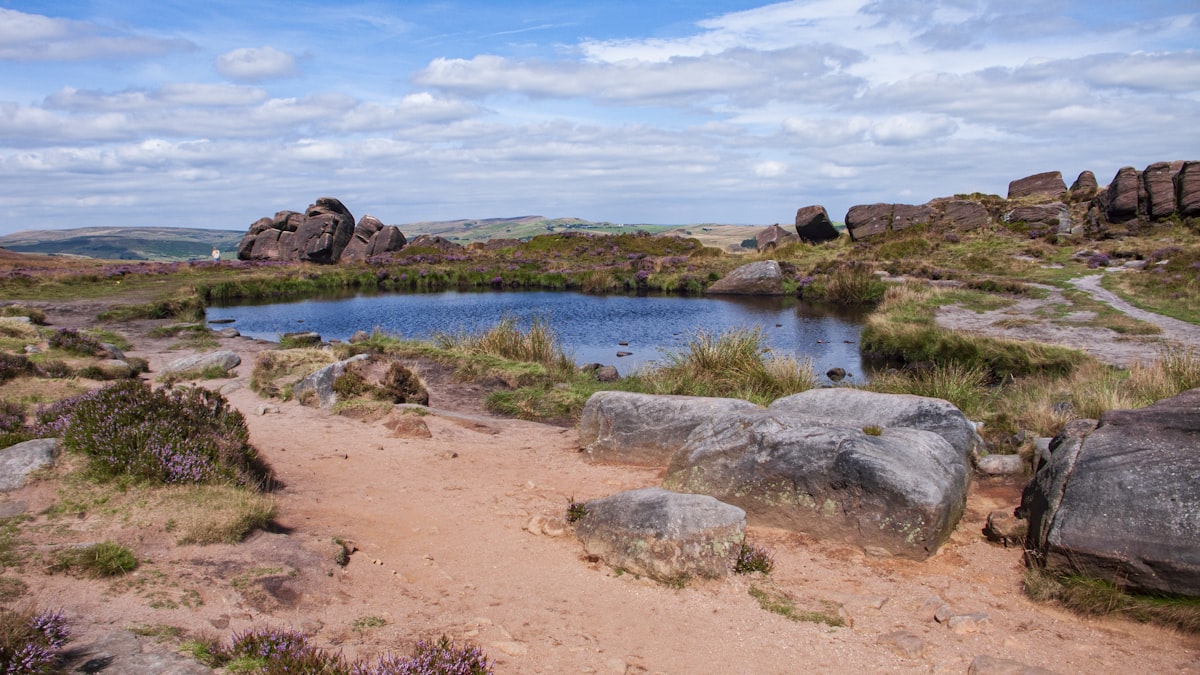
Two local specifics shape daylight cases here. First, much of the district is rural and elevated, sitting on the Peak District fringe with landmarks such as the gritstone ridge of The Roaches above Leek; sloping sites are common, and a change in level between properties can significantly affect overshadowing and outlook, which makes an accurate, site-specific assessment valuable. Second, the historic, tightly built town centres of Leek and Biddulph mean infill and conversion schemes frequently sit close to existing homes, exactly the situations in which daylight, sunlight and privacy are tested under Policy DC1.
How Fortress Associates can help
Fortress Associates prepares daylight and sunlight reports to BRE BR 209 (2022) and BS EN 17037 for projects across Staffordshire Moorlands and the rest of the UK. We assess the impact on neighbouring properties and the daylight within your own scheme, and present the findings in the context of Policy DC1, the Design Guide SPD and the NPPF. Learn more about our daylight and sunlight report service or our wider services, including Building Regulations drawings. We work nationwide with a 4–5 working day turnaround and no advance payment. To discuss a Leek, Biddulph or Cheadle project, please get in touch.
Working nearby? See our companion guide on daylight requirements in Newcastle-under-Lyme.
Sources & further reading
Need help with a UK planning project?
Fixed-fee daylight reports and Building Regulations drawings — delivered in 4–5 working days. No advance payment.
Request a free quote