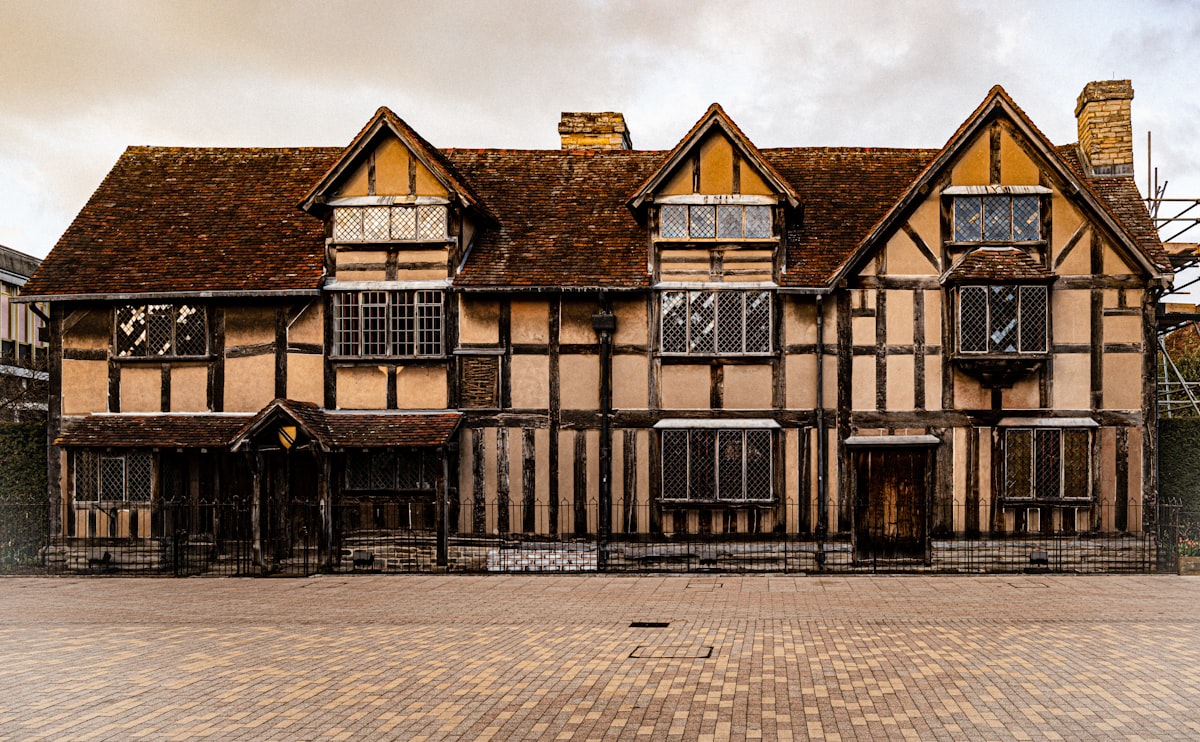
If you are planning an extension in Stratford-upon-Avon, an infill scheme in Alcester or Shipston-on-Stour, or a new development on the Cotswolds fringe, understanding the daylight requirements in Stratford-on-Avon will help your application run smoothly. Stratford-on-Avon District Council is the local planning authority for the district — not Warwickshire County Council — and, unusually for a shire district, it sets out a clear and specific approach to daylight, sunlight and overshadowing.
This guide explains the relevant policies, the District's own daylight test, and how a robust daylight and sunlight assessment supports applications across the district.
The planning framework for daylight requirements in Stratford-on-Avon
The development plan is the Stratford-on-Avon District Core Strategy 2011–2031, adopted on 11 July 2016. The Council is also progressing a Core Strategy Review and is working jointly with Warwick District Council on the emerging South Warwickshire Local Plan, but the adopted Core Strategy remains the current basis for decisions.
The key policies for daylight and amenity are:
- Policy CS.9: Design and Distinctiveness — requires development to be of high design quality, to respect local distinctiveness, and to protect the amenity of existing and future occupiers.
- Policy CS.15: Distribution of Development and Policy CS.20: Existing Housing Stock and Buildings — these are expressly identified by the Council as the policies that its amenity guidance helps to interpret.
Stratford-on-Avon's own daylight and sunlight guidance
Stratford-on-Avon is comparatively well served by local guidance. The Council has adopted a Development Requirements SPD, and Part F: Residential Amenity (April 2019) contains a dedicated section — F1: Daylight and Sunlight — which provides detailed advice on how applications are judged. This SPD is identified as supplementing Core Strategy policies CS.9, CS.15 and CS.20.
Two points from Part F are especially important for applicants:
- A 45/25 degree test. The SPD states: “The Council uses a 45/25 degree test to ascertain whether, as a result of a proposed development, the amount of light reaching neighbouring windows is likely to be acceptable.†This is a recognised geometric method for screening loss of daylight to neighbouring habitable-room windows.
- Explicit reference to the BRE guide. Part F directs applicants to the BRE report Site Layout Planning for Daylight and Sunlight — A Guide to Good Practice, stating that its guidance and tables “should be used if there is any doubt about the acceptability of proposalsâ€.
The SPD also makes clear that the relative position, height and separation of buildings should be adjusted to reduce overshadowing and loss of light, and that a new building or extension which extensively blocks sunlight to an existing property's windows or garden should be avoided. Part F additionally addresses separation distances, light to internal spaces, and the protection of privacy.
In short: where Rugby and many other authorities rely on national methodology alone, Stratford-on-Avon has codified an explicit screening test in its adopted SPD. A modern assessment should be carried out to the current BRE BR 209 (2022) edition — which supersedes the 2012 version cited in the SPD — together with BS EN 17037 for daylight within new homes, applied through the policies of the Core Strategy and the National Planning Policy Framework (NPPF).
Local factors that affect daylight in Stratford-on-Avon
The district's character creates distinctive daylight considerations:
- Historic Stratford-upon-Avon. Shakespeare's birthplace town has a tightly packed historic core, the Royal Shakespeare Company theatres on the River Avon, and a substantial conservation area. Timber-framed and listed buildings, close boundaries and important views mean extensions and infill must be carefully judged for their impact on neighbours' light.
- Cotswolds fringe and rural villages. Much of the south of the district falls within or adjoins the Cotswolds National Landscape, where sensitive design and the avoidance of overbearing or overshadowing impacts on established homes are central concerns.
A BRE-based daylight and sunlight assessment lets you test these scenarios objectively, evidence compliance with Policy CS.9 and the Development Requirements SPD, and identify design changes — reduced height, greater set-backs or a reshaped roof — that resolve issues before submission.
When you may need a daylight and sunlight report in Stratford-on-Avon
- Your proposal sits close to a neighbour and could fail the 45/25 degree test or reduce light to habitable-room windows.
- A planning officer or neighbour raises loss of light, overshadowing or an overbearing impact.
- You are bringing forward a flatted or multi-unit scheme and must demonstrate adequate internal daylight to the new homes.
- You want to present a robust, evidence-led case and reduce the risk of refusal.
How Fortress Associates can help
Fortress Associates prepares daylight and sunlight reports to BRE BR 209 (2022) and BS EN 17037, supporting applications in Stratford-on-Avon and nationwide. Learn more about our daylight and sunlight report service or see our full range of services. We offer a 4–5 working day turnaround and require no advance payment. To discuss a project in the district, contact us. If your scheme lies in a neighbouring authority, our guide to daylight requirements in Rugby may also be useful.
Sources & further reading
Need help with a UK planning project?
Fixed-fee daylight reports and Building Regulations drawings — delivered in 4–5 working days. No advance payment.
Request a free quote