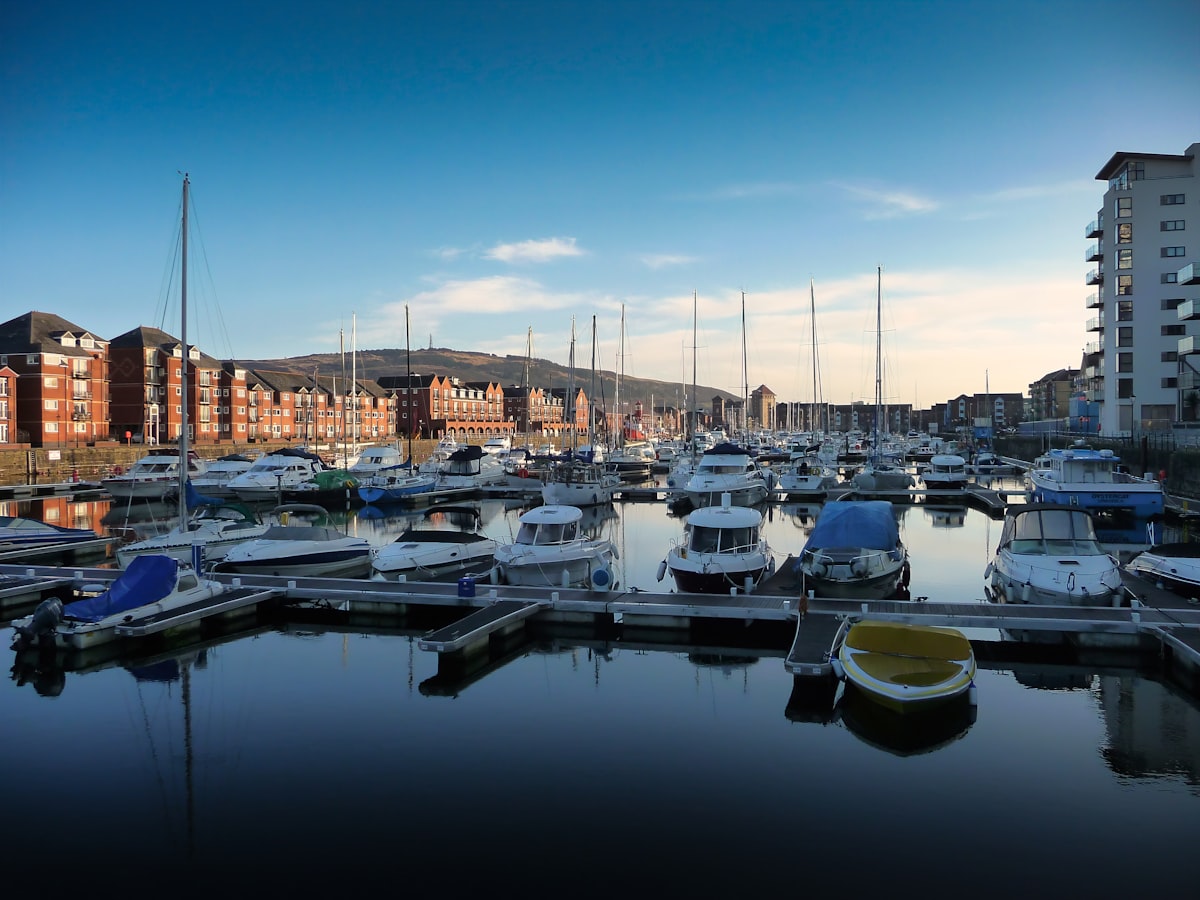
Daylight requirements in Swansea are unusually varied for a Welsh authority, and that is because Swansea is a city as much as a county. Within a single planning area you find the tightly packed Victorian and Edwardian terraces of Brynmill, Sandfields and Mount Pleasant; the regeneration sites and apartment blocks of the Maritime Quarter, SA1 Swansea Waterfront and the city centre; and the lower-density suburbs spreading towards Gower. Each of these contexts raises a different daylight and sunlight question, and Swansea Council’s placemaking-led planning framework expects developers to answer it properly.
This guide sets out how daylight, sunlight and overshadowing are handled in Swansea, which adopted policies apply, and how a technical assessment built on the BRE methodology supports a credible planning application.
The planning framework in Swansea
The statutory development plan is the Swansea Local Development Plan 2010–2025, adopted on 28 February 2019. It replaced the older Unitary Development Plan and is explicitly built around a strong placemaking agenda aligned with the Welsh Government’s well-being objectives. The council is now preparing a replacement LDP (LDP2) covering 2023–2038, which has reached the preferred strategy stage, but the 2019 plan remains the adopted document used to determine applications today.
Above the LDP sits the national framework that applies across Wales: Planning Policy Wales (Edition 12, 2024), Future Wales: the National Plan 2040, and the relevant Technical Advice Notes. Planning Policy Wales puts placemaking and the amenity of existing and future residents at the heart of decision-making, which is precisely the lens Swansea applies through its own policies.
Key adopted policies
The Swansea LDP embeds amenity and daylight considerations principally through its placemaking policies:
- Policy PS 1 (Sustainable Places) — the strategic policy requiring development to create sustainable, healthy and high-quality places.
- Policy PS 2 (Placemaking and Place Management) — the central design and amenity policy. It requires that the design, layout and orientation of proposed buildings, and the spaces between them, provide for an attractive, legible, healthy, accessible and safe environment, and that proposals cause no significant adverse impact on amenity. The council assesses amenity by reference to matters including loss of light, overlooking, loss of privacy and overshadowing.
These criteria-based policies do not fix numerical daylight targets in the plan itself. Instead, the council relies on supplementary planning guidance and recognised technical standards to decide whether amenity is acceptably protected.
Placemaking and tall buildings guidance
Swansea has a particularly well-developed suite of supplementary planning guidance, which is one of the things that sets it apart from neighbouring authorities:
- The Placemaking Guidance for Residential Development (adopted October 2021) sets out how placemaking principles apply to residential schemes at every scale, from a single extension to a whole new neighbourhood. It expressly treats loss of light, overlooking and privacy as amenity matters to be assessed.
- The Places to Live – Residential Design Guide and the council’s infill and backland guidance address how new homes should relate to their neighbours, including spacing and orientation.
- The Swansea Tall Buildings Strategy (adopted November 2016) identifies areas of opportunity for taller development — concentrated around the city centre and waterfront — and places the burden on applicants to justify the height, massing and overshadowing implications of any tall building.
How daylight and sunlight are assessed
While the LDP and SPG set the policy expectation, the accepted technical method for measuring impacts is the Building Research Establishment guidance. The current edition is BRE BR 209 – Site Layout Planning for Daylight and Sunlight: A Guide to Good Practice (third edition, 2022), supported by the daylight provision standard in BS EN 17037. These are the documents that daylight and sunlight consultants across the UK use, and they are treated as best practice in Wales.
A report will typically apply the following tests:
- Vertical Sky Component (VSC) — the skylight reaching a neighbour’s window. Retaining around 27%, or keeping any reduction within 20% of the former value, generally indicates daylight remains satisfactory.
- Daylight distribution (No Sky Line) — how much of a room can still see the sky after development.
- Annual Probable Sunlight Hours (APSH) — sunlight reaching windows facing within 90 degrees of due south.
- Overshadowing of gardens and amenity space — checking that at least half of an amenity area still receives some sunlight on 21 March.
Why Swansea’s urban grain matters
In the dense inner-city terraces, the back-to-back spacing is tight and rear gardens are short, so even a single-storey rear extension can materially reduce a neighbour’s daylight — making the VSC and 45-degree assessments decisive. In the Maritime Quarter, SA1 and the city centre, the questions shift to the cumulative overshadowing of apartment windows, balconies and public realm by taller buildings, exactly the impacts the Tall Buildings Strategy asks applicants to justify. A proper BRE BR 209 assessment translates these context-specific concerns into objective figures the council can weigh against Policy PS 2.
For comparison with a very different Welsh topography, see our guide to daylight requirements in Rhondda Cynon Taf, where steep valley terraces dominate the amenity picture.
How Fortress Associates can help
Fortress Associates prepares clear, robust daylight and sunlight assessments to BRE BR 209 (2022) and BS EN 17037, written to support planning applications in Swansea and throughout the UK. Learn more about our daylight and sunlight report service, or browse our full services. We work to a 4–5 working day turnaround and require no advance payment. To talk through your scheme, please use our contact page.
Sources & further reading
Need help with a UK planning project?
Fixed-fee daylight reports and Building Regulations drawings — delivered in 4–5 working days. No advance payment.
Request a free quote