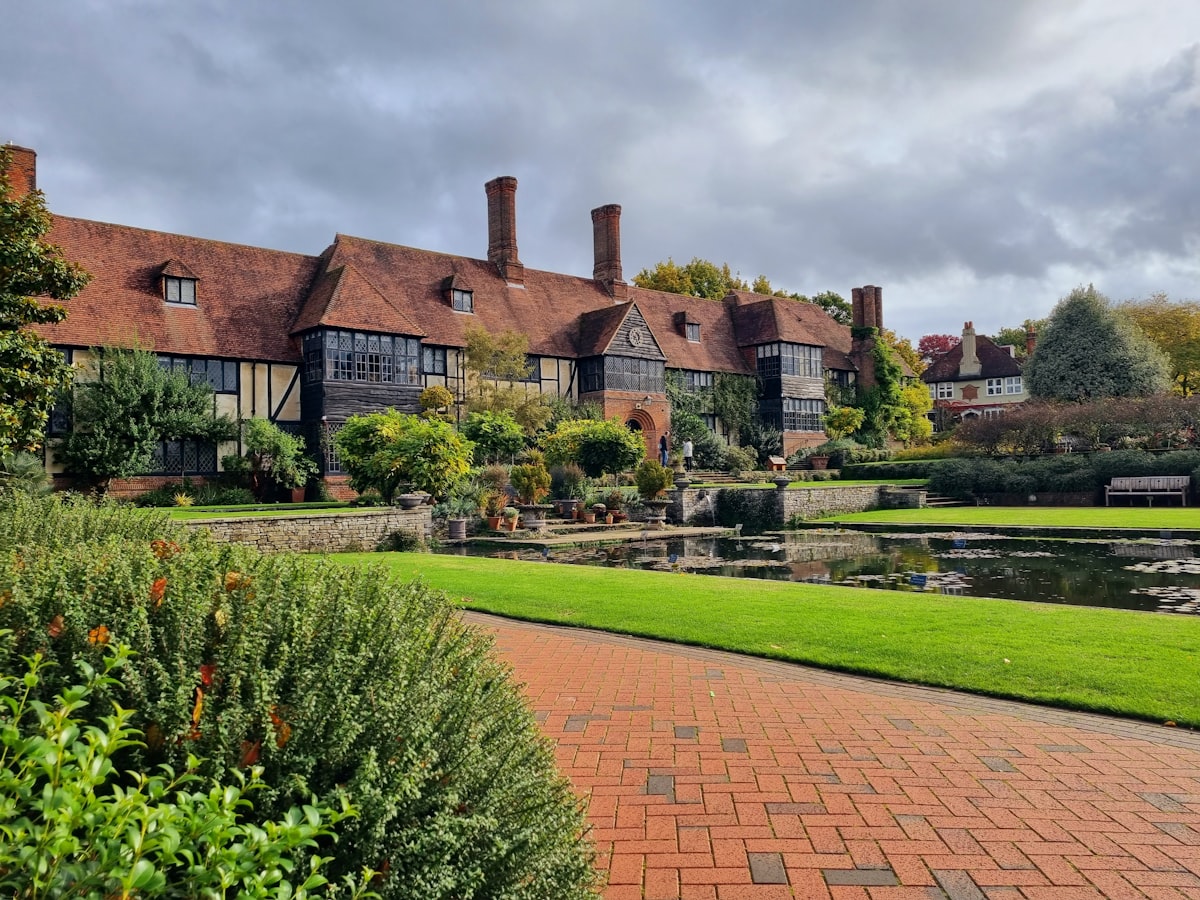
Understanding the daylight requirements in Tandridge District Council matters to anyone proposing a house extension, an infill home or a larger residential scheme anywhere in this corner of east Surrey, from the historic streets of Oxted and the hilltop town of Caterham to the rural villages around Lingfield and the slopes of the North Downs. Tandridge District Council is the local planning authority (LPA) for the area; Surrey County Council is the upper-tier authority but does not determine most householder and residential applications. This guide explains how daylight and sunlight are weighed locally, which adopted policies apply, and what an assessment to recognised standards involves.
Daylight requirements in Tandridge: the policy framework
The development plan for the district is made up of two adopted documents. The first is the Tandridge District Core Strategy (2008), which sets the strategic framework; the second is the Local Plan: Part 2 - Detailed Policies 2014-2029 (adopted 2014), which provides the day-to-day development management policies that officers apply when assessing applications.
It is worth being clear about the plan's status. Tandridge has been preparing a new district-wide local plan covering the period 2024-2044, which has been through examination but is not yet adopted. Until it is, the Core Strategy and Local Plan Part 2 remain the statutory basis for decisions, so applicants should design to those adopted policies rather than to emerging ones.
For strategic design quality, Policy CSP18 (Character and Design) of the Core Strategy expects development to respect and where possible enhance the character of its surroundings. The most directly relevant amenity policy, however, sits in the Local Plan Part 2.
Policy DP7 and the 22-metre privacy distance
The key development management policy is Policy DP7: General Policy for New Development. Among its criteria, the policy seeks to protect the living conditions of neighbouring occupiers by resisting development that would result in unacceptable overshadowing or that would be overbearing, as well as harm through loss of privacy and overlooking. To help apply the privacy test consistently, Tandridge uses a working guideline of a 22-metre separation distance between the principal windows of facing habitable rooms.
That figure is a starting point rather than an absolute rule. Like most numerical separation guidance, it can be adjusted where the relationship between buildings, changes in level or the orientation of windows mean the standard distance would either be insufficient or unnecessarily restrictive. The concepts of overshadowing (loss of daylight and sunlight) and an overbearing impact (a sense of enclosure or dominance from a large or close structure) are the two daylight-related limbs of Policy DP7 that most often arise on extension and infill schemes.
Topography and the Green Belt context
Two features of Tandridge shape how daylight and sunlight are considered in practice. The first is that around 94% of the district is designated Green Belt, which concentrates new housing into the existing built-up areas of Caterham, Oxted, Warlingham, Whyteleafe and Lingfield, where plots can be tight and back-to-back relationships common. The second is the district's sloping North Downs topography. Significant changes in ground level between properties have a direct effect on overshadowing and on the perceived height of a new building, so level differences should be measured and accounted for rather than assumed away. A two-storey extension uphill of a neighbour can have a very different daylight impact from the same extension on flat ground.
Which technical standard applies
Tandridge does not publish a bespoke daylight and sunlight Supplementary Planning Document. Where a proposal raises a realistic prospect of harm to a neighbour's daylight or sunlight, the practical expectation is that this is demonstrated against the recognised national methodology. That methodology is the Building Research Establishment guidance, BRE BR 209: Site Layout Planning for Daylight and Sunlight - A Guide to Good Practice (2022 edition), read alongside the British Standard BS EN 17037 on daylight in buildings. The National Planning Policy Framework (NPPF) supports making efficient use of land while securing well-designed places and a good standard of amenity, and these national documents are applied through the adopted policies above. In short, BR 209 provides the technical tests that allow the qualitative amenity language of Policy DP7 to be measured objectively.
What a daylight and sunlight assessment involves
A BRE-based assessment typically considers two questions: the daylight and sunlight enjoyed by neighbouring properties, and the daylight and sunlight that future occupiers of the proposed development will receive. The principal tests include:
- Vertical Sky Component (VSC) - the amount of skylight reaching the centre of a neighbour's window, with a guideline value of 27%, or no worse than 0.8 times its former value;
- Daylight distribution (no-sky line) - how daylight is spread across the depth of a room;
- Annual Probable Sunlight Hours (APSH) - the sunlight reaching windows with a significant southerly aspect, assessed across the whole year and the winter months;
- Overshadowing of gardens and amenity areas - using the sun-on-ground test on the equinox, which is especially relevant given the district's sloping sites.
A clear, BRE-compliant report helps a Tandridge planning officer judge a proposal against the overshadowing and overbearing criteria of Policy DP7 and the 22-metre privacy guideline. It is particularly valuable for two-storey rear or side extensions in Oxted and Caterham, infill plots within the built-up areas, and any scheme on the sloping ground that characterises so much of the North Downs. A robust assessment cannot promise consent, but it gives officers the evidence to reach a sound decision and helps applicants design out problems before submission. The same care applies whether the eventual decision is taken under the current adopted plan or, in time, the new 2024-2044 plan.
How Fortress Associates can help
Fortress Associates prepares our daylight and sunlight report service to BRE BR 209 (2022) and BS EN 17037 for projects across Oxted, Caterham, Lingfield, Warlingham and the wider Tandridge district. We work nationwide with a typical 4 to 5 working day turnaround and ask for no advance payment. You can see the full range on our services page or contact us to discuss your site. We also produce Building Regulations drawings where these are needed alongside a planning submission. For a neighbouring authority, see our guide to daylight requirements in North Warwickshire.
Sources & further reading
- Tandridge District Council - Planning strategies and policies (Core Strategy and Local Plan Part 2)
- BRE - BR 209: Site Layout Planning for Daylight and Sunlight (2022)
- GOV.UK - National Planning Policy Framework
- Fortress Associates daylight and sunlight reports
- Our services and our guide to getting in touch
Need help with a UK planning project?
Fixed-fee daylight reports and Building Regulations drawings — delivered in 4–5 working days. No advance payment.
Request a free quote