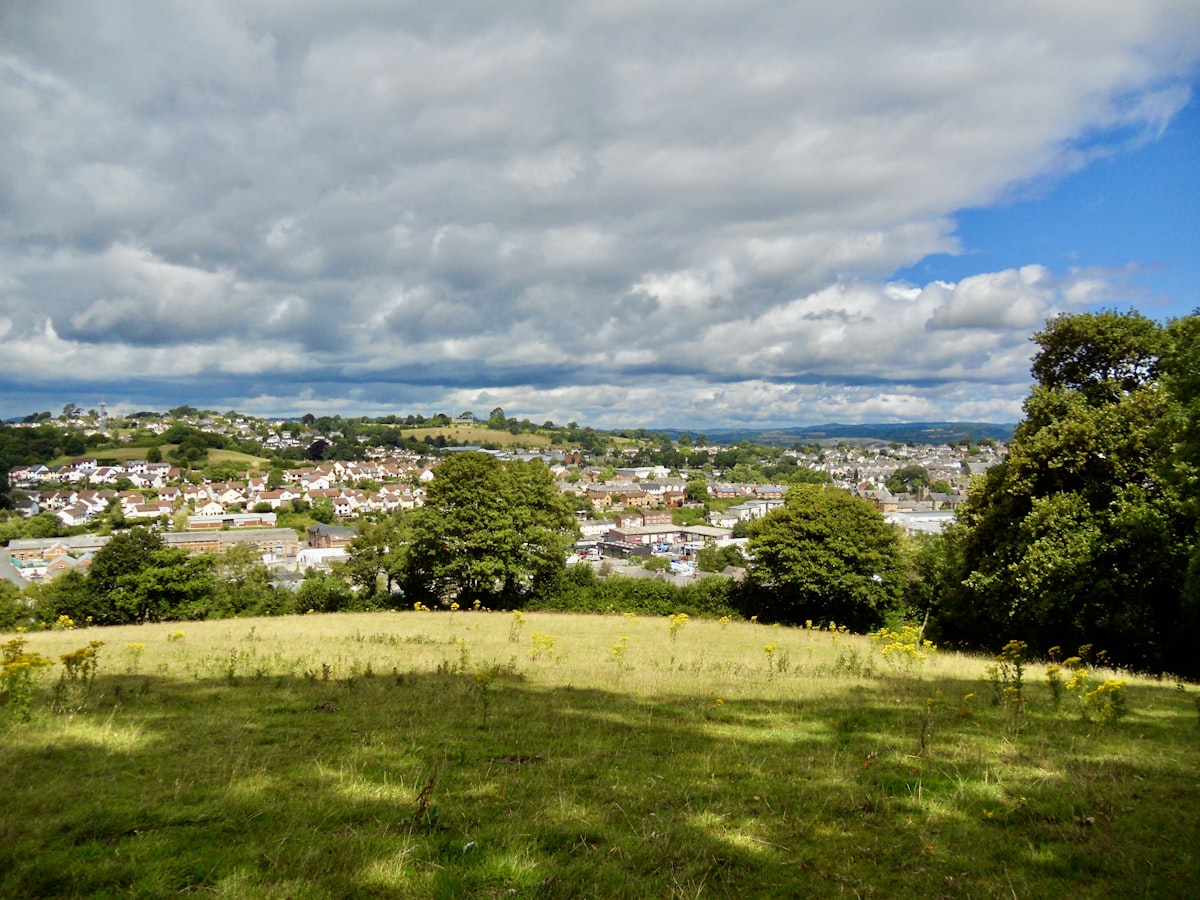
Meeting the daylight requirements in Teignbridge is an early and important part of designing any extension, infill plot or larger residential scheme across the district, from the market town of Newton Abbot to the coastal communities of Teignmouth and Dawlish and the villages on the edge of Dartmoor. Teignbridge District Council is the local planning authority (LPA) for this area; Devon County Council is the highway and minerals/waste authority and does not determine householder or residential planning applications. This guide explains how daylight and sunlight are assessed locally and where the relevant standards sit within the council's adopted planning framework.
Daylight requirements in Teignbridge and the local policy framework
The development plan for the district is the Teignbridge Local Plan 2013-2033, adopted on 6 May 2014 and still the plan against which applications are determined while a Local Plan Review (the emerging Local Plan 2020-2040) progresses. Daylight and sunlight are not given a single dedicated policy; instead they are assessed as part of the broader tests on design quality and residential amenity.
The two policies most relevant to daylight and sunlight are:
- Policy S1A – Presumption in Favour of Sustainable Development, which frames how the council applies national policy locally.
- Policy S2 – Quality Development, which requires high-quality design that responds to the characteristics of the site and its surroundings and protects the residential amenity of neighbouring occupiers. In practice, this is the policy hook under which loss of light, overshadowing, overlooking and overbearing impact are weighed.
Because the Local Plan does not set out numerical daylight or sunlight targets, the council relies on recognised technical guidance — principally the Building Research Establishment's BRE BR 209 (2022), Site Layout Planning for Daylight and Sunlight, together with the British Standard BS EN 17037 — to give substance to the amenity tests in Policy S2. National planning policy in the NPPF supports refusing development that fails to secure adequate living conditions for existing and future occupants.
Is there a daylight or amenity SPD in Teignbridge?
It is worth being clear about what the council does and does not publish. Teignbridge has adopted a number of Supplementary Planning Documents — including the Affordable Housing SPD, the Custom and Self Build SPD, the Solar Photovoltaic (PV) Developments in the Landscape SPD (2018), and site-specific guidance such as the NA2 Whitehill, Newton Abbot SPD and the Dawlish DA2/DA6 SPD. However, there is no adopted Teignbridge SPD or design guide dealing specifically with householder extensions, residential amenity, daylight or sunlight. In the absence of such a document, the BRE BR 209 (2022) methodology, BS EN 17037 and the NPPF are applied through Policy S2 of the Local Plan.
What the validation guides require
Teignbridge updated its Planning Validation Guidance and Householder Validation Guide (most recently in September 2024, adopted by Full Council in October 2024). The validation checklist does not list a standalone daylight, sunlight or overshadowing assessment as a routine mandatory submission for every application. Instead, the level of supporting information is expected to be proportionate to the scale and impact of the proposal. For schemes where light or overshadowing is likely to be a material concern — for example a two-storey rear extension close to a boundary, a backland plot, or a taller building near existing homes — a BRE-based daylight and sunlight report is the standard way to demonstrate that Policy S2's amenity test is met, and case officers will expect to see one where impacts are plausible.
Local context: why Teignbridge sites need careful assessment
The district's varied character means daylight and sunlight issues arise in quite different ways depending on where a site sits:
- Newton Abbot is the largest town and the focus of significant growth, including the NA2 Wolborough/Whitehill strategic allocation. Denser town-centre and edge-of-town development brings buildings closer together, making inter-building daylight relationships and overshadowing of gardens more sensitive.
- Teignmouth and Dawlish are tightly built coastal towns with sloping topography and many terraced and Victorian properties. Changes in level can sharply affect overshadowing and the daylight reaching lower windows, so site sections and accurate levels matter.
- The western part of the district adjoins Dartmoor National Park, and several villages have conservation areas and listed buildings, where the design response under Policy S2 must balance amenity with heritage and landscape character.
In each case, the practical questions are the same: will neighbouring habitable-room windows still receive adequate skylight (the BRE Vertical Sky Component and daylight distribution tests), will gardens and amenity areas keep enough sunlight (the BRE overshadowing test), and will new windows create unacceptable overlooking? A robust assessment answers these against the BR 209 (2022) numerical guidelines while acknowledging that the BRE figures are advice, not rigid policy thresholds.
How daylight and sunlight are assessed under BR 209 (2022)
A BRE-based assessment typically considers:
- Daylight to neighbours — the Vertical Sky Component (VSC) at affected windows, with the familiar 27% guideline and the test that retained light should not fall below around 0.8 times its former value, plus the no-sky-line / daylight distribution check inside rooms.
- Sunlight to neighbours — the Annual Probable Sunlight Hours (APSH) test for windows facing within 90 degrees of due south.
- Overshadowing of amenity space — the recommendation that at least half of a garden or amenity area should receive at least two hours of sunlight on 21 March.
- Daylight and sunlight within the new homes themselves, which is where BS EN 17037 target illuminance levels are increasingly relevant.
Presenting these results clearly, with drawings and a plain-English commentary, helps a Teignbridge case officer apply Policy S2 with confidence and reduces the risk of delay or refusal.
How Fortress Associates can help
Fortress Associates prepares our daylight and sunlight report service to BRE BR 209 (2022) and BS EN 17037, tailored to the requirements of the Teignbridge Local Plan. We also produce Building Regulations drawings to the Approved Documents (Parts A–S). We work nationwide with a 4–5 working day turnaround and ask for no advance payment. To discuss a Newton Abbot, Teignmouth or Dawlish site, please get in touch.
Sources & further reading
Need help with a UK planning project?
Fixed-fee daylight reports and Building Regulations drawings — delivered in 4–5 working days. No advance payment.
Request a free quote