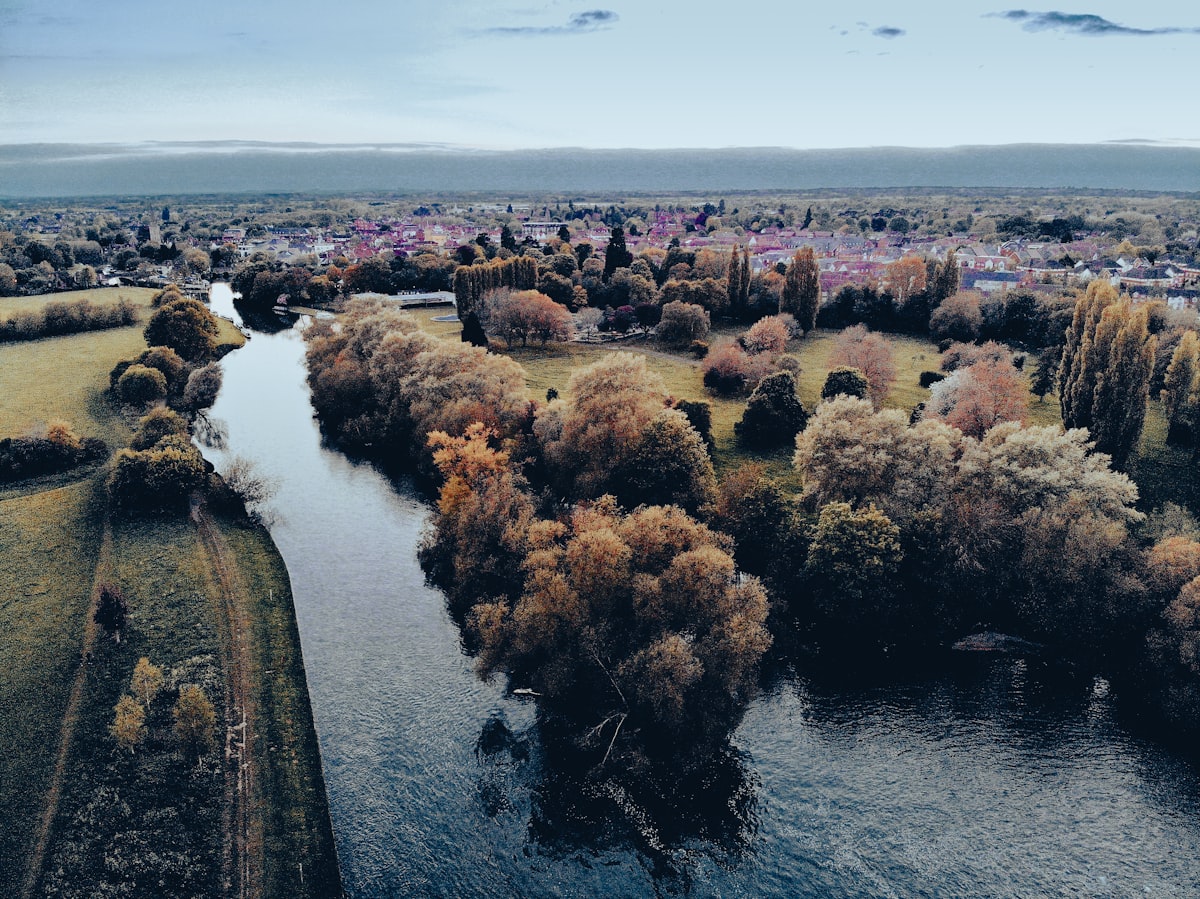
Planning an extension, a new dwelling or a residential development in Abingdon-on-Thames, Wantage, Faringdon, Grove or the villages of the Science Vale? Getting to grips with the daylight requirements in Vale of White Horse early will help your scheme through the planning process. Vale of White Horse District Council is the local planning authority (LPA) for the district. Oxfordshire County Council covers the wider county but is not the planning authority for householder and residential development of this kind. This guide explains how daylight and sunlight are assessed here and which adopted policies apply.
Who decides your application?
Vale of White Horse District Council determines planning applications across the district, from the historic town of Abingdon-on-Thames to the market towns of Wantage and Faringdon. The county council deals with highways, minerals, waste and education, but how a building affects a neighbour's daylight, sunlight and living conditions is a district-level judgement made against the adopted Local Plan.
A two-part adopted Local Plan
The Vale operates a Local Plan in two adopted parts:
- The Vale of White Horse Local Plan 2031 Part 1: Strategic Sites and Policies, adopted by Full Council in December 2016, which sets the strategy, the strategic site allocations and the core policies; and
- The Vale of White Horse Local Plan 2031 Part 2: Detailed Policies and Additional Sites, adopted on 9 October 2019, which adds detailed development management policies and further allocations, and includes policies for the part of Didcot Garden Town that lies within the Vale.
The two parts work together, and both are part of the development plan against which proposals are judged.
The amenity and design policies that matter
Two policies are central to daylight and sunlight in the Vale:
- Core Policy 37 (Design and Local Distinctiveness) in Part 1 requires high-quality, well-designed development with a clear sense of place that responds to its character and context. The way buildings are sited, scaled and spaced — which determines how much light reaches neighbours — falls squarely within this policy.
- Policy DP23 (Impact of Development on Amenity) in Part 2 is the key amenity test. It seeks to ensure that new development does not cause unacceptable harm to the amenity of neighbouring occupiers, expressly covering matters such as loss of light and overshadowing alongside privacy, outlook and disturbance.
For most extensions and infill schemes, Policy DP23 is the policy an officer will turn to when weighing the effect on a neighbour's daylight or sunlight, with Core Policy 37 reinforcing the wider design expectation.
The Joint Design Guide SPD
These policies are supported by the Joint Design Guide Supplementary Planning Document (SPD), adopted in June 2022. It is a material consideration in determining applications and is structured around themes including place and setting, the natural environment, movement and connectivity, space and layout, built form, and climate and sustainability. The guidance on space, layout and built form is directly relevant to daylight: well-orientated, appropriately spaced buildings are far less likely to harm a neighbour's light.
Local context shapes how these policies are applied. The Vale is home to the Science Vale growth area around Didcot, Wantage and Grove, including the internationally significant Harwell Campus, and to the historic riverside town of Abingdon-on-Thames. In Abingdon's tight historic street pattern and in the higher-density schemes coming forward across the Science Vale, careful handling of building height, spacing and overshadowing is given real weight.
How daylight requirements in Vale of White Horse are measured
The Vale does not set its own bespoke numerical daylight standard. Instead, where daylight or sunlight is in question, officers rely on the recognised national methodology, applied through the adopted Local Plan:
- BRE BR 209 — Site Layout Planning for Daylight and Sunlight: A Guide to Good Practice (2022, third edition), which sets out the established tests, including the Vertical Sky Component (VSC), the No Sky Line / daylight distribution test, the Annual Probable Sunlight Hours (APSH) test, and overshadowing of gardens and amenity spaces.
- BS EN 17037 (Daylight in Buildings), used to assess daylight within new habitable rooms.
- The National Planning Policy Framework (NPPF), which requires a good standard of amenity and efficient use of land, delivered locally through Core Policy 37 and Policy DP23.
Where a proposal could materially affect a neighbour's light, a Daylight & Sunlight Report prepared to BRE BR 209 (2022) is the clearest way to demonstrate compliance with Policy DP23.
When a daylight and sunlight report helps
Consider commissioning a report where your proposal involves:
- A two-storey or rear extension close to a boundary in a constrained Abingdon, Wantage or Faringdon plot;
- A new dwelling or backland plot near existing homes;
- A larger residential or mixed-use scheme in the Science Vale where internal daylight to new homes must be shown under BS EN 17037; or
- A case where a neighbour or officer has raised a specific loss-of-light or overshadowing concern.
While a daylight and sunlight report is not required for every application, supplying one early — where the relationship to neighbours is sensitive — can prevent delay and gives officers the evidence they need to support the scheme under Policy DP23.
How Fortress Associates can help
Fortress Associates provides our daylight and sunlight report service to homeowners, architects and developers across Vale of White Horse and the rest of the UK. Our reports are prepared to BRE BR 209 (2022) and BS EN 17037 and are written to address the amenity and design policies in the adopted Local Plan 2031 (Parts 1 and 2). We work to a 4–5 working day turnaround with no advance payment. You can review our services or contact us to discuss your site.
Where a project also needs technical drawings, we prepare Building Regulations Drawings for the construction stage. For a neighbouring authority, see our guide to daylight requirements in Cherwell.
Sources & further reading
Need help with a UK planning project?
Fixed-fee daylight reports and Building Regulations drawings — delivered in 4–5 working days. No advance payment.
Request a free quote