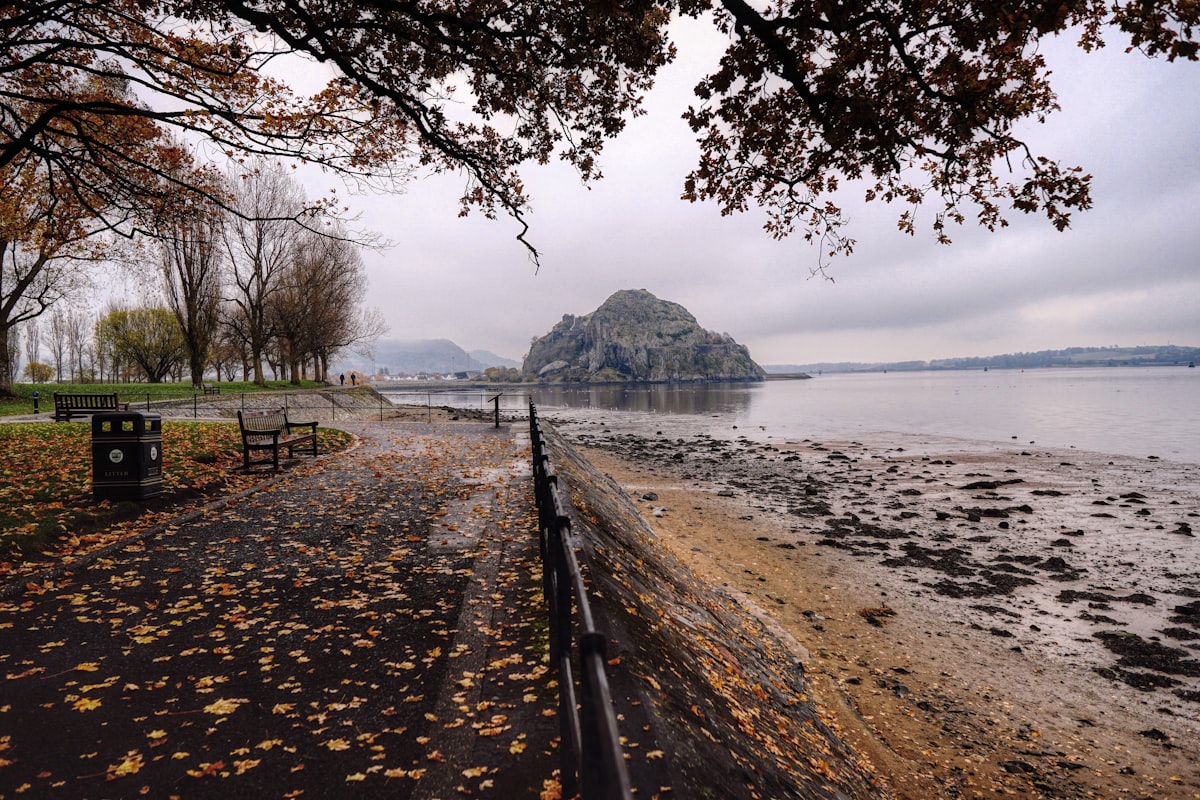
Understanding the daylight requirements in West Dunbartonshire matters for anyone proposing a house extension, an infill plot or a larger residential scheme in Dumbarton, Clydebank, Alexandria or the surrounding settlements of the Vale of Leven. West Dunbartonshire Council is the local planning authority for most of the area, and daylight and sunlight are treated as part of the wider question of residential amenity and good design. This guide explains which adopted policies apply, where the emerging plan sits, and what a daylight and sunlight assessment to recognised standards actually involves.
Daylight requirements in West Dunbartonshire: the policy framework
The statutory development plan for the area is made up of the National Planning Framework 4 (NPF4), adopted by Scottish Ministers on 13 February 2023, and the West Dunbartonshire Local Plan, which remains the adopted local plan for the area. It is important to be precise here: the proposed Local Development Plan 2 (LDP2) was not adopted - on 15 March 2023 the Council's Planning Committee decided that it would not proceed to adopt LDP2 following the introduction of NPF4. The Proposed LDP2 (as modified in 2020) is nonetheless treated as the Council's most up-to-date spatial strategy and is given significant weight as a material consideration. In practice this means a supporting statement should cite the adopted Local Plan and NPF4, while also acknowledging the proposed LDP2 where relevant.
At the national level, two NPF4 policies are most relevant to daylight and amenity:
- Policy 14 (Design, quality and place), which takes a design-led approach and tests proposals against the six qualities of successful places, including healthy and pleasant places to live; and
- Policy 16 (Quality homes), which seeks well-designed, sustainable homes with good internal and external living conditions for future occupiers.
Good daylight and sunlight, and the avoidance of unacceptable overshadowing or loss of light to neighbours, are part of what these policies mean by amenity and quality of place.
The local design and amenity policies
The adopted West Dunbartonshire Local Plan sets out the local design and amenity expectations. The two most directly relevant policies are:
- Policy GD 1 (Development Control), the general development-management policy. It expects all new development to be of a high quality of design and to respect the character and amenity of the area, and it lists the matters to be considered, including layout and design "(including scale, density, massing, height, aspect, effect on daylighting, crime prevention measures and privacy)". Daylighting and privacy are therefore named directly in the plan's lead policy.
- Policy H 5 (Development within Existing Residential Areas), which safeguards the character and amenity of established residential areas and sets out the factors that might lead to a loss of amenity, including the effect of a proposal on neighbouring residential conditions.
When a householder or residential application is assessed, officers consider both whether a proposal would unacceptably harm the daylight, sunlight, privacy or amenity of neighbours, and whether future occupiers would themselves enjoy reasonable living conditions.
An important local point: the National Park planning area
A feature that distinguishes West Dunbartonshire from most authorities is that the council area does not include the parts of Balloch and the countryside around Loch Lomond that fall within the Loch Lomond & The Trossachs National Park. The National Park Authority - which is itself headquartered in Balloch - is a separate, full planning authority and determines planning applications within the Park boundary under its own adopted Local Development Plan. If your site is at the northern end of the area, near Loch Lomond, it is essential to confirm whether it lies inside the Park before relying on West Dunbartonshire Council's policies. Dumbarton, Clydebank and most of Alexandria lie outside the Park and fall under the Council.
How BRE BR 209 fits in
Neither NPF4 nor the West Dunbartonshire Local Plan sets out its own numerical daylight calculation. The recognised technical methodology is the Building Research Establishment guidance, BRE BR 209: Site Layout Planning for Daylight and Sunlight - A Guide to Good Practice (2022 edition), read alongside the British Standard BS EN 17037 on daylight in buildings. These documents are applied as best practice to provide objective evidence for the amenity and design tests in the adopted policies. In short, BR 209 supplies the measurable tests that let a planning officer judge whether a scheme meets the daylighting and amenity aims of Policy GD 1, Policy H 5 and NPF4 Policies 14 and 16.
What a daylight and sunlight assessment involves
A BRE-based assessment usually answers two questions: how much daylight and sunlight neighbouring properties will keep, and how much future occupiers of the proposed development will receive. The principal tests include:
- Vertical Sky Component (VSC) - the amount of skylight reaching the centre of a neighbour's window, with a guideline value of 27%, or no worse than 0.8 times its previous value;
- Daylight distribution (the no-sky line) - how well daylight reaches across the depth of a room;
- Annual Probable Sunlight Hours (APSH) - the sunlight reaching windows with a significant southerly aspect, tested across the whole year and the winter months; and
- Overshadowing of gardens and amenity space - using the sun-on-ground test on the equinox.
A clear, BRE-compliant report helps a West Dunbartonshire planning officer weigh a proposal against the adopted policies. It is particularly useful for tightly spaced terraced and tenement layouts in Clydebank, for rear and two-storey side extensions in Dumbarton, and for infill plots in Alexandria and the Vale of Leven where overshadowing of a neighbour's habitable-room windows or garden is a realistic concern. A robust assessment cannot promise consent, but it gives officers the evidence to reach a sound decision and helps applicants design out problems before submission.
How Fortress Associates can help
Fortress Associates prepares our daylight and sunlight report service to BRE BR 209 (2022) and BS EN 17037 for projects across Dumbarton, Clydebank, Alexandria and the wider West Dunbartonshire area. We work nationwide with a typical 4 to 5 working day turnaround and ask for no advance payment. You can see the full range on our services page or contact us to discuss your site. Where a planning submission also needs technical drawings, we produce building warrant and Building (Scotland) Regulations drawings alongside the report. If your project is elsewhere in central Scotland, see our related guide to the daylight requirements in Stirling.
Sources & further reading
- West Dunbartonshire Council - Development Plan
- Scottish Government - National Planning Framework 4 (NPF4)
- BRE - BR 209: Site Layout Planning for Daylight and Sunlight (2022)
- Loch Lomond & The Trossachs National Park Authority - Planning
- Fortress Associates daylight and sunlight reports, our services and how to get in touch
Need help with a UK planning project?
Fixed-fee daylight reports and Building Regulations drawings — delivered in 4–5 working days. No advance payment.
Request a free quote