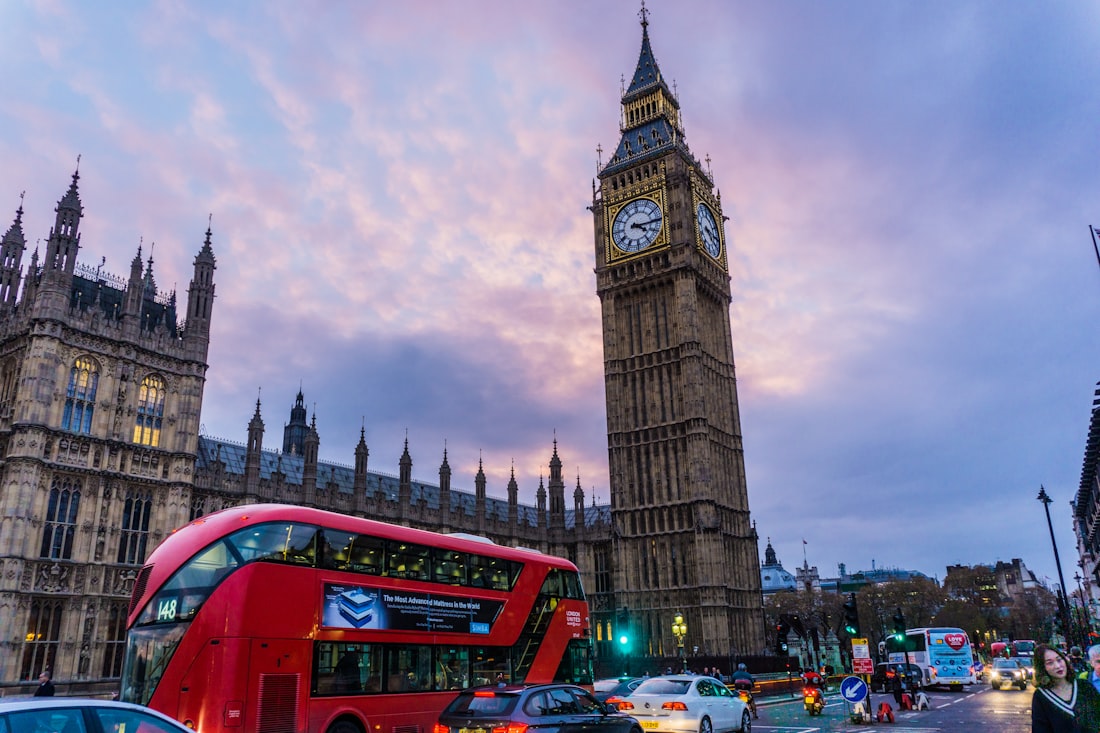
Westminster is one of the most demanding planning environments in the United Kingdom for daylight and sunlight assessments. As a central London borough where more than three-quarters of the built environment sits within designated conservation areas, nearly every development project - from a basement extension in Mayfair to a rooftop addition in Marylebone - requires a carefully prepared daylight and sunlight report to support the planning application.
This post explains the planning context in Westminster, how the council applies BRE BR 209 (2022), when a daylight report is required, and the particular challenges that arise from Westminster's unique urban character.
Planning context in Westminster
Westminster is home to some of the most densely developed and historically significant streets in the country. The borough spans from the riverside Georgian terraces of Pimlico to the grand Regency stucco of Belgravia and the Victorian mansion blocks of Marylebone. High land values - among the highest anywhere in the world - drive continuous pressure for intensification: basement excavations beneath Georgian townhouses, rooftop storeys on mansion blocks, and rear extensions that test the limits of what neighbouring properties can absorb.
The borough contains more than sixty conservation areas, including Mayfair, St James's, Knightsbridge, and parts of Westminster World Heritage Site, which encompasses the Palace of Westminster and Westminster Abbey. These designations mean that planning applications receive a high level of scrutiny, and the amenity of existing residents - including their access to daylight and sunlight - is treated as a primary consideration rather than a secondary one.
Westminster adopted its City Plan 2019-2040 and, in February 2026, also adopted a new Environment Supplementary Planning Document (SPD) that sets out detailed environmental guidance covering air quality, noise, overheating, biodiversity, and sustainable design. The Environment SPD is a material consideration in the assessment of all planning applications in the borough and reinforces the importance of protecting residential amenity, including daylight and sunlight standards.
Daylight and sunlight policy in Westminster
Westminster City Council applies BRE BR 209 (2022), Site Layout Planning for Daylight and Sunlight, as its primary technical benchmark. The council expects applicants to demonstrate compliance with the Vertical Sky Component (VSC), No-Sky Line (NSL), and Annual Probable Sunlight Hours (APSH) tests where those tests are relevant to the development proposed. Westminster is widely regarded as one of the stricter London planning authorities on daylight matters: planning officers apply BRE targets with limited flexibility, and any proposal that produces a significant reduction in daylight or sunlight to neighbouring habitable rooms is likely to generate objections and may be refused.
The council's validation requirements make clear that a daylight and sunlight assessment is a standard supporting document for many categories of application. Westminster's supplementary planning documents and the City Plan policy ENV6 address local environmental impacts including daylight and overshadowing. The validation checklist specifies that a daylight and sunlight report must be provided wherever a proposed development has the potential to materially affect the daylight or sunlight received by neighbouring buildings.
Because of the World Heritage Site setting and the exceptional sensitivity of conservation area character, Westminster officers can give less weight to the Appendix F flexibility provisions in BRE BR 209 that allow some relaxation of targets in highly urban contexts. Assessors working in Westminster should be prepared for the standard numerical targets to be applied strictly, and for qualitative assessments - relating to room use, orientation, and the character of the neighbourhood - to carry additional weight.
When is a daylight report required in Westminster?
A daylight and sunlight assessment is typically required in Westminster for the following types of development:
- Basement excavations and basement extensions beneath residential properties, particularly where they extend under gardens or affect light wells serving neighbouring buildings
- Rear extensions of any significant depth on terraced or semi-detached properties where neighbouring windows are in close proximity
- Loft conversions and rooftop additions that involve raising ridge or parapet heights
- New residential buildings or blocks, including conversions from office or commercial use, where the massing could overshadow adjacent properties
- Side extensions and infill developments on narrow plots in dense terraced streets
- Commercial or mixed-use developments where residential accommodation adjoins or overlooks the site
- Any development where a pre-application scoping discussion with the council has identified daylight or sunlight as a potential concern
Always check Westminster City Council's current local validation checklist before submitting an application, as requirements are updated periodically and the specific documents required will depend on the type and scale of your proposal.
Common daylight challenges in Westminster
Westminster's Georgian and Victorian street patterns were designed with relatively generous plot depths, but the intervening centuries of incremental development - rear additions, garden-level extensions, mews conversions, and new infill - have significantly reduced the open space available between buildings. This means that even modest rear extensions can produce a measurable reduction in the VSC or NSL of a neighbouring kitchen or living room, particularly where that room faces north or north-east and is already receiving limited daylight.
Basement extensions present a distinctive challenge. Westminster has seen many applications for subterranean extensions beneath garden walls and rear courtyards. Light wells that serve below-ground rooms - habitable spaces in converted basements - are often narrow and deep, making them highly sensitive to any adjacent development. A new rear extension at ground level, for example, can substantially reduce the sky visible from a basement window, tipping a marginal VSC result into a failure. Thorough three-dimensional modelling of existing and proposed conditions is essential in these situations.
Rooftop additions in Westminster's historic terraces raise a different set of issues. Mansard extensions and rooftop plant rooms can cast shadows onto the rear-facing windows of immediately adjacent properties. Where those properties are shorter - for instance, where a six-storey Victorian block adjoins a three-storey Regency house - the height difference amplifies the shadow impact. Officers in Westminster are experienced in scrutinising these assessments, and it is important that reports are prepared with the rigour and completeness that the council expects.
How Fortress Associates can help
At Fortress Associates, we prepare daylight and sunlight reports for planning applications in Westminster and across the UK. Our assessments comply with BRE BR 209 (2022) and include VSC, NSL, and APSH calculations. Reports are delivered within four to five working days with no advance payment required. Contact us to discuss your project, or visit our services page for more information.
Sources & further reading
Need help with a UK planning project?
Fixed-fee daylight reports and Building Regulations drawings — delivered in 4–5 working days. No advance payment.
Request a free quote