Few Surrey authorities give as much dedicated attention to natural light as Woking, which makes understanding the daylight requirements in Woking particularly important for anyone proposing an extension, a flat scheme or a town-centre redevelopment. Woking Borough Council is the local planning authority (LPA) for the borough — it is the borough council, not Surrey County Council, that determines most planning applications. This guide explains how the council assesses daylight and sunlight, which local documents apply, and how a professional assessment to current British standards can support your proposal.
Daylight requirements in Woking: the planning framework
Unusually, Woking has adopted a Supplementary Planning Document devoted specifically to light and amenity. Applications are assessed against the adopted development plan, with detailed guidance supplied by that SPD and by nationally recognised guidance from the Building Research Establishment (BRE). The key documents are:
- The Woking Core Strategy, adopted on 25 October 2012, which sets the strategic policy framework.
- The Development Management Policies DPD, adopted in October 2016, which provides the detailed policies used to determine applications, including design and residential extensions.
- The Site Allocations DPD (adopted 2021), which allocates land to meet the borough's housing and employment needs.
- The Outlook, Amenity, Privacy and Daylight SPD, adopted on 10 February 2022, which provides Woking's most detailed guidance on light and amenity.
- National guidance and standards — the National Planning Policy Framework (NPPF), the BRE's Site Layout Planning for Daylight and Sunlight: A Guide to Good Practice (BR 209, 2022 edition) and BS EN 17037.
Core Strategy and Development Management Policies
The principal design policy is Policy CS21 (Design), which requires new development to respect and make a positive contribution to the street scene and the character of the area, with due regard to scale, height, proportions, building lines, layout and materials, and to provide appropriate levels of private and public amenity space. The Development Management Policies DPD then carries this through into the detailed tests applied at application stage, including policies on design and on residential extensions. Together they establish that a material loss of daylight, sunlight, outlook or privacy to neighbouring occupiers is a harm that must be weighed in the planning balance.
The Outlook, Amenity, Privacy and Daylight SPD (2022)
This SPD is the document that sets Woking apart. Adopted on 10 February 2022 to replace an earlier 2008 version, it provides practical guidance on achieving suitable outlook, amenity, privacy, daylight and sunlight in new residential development while safeguarding the character of adjoining areas. Notably, it draws directly on the established BRE approach. It explains that suitable daylight to a dwelling is generally achieved where an unobstructed vertical angle of 25 degrees can be drawn from a point 2 metres above floor level at the window, and that private gardens should be reasonably flat and open, with no more than 25% of the area prevented from receiving sunlight measured on 21 March. These are exactly the kinds of measurable tests a daylight consultant can assess.
The SPD also recognises that the most urban locations behave differently: dwellings in high-density schemes in Woking town centre and the larger village centres may not achieve the same levels of privacy or amenity as lower-density suburban homes, and the council sets out alternative ways of meeting amenity needs, including public realm contributions in lieu of on-site space.
The BRE and BS EN 17037 methodology
The 2022 edition of BRE BR 209 sets out the recognised tests used across England, which complement Woking's own 25-degree guidance:
- Vertical Sky Component (VSC) — the skylight reaching a neighbouring window. A reduction below 27%, and to less than 0.8 times the previous value, is the threshold at which loss of daylight is generally noticeable.
- No Sky Line / Daylight Distribution — how the area of a room receiving direct skylight changes after development.
- Annual Probable Sunlight Hours (APSH) — the sunlight reaching a window, assessed for windows facing within 90 degrees of due south.
BS EN 17037, the British and European standard for daylight in buildings, complements this with recommendations on daylight provision, sunlight, view out and the control of glare in new homes. Together with the council's SPD, these allow a consultant to provide objective, numerical evidence rather than subjective opinion.
Local context: a high-density town centre
Two features make daylight and sunlight a frequent issue in Woking. First, Woking town centre is one of the most intensively developed in Surrey, with landmark tall buildings around Victoria Square and continued pressure for high-density residential schemes. The council's Design SPD includes specific guidance on tall buildings and town-centre development, and the close grain of the town centre means that the effect of a new building on its neighbours' light is often a decisive consideration. A robust BRE assessment is therefore especially valuable here.
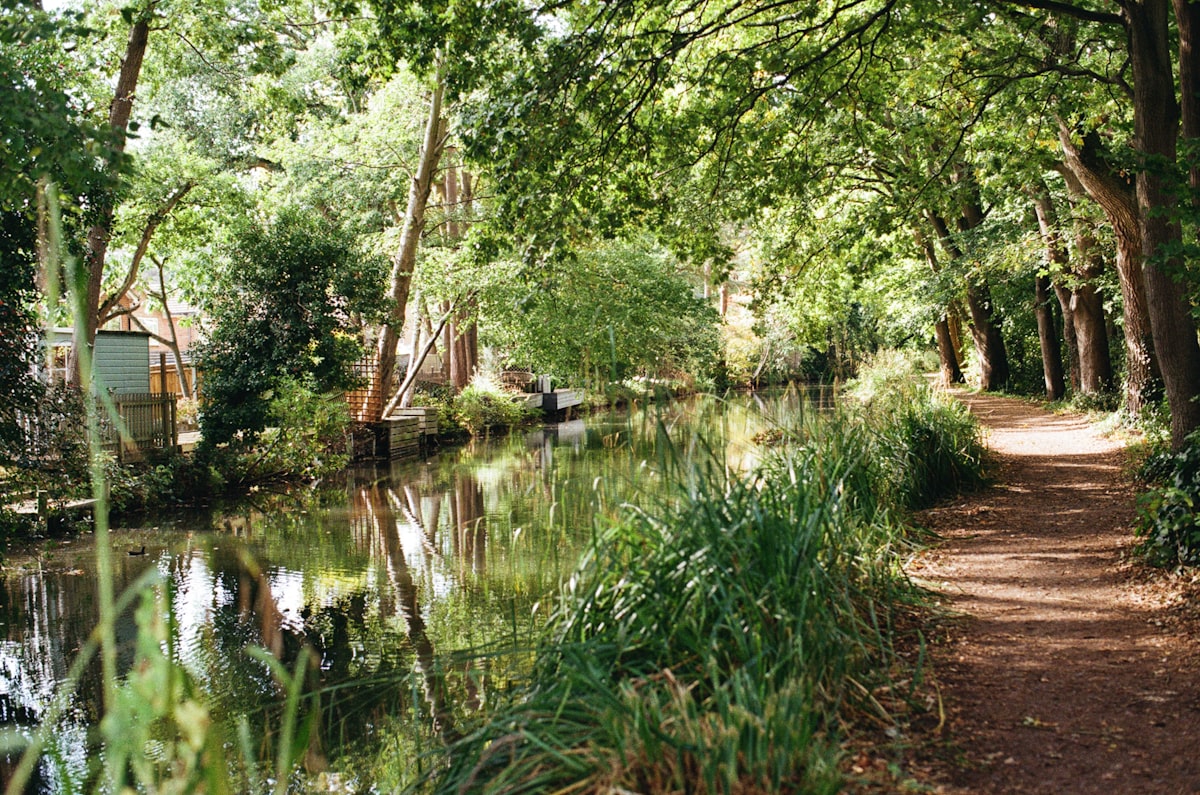
Second, the borough's suburban and village areas — from Knaphill and St John's to West Byfleet — are crossed by the historic Basingstoke Canal and characterised by leafy, lower-density streets where the SPD's outlook and privacy guidance is applied closely to householder extensions and infill plots. Whether your scheme is a town-centre apartment block or a rear extension, demonstrating compliance with the SPD's light tests helps a case officer reach a positive recommendation.
How Fortress Associates can help
Fortress Associates provides our daylight and sunlight report service for homeowners, architects and developers across Woking and the wider UK. Every report is prepared to BRE BR 209 (2022) and BS EN 17037 and is written to support your application against the relevant Local Plan policies and the council's Outlook, Amenity, Privacy and Daylight SPD. We work nationwide with a typical turnaround of four to five working days and ask for no advance payment. We also prepare Building Regulations drawings where your project needs them. To discuss a Woking scheme, get in touch with our team.
Sources & further reading
Need help with a UK planning project?
Fixed-fee daylight reports and Building Regulations drawings — delivered in 4–5 working days. No advance payment.
Request a free quote