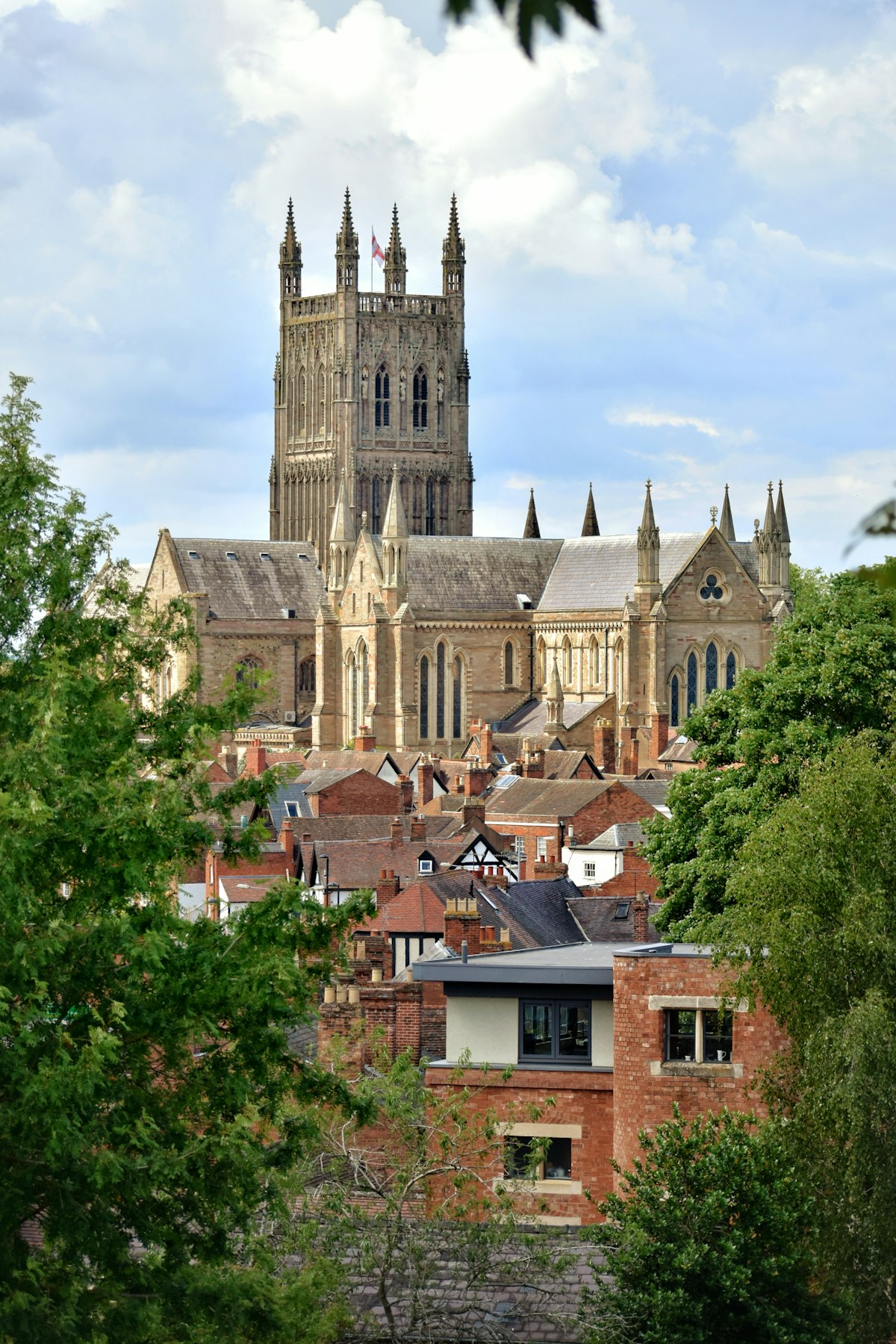
The daylight requirements in Worcester matter to anyone proposing a house extension, an apartment scheme or a new dwelling within this historic cathedral city on the River Severn. Worcester City Council is the local planning authority (LPA), and it determines applications against a development plan it shares with its neighbours. This guide explains, accurately, which policies and guidance govern daylight, sunlight and amenity in Worcester, and what a sound assessment needs to show.
The joint development plan for Worcester
Worcester does not have a development plan of its own in the conventional sense. Instead, the relevant adopted plan is the South Worcestershire Development Plan (SWDP), adopted in February 2016. The SWDP is a joint plan, prepared together by three authorities — Worcester City Council, Malvern Hills District Council and Wychavon District Council — and it provides a single, consistent policy framework across all three districts to 2030.
This joint arrangement means that a daylight and sunlight argument prepared for a site in Worcester rests on exactly the same core policy wording as one in Great Malvern or Pershore, even though the local character of each place is very different. (The councils are progressing a review of the plan, the SWDP Review, but the adopted 2016 SWDP remains the plan in force for decision-making.)
SWDP Policy 21: Design and neighbouring amenity
The key policy for daylight and sunlight in Worcester is Policy SWDP 21 (Design). It requires all development to be of high design quality and sets out a list of matters that applications must address. Criterion B includes a specific provision on Neighbouring Amenity, which states:
"Development should provide an adequate level of privacy, outlook, sunlight and daylight, and should not be unduly overbearing."
This is the wording a Worcester case officer relies on when weighing the impact of a proposal on its neighbours. The policy's reasoned justification reinforces the point, stating that a development will not be acceptable where there is an "unacceptable detrimental impact on the amenity of existing or new residents or occupants resulting from the new development". Other criteria of SWDP 21 — on siting and layout, scale, height and massing, and the settings of the city — are also relevant, because the mass and orientation of a building directly determine its effect on light.
Worcester's distinctive setting
SWDP 21 places particular weight on protecting Worcester's historic skyline. Criterion B(iii) requires that the "prominent views, vistas and skylines of Worcester city" are maintained and safeguarded, and the reasoned justification refers expressly to preserving distant views of "towers, spires, hills, ridges and waterside, including the floodplain". For the Faithful City, that means:
- Worcester Cathedral and its riverside setting dominate the skyline; tall or bulky development that competes with it, or that overshadows the tightly packed historic streets of the city centre, faces close scrutiny.
- The River Severn floodplain shapes where and how development can occur, often pushing schemes towards denser, taller forms on constrained urban sites where the daylight relationship between buildings is critical.
- Worcester's conservation areas and numerous listed buildings, including the medieval and Georgian fabric around the cathedral and High Street, add heritage sensitivity to amenity and design judgements.
The South Worcestershire Design Guide SPD
Policy SWDP 21 is amplified by the South Worcestershire Design Guide Supplementary Planning Document, adopted in March 2018 jointly by the three councils. The SPD provides additional detail on how the SWDP's design policies, and SWDP 21 in particular, should be interpreted in the design and layout of new development. It is a material consideration in determining applications, and it is the document to consult for the qualitative expectations on outlook, privacy and the relationship between buildings.
What Worcester does not have is a numerical daylight and sunlight standard within its own policies. Where a technical assessment of light is needed, the recognised methodology is the Building Research Establishment guide, BRE BR 209: Site Layout Planning for Daylight and Sunlight (2022 edition), supported by the British Standard BS EN 17037 for daylight provision inside new dwellings. National policy applies through the plan: the National Planning Policy Framework (NPPF) requires good design and seeks to avoid development that creates poor living conditions.
What a daylight and sunlight report should demonstrate in Worcester
A robust assessment for a Worcester scheme will typically:
- Test the effect on neighbouring windows using BR 209's Vertical Sky Component and, for rooms, the No Sky Line (daylight distribution) method.
- Assess sunlight to neighbouring habitable rooms and gardens using Annual Probable Sunlight Hours, including the winter probable sunlight hours test.
- Demonstrate adequate internal daylight for any new homes by reference to BS EN 17037 targets.
- Relate the numerical results back to the wording of SWDP 21 criterion B(iv) and the South Worcestershire Design Guide SPD, so the case officer can see compliance clearly.
Presenting both the technical figures and the policy narrative is what turns a set of numbers into a persuasive planning case.
How Fortress Associates can help
Fortress Associates provides our daylight and sunlight report service prepared to BRE BR 209 (2022) and BS EN 17037, and aligned to the SWDP 2016 and the South Worcestershire Design Guide SPD. We also prepare Building Regulations drawings. We operate nationwide with a 4–5 working day turnaround and no advance payment. To discuss a Worcester project, please contact our team.
Sources & further reading
- South Worcestershire Development Plan — Worcester City Council
- South Worcestershire Development Plan (SWDP) official site
- BRE BR 209: Site Layout Planning for Daylight and Sunlight (2022)
- National Planning Policy Framework (gov.uk)
- Fortress Associates daylight and sunlight reports and our related guide, Daylight Requirements in Malvern Hills
Need help with a UK planning project?
Fixed-fee daylight reports and Building Regulations drawings — delivered in 4–5 working days. No advance payment.
Request a free quote