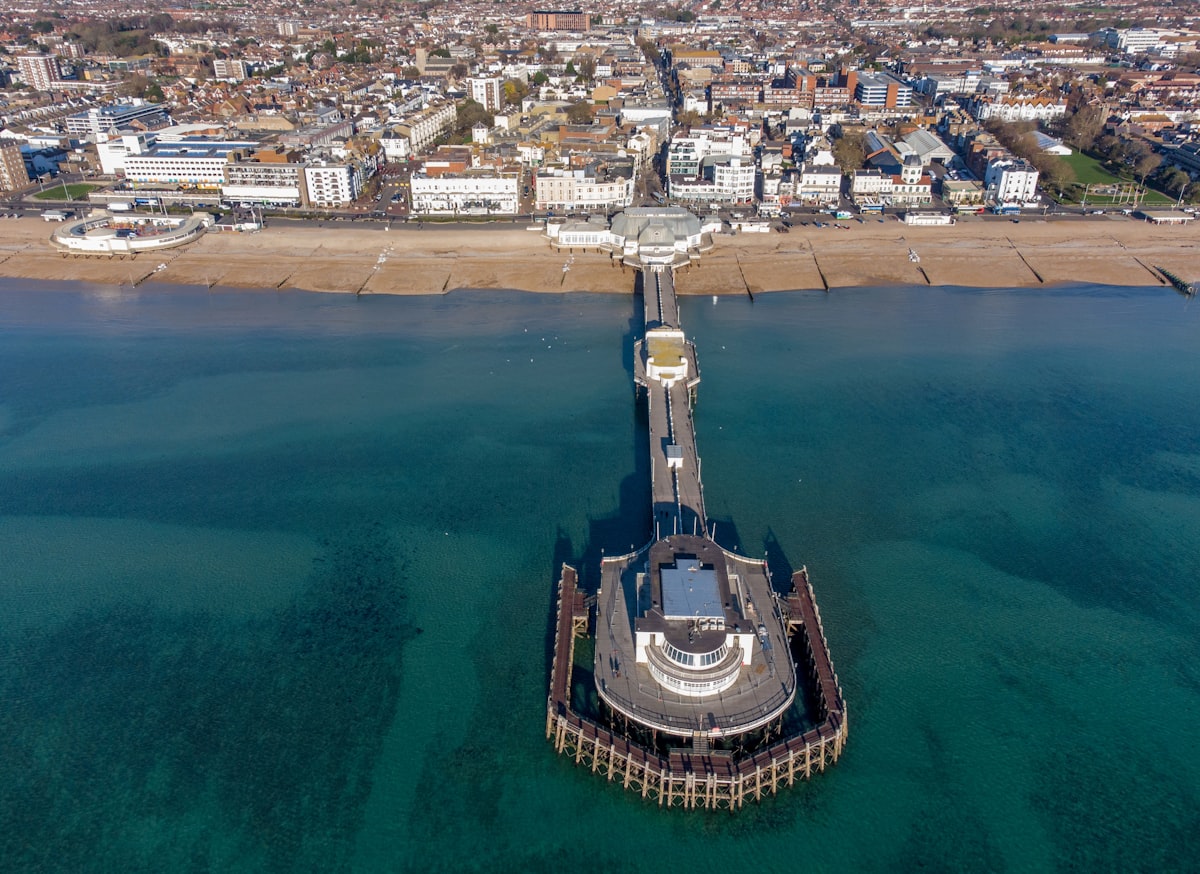
Understanding the daylight requirements in Worthing is essential for anyone planning an extension, a new dwelling, or a larger residential scheme in this West Sussex seaside town. Worthing Borough Council is the local planning authority (LPA) for the built-up part of the borough, and it assesses the daylight and sunlight effects of development against its adopted Local Plan and national guidance. This guide explains which policies apply, what the council expects, and how a properly prepared daylight and sunlight report can support your application.
Daylight requirements in Worthing: the policy framework
Worthing's statutory development plan is the Worthing Local Plan 2020-2036, which was formally adopted by Full Council on 28 March 2023. The Local Plan sets the policies against which development management decisions are made for the part of the borough that lies outside the South Downs National Park. The northern fringe of the borough falls within the National Park, where the South Downs National Park Authority is the relevant planning authority rather than the borough council - an important distinction if your site is close to the downland edge.
The principal policy dealing with the amenity of neighbouring occupiers is Policy DM5 (Quality of the Built Environment). Among its design requirements, the policy states that development should:
"...not have an unacceptable impact on the occupiers of adjacent properties, particularly of residential dwellings, including unacceptable loss of privacy, daylight/sunlight, outlook, an unacceptable increase in noise giving rise in significant adverse impacts..."
This is the clause planning officers turn to when judging whether a proposal would harm a neighbour's light. It does not set numerical thresholds itself, so the technical question of what counts as an "unacceptable" loss of daylight or sunlight is answered by reference to recognised national guidance (discussed below).
Daylight and amenity considerations also surface elsewhere in the plan. The supporting text to Policy DM2 (Density) stresses that sufficient external space around and between new homes is important and that it is "...important to ensure adequate privacy and daylight to both existing and new homes." For housing schemes, internal daylight and the living conditions of future occupiers are therefore part of the assessment as well as the impact on existing neighbours.
Is there a daylight and sunlight SPD in Worthing?
Worthing does not have a dedicated daylight and sunlight Supplementary Planning Document setting out numerical light thresholds. The most directly relevant supplementary guidance is the Adur & Worthing Councils' Development Management Standard No. 2: Extensions and Alterations to Dwellings, which deals with householder schemes. It explains that a proposal should not "reduce the daylight to neighbouring properties to an unacceptable extent" and addresses related issues of privacy, overlooking and outlook, but it works in qualitative terms rather than prescribing a specific calculation method.
Because the Local Plan and the council's guidance describe daylight and sunlight effects in terms of acceptability rather than fixed figures, the established technical benchmark is provided by the BRE guidance, BR 209 (2022) - Site Layout Planning for Daylight and Sunlight, read alongside BS EN 17037 (Daylight in buildings). National policy supports this approach: the National Planning Policy Framework (NPPF) asks authorities to secure a high standard of amenity for existing and future occupiers, and councils across the country use BRE BR 209 as the accepted methodology for testing daylight and sunlight when a Local Plan does not specify its own. In practice, a Worthing officer assessing "unacceptable loss of daylight/sunlight" under Policy DM5 will expect any technical light assessment to follow BRE BR 209 methods.
What the BRE methodology actually measures
A BRE-based daylight and sunlight assessment typically considers:
- Vertical Sky Component (VSC) - the amount of skylight reaching a neighbour's window, with 27% treated as the benchmark for good daylight;
- No Sky Line / daylight distribution - how much of a room still receives direct sky light after development;
- Annual Probable Sunlight Hours (APSH) - the sunlight received by windows facing within 90 degrees of due south, including the winter sunlight proportion; and
- Overshadowing of amenity areas - whether gardens and open spaces keep adequate sunlight, often tested on 21 March.
For new homes, the internal daylight provision is checked against the illuminance and daylight-factor targets in BS EN 17037 and the supporting BRE guidance.
Local factors that matter in Worthing
Two characteristics of Worthing make daylight and sunlight assessment particularly relevant:
- The seafront and town centre. Worthing's coastal frontage and town centre have seen taller residential and mixed-use redevelopment in recent years. Where buildings rise above their neighbours, the impact on the daylight, sunlight and outlook of surrounding homes becomes a central planning issue under Policy DM5, and a supporting technical report is frequently expected.
- Tightly built Victorian and Edwardian streets. Much of Worthing comprises closely spaced terraced and semi-detached housing. Rear extensions and loft or roof additions on these plots can readily affect a neighbour's light, which is exactly the situation Development Management Standard No. 2 is intended to manage.
If your site lies near the South Downs National Park boundary in the north of the borough, check at the outset which authority will determine the application, as the policy basis differs.
When you are likely to need a daylight and sunlight report
A BRE-compliant report is commonly required or advisable for:
- New flats or houses close to existing residential windows;
- Two-storey and rear extensions where a neighbour has raised concerns about loss of light;
- Taller seafront or town-centre buildings; and
- Schemes where the council, a neighbour, or a planning consultant has specifically asked for daylight/sunlight evidence to demonstrate compliance with Policy DM5.
Submitting a clear, methodologically sound assessment early can prevent delays, focus negotiations, and give officers the technical confidence to support a scheme.
How Fortress Associates can help
Fortress Associates prepares our daylight and sunlight report service to BRE BR 209 (2022) and BS EN 17037, presented so that Worthing Borough Council officers can read the results directly against Policy DM5. We work UK-wide with a 4-5 working day turnaround and ask for no advance payment. We also produce Building Regulations drawings if your project needs them. To discuss your scheme, please get in touch.
Sources & further reading
Need help with a UK planning project?
Fixed-fee daylight reports and Building Regulations drawings — delivered in 4–5 working days. No advance payment.
Request a free quote