The daylight requirements in Wrexham (Wrecsam) are an important consideration for anyone proposing a house extension, infill dwelling or larger residential development in Wales's newest city. The council assesses how a scheme affects light and amenity to neighbouring homes through its statutory development plan and detailed local planning guidance, supported where necessary by a technical daylight and sunlight report. This article explains the current local position - which changed significantly in 2025 - and how it is applied in practice.
The planning framework in Wrexham - what changed in 2025
The development plan position in Wrexham is unusual and applicants must get it right. Wrexham Council adopted a new Local Development Plan (LDP 2013-2028) on 20 December 2023, but by Order of the High Court of Justice dated 19 May 2025 that adoption was quashed. The LDP is therefore no longer part of the development plan for Wrexham.
As a result, the statutory development plan for Wrexham now comprises the Wrexham Unitary Development Plan 1996-2011 (adopted February 2005) together with Future Wales: the National Plan 2040. Decisions are also taken in the context of Planning Policy Wales (Edition 12, 2024) and the relevant Technical Advice Notes. This is the Welsh planning framework - the English NPPF does not apply. Citing the reinstated UDP rather than the quashed LDP is essential when preparing a daylight or amenity case.
Key adopted UDP policies
Two policies in the adopted UDP underpin daylight and amenity decisions:
- Policy GDP1 - Development Objectives. This is the principal development-management policy and is routinely used to protect the amenities of the occupiers of nearby properties, alongside considerations of character and street scene.
- Policy PS2. A strategic policy on general development principles, working with GDP1 to ensure new development respects the character of dwellings and the amenity of neighbouring homes.
The council's Local Planning Guidance Note No. 30 (Design) confirms that it amplifies Policies PS2 and GDP1 of the adopted Wrexham UDP, providing the design rationale that sits behind day-to-day decisions.
Local Planning Guidance Note No. 20 - House Extensions
For most householder schemes the detailed daylight tests are set out in Wrexham's adopted Local Planning Guidance Note No. 20 (House Extensions). This is the document case officers turn to first, and it contains two distinctive Wrexham standards.
The 45-degree test
LPG20 states that "the Council has adopted the Building Research Establishment guidance on site layout planning for daylight, and extensions should comply with the 45 degree test". To apply it, you take the elevation of the wall containing the neighbour's window and draw a line down at 45 degrees from the near top corner of the extension, then repeat on plan from the end of the extension towards the window wall. If the centre of the main window lies on the extension side of both 45-degree lines, the extension may cause a significant reduction in light. The guidance is explicit that passing the test does not mean automatic approval, nor the reverse.
Separation distances for privacy and daylight
Wrexham applies its own separation standards, which differ from those used by neighbouring Welsh authorities. Where two habitable rooms face one another such that direct overlooking is likely, the windows must be a minimum of 22 metres apart. Where a window faces a wall that exceeds the height of the top of that window, a minimum of 13 metres is required. These standards apply on flat ground and address both privacy and loss of light. LPG20 also recommends high-level windows or roof lights following the slope of the roof, with a minimum sill height of 1.7 metres, to reduce overlooking.
The wider amenity test
LPG20 makes clear that an extension "should not result in a significant loss of privacy, daylight or sunlight to neighbouring properties, or be visually overbearing when viewed from adjoining houses", and warns against extensions so large as to create a claustrophobic effect or significant visual intrusion and loss of light.
How daylight and sunlight are measured
Because Wrexham has formally adopted BRE methodology, a professional assessment is judged against the national standard BRE BR 209: Site layout planning for daylight and sunlight (2022, third edition). A robust report will typically address:
- Vertical Sky Component (VSC) - daylight reaching a neighbouring window, with the guideline that retained VSC should not fall below 0.8 times its former value.
- No Sky Line / daylight distribution - how much of a room can still see the sky.
- Annual Probable Sunlight Hours (APSH) - sunlight to windows facing within 90 degrees of due south.
- Internal daylight for newly created rooms, assessed against BS EN 17037 (Daylight in Buildings).
A BRE assessment provides the objective evidence that complements the council's 45-degree test and demonstrates compliance with the amenity aims of Policy GDP1.
Local context across the county borough
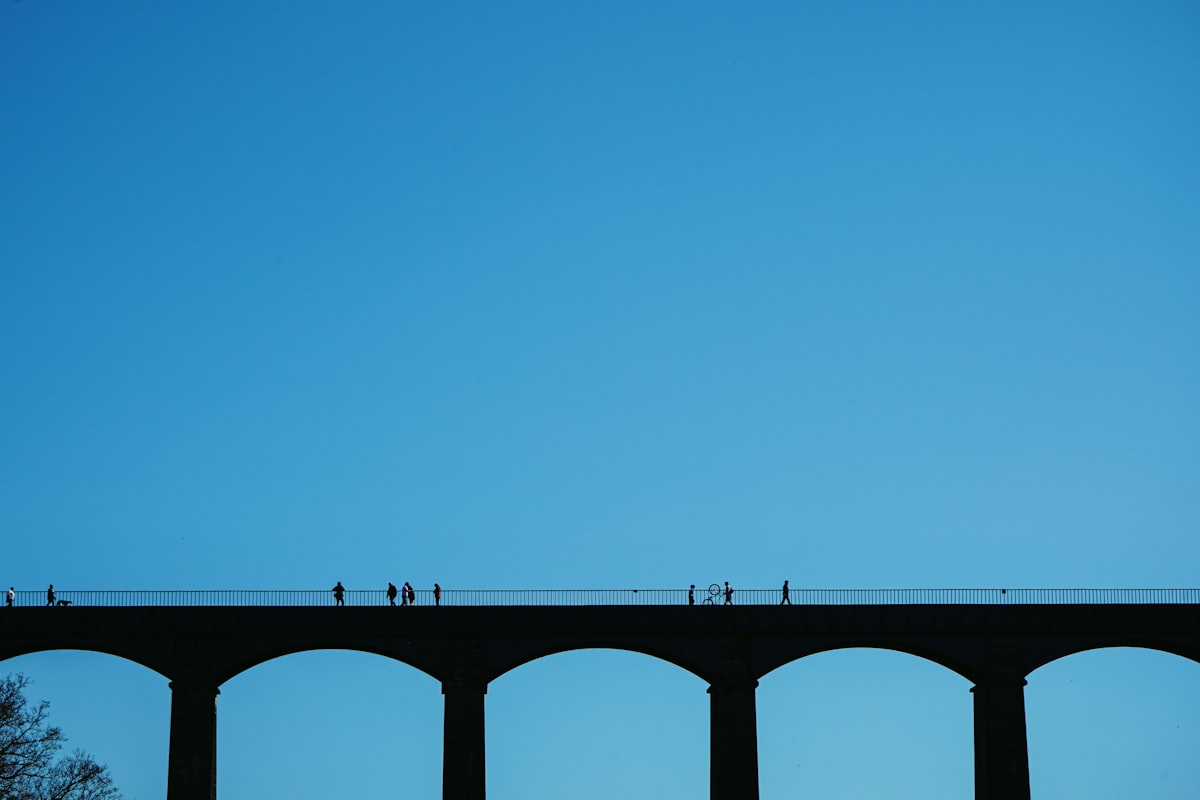
Wrexham became a city in 2022, and development pressure spans the compact Victorian streets around St Giles Church in the city centre out to villages such as Gresford, Rhosllanerchrugog and Ruabon. Tight terraced plots in the older parts of the city can make the 22-metre and 13-metre separation distances difficult to achieve, so early daylight analysis is valuable. In sensitive settings near the Pontcysyllte Aqueduct World Heritage Site, design quality and amenity both carry weight under Policies GDP1 and PS2.
How Fortress Associates can help
Fortress Associates prepares our daylight and sunlight report service to BRE BR 209 (2022) and BS EN 17037, aligned with Wrexham's reinstated UDP and Local Planning Guidance Note No. 20. We also produce Building Regulations drawings for projects heading to construction. We work UK-wide with a 4-5 working day turnaround and no advance payment required. To discuss a Wrexham scheme, get in touch or read our guide to daylight requirements in the Vale of Glamorgan.
Sources & further reading
Need help with a UK planning project?
Fixed-fee daylight reports and Building Regulations drawings — delivered in 4–5 working days. No advance payment.
Request a free quote