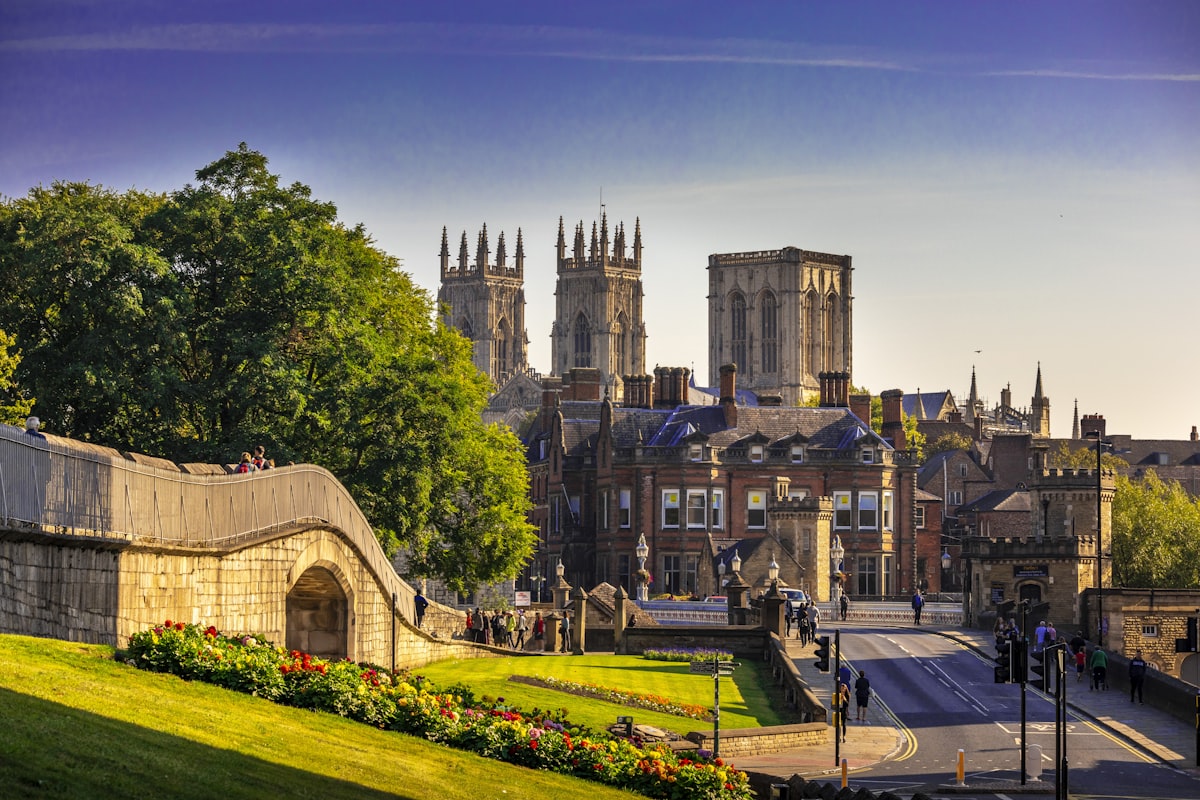
Daylight requirements in York are shaped by an unusually strong heritage framework. The City of York is a unitary authority and its own local planning authority, responsible for a compact, historic city defined by York Minster, the Medieval and Roman city walls, Clifford's Tower and a tightly woven medieval street pattern. For most of the past two decades the council determined applications using saved policies and national guidance, but that changed recently: York now has a full, modern Local Plan. Understanding how that plan, and the established BRE methodology, treat daylight and sunlight is essential for anyone planning an extension, infill or new housing scheme in the city.
York's new Local Plan
After many years working from saved policies, the City of York Council adopted its City of York Local Plan at Full Council on 27 February 2025, following the Inspectors' report issued on 14 February 2025 which found the plan sound subject to main modifications. The adopted plan covers the period 2017–2033 and now forms the statutory basis for decisions on planning applications across the city. This is a significant change: York's first adopted Local Plan in a generation replaced a long-standing reliance on saved and emerging policy, giving applicants a clearer, plan-led framework.
The plan's design and heritage content sits in Section 8: Placemaking, Heritage, Design and Culture, which contains a suite of design policies (the D-series, Policies D1 to D14). The lead policy, Policy D1 (Placemaking), sets the overarching expectation for high-quality, well-designed development and places particular emphasis on the implications of good design for mental and physical health and wellbeing.
What the Local Plan says about amenity and light
York's design policies do not set a single numerical daylight figure. Instead, they require development to deliver high-quality design and to protect the residential amenity of current residents and future occupiers — the standard against which loss of light, overshadowing, overbearing impact and loss of outlook are judged. The placemaking and design policies in Section 8 work alongside the plan's historic environment policies, which protect York's exceptional heritage assets.
That heritage dimension is unusually prominent in York. The Local Plan expressly seeks to preserve and enhance the city's heritage assets, which it identifies as including:
- the city's protected skyline and important views, in which York Minster is the dominant feature;
- York Minster and its precinct (itself the subject of a made neighbourhood plan);
- the Medieval and Roman city walls, Clifford's Tower and Museum Gardens;
- the architecture and archaeology of the historic centre — York is also a UNESCO City of Media Arts.
For development, this means a scheme must satisfy both the amenity expectations of the design policies and the conservation tests of the heritage policies. A proposal that respects a neighbour's daylight can still be refused if it harms a protected view or the setting of a heritage asset, and vice versa.
How daylight requirements in York are assessed in practice
Where a policy requires the protection of amenity without prescribing a number, the established approach — in York as throughout England — is to apply recognised national technical guidance:
- BRE BR 209 (2022), Site Layout Planning for Daylight and Sunlight: A Guide to Good Practice. This sets the recognised tests: the Vertical Sky Component (VSC) and the 0.8 retained-ratio rule for daylight to neighbouring windows, the Annual Probable Sunlight Hours (APSH) test for sunlight, and the 45-degree and 25-degree guidelines used to gauge the impact of a new building or extension.
- BS EN 17037, the British and European standard Daylight in Buildings, used to demonstrate adequate internal daylight in proposed habitable rooms — relevant for the apartment and conversion schemes common in York's city-centre fabric.
- The National Planning Policy Framework (NPPF), which requires a high standard of amenity for existing and future occupiers while securing well-designed, efficient use of land.
Where a proposal could materially affect the daylight or sunlight reaching neighbouring properties — or where a constrained, closely built site raises questions about the daylight reaching future occupiers — a daylight and sunlight assessment prepared to BR 209 provides the objective evidence the council needs. In York's dense historic streets, where buildings sit close together and gardens are small, the 45-degree guideline is engaged readily, so getting this evidence right early can be decisive.
Common situations where a daylight and sunlight report helps
- Rear and two-storey extensions in the terraced streets within and around the city walls, where the 45-degree guideline is easily breached;
- Backland and infill plots, where a new dwelling must be tested against the windows and gardens of tightly packed neighbours;
- Conversions and apartment schemes in the historic centre, where internal daylight to habitable rooms must be demonstrated against BS EN 17037;
- Resolving objections, where a neighbour or case officer has raised loss of light and an objective BRE assessment can settle the question against Policy D1 and the wider design policies.
How Fortress Associates can help
Fortress Associates prepares daylight and sunlight reports to BRE BR 209 (2022), BS EN 17037 and the NPPF, written to support applications determined under the City of York Local Plan. Find out more about our daylight and sunlight report service, or browse the full range of work on our services page. We work nationwide with a 4–5 working day turnaround and no advance payment required. To discuss your York site, please contact us.
Working on a project in the north west? Our guide to daylight requirements in Westmorland and Furness covers a very different planning landscape for comparison.
Sources & further reading
Need help with a UK planning project?
Fixed-fee daylight reports and Building Regulations drawings — delivered in 4–5 working days. No advance payment.
Request a free quote