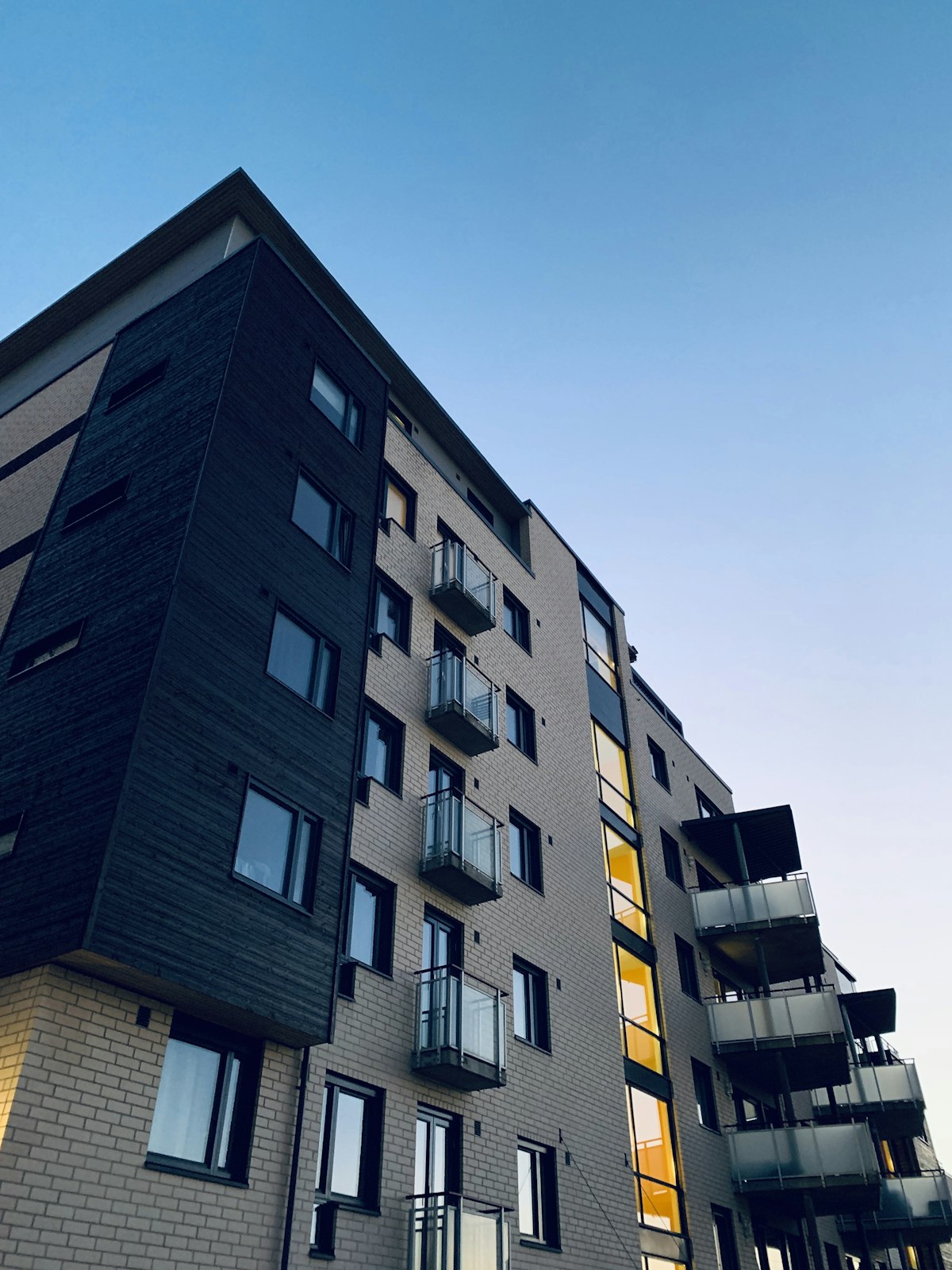
A balcony is one of the most sought-after features in a new flat, yet it is also one of the quietest destroyers of daylight to the home directly beneath it. When a balcony projects out over the window below, it acts as a permanent horizontal shade, cutting the amount of visible sky that window can see and, with it, both the daylight and the sunlight reaching the room inside.
This matters because daylight and sunlight are assessed at planning stage against BRE BR 209 (2022) and BS EN 17037. A scheme that looks generous on plan can fail the numbers simply because its own balconies are shading its own windows. The good news is that the effect is predictable, measurable and, with early design attention, avoidable.
Why balconies reduce daylight and sunlight
Every daylight and sunlight metric depends on how much sky a window can see. A projecting balcony sits above the window on the floor below and blocks out a wedge of that sky, especially the higher part of the sky where the strongest, most consistent light comes from. The deeper the projection and the more solid the balustrade, the larger the loss.
The three headline metrics are affected differently, so it is worth being clear about each. For a refresher on the terms, see our guide to VSC, NSL and APSH.
- Vertical Sky Component (VSC) measures the amount of sky visible at the centre of a window. A balcony overhang lowers VSC because it physically covers the top of the window's view of the sky. BRE regards a VSC of 27% or above as a good level of daylight for a window in a UK residential setting.
- No Sky Line (NSL), sometimes called Daylight Distribution, maps how much of the room's working plane can see any sky at all. An overhang pushes the no-sky line further into the room, shrinking the well-lit zone near the window.
- Annual Probable Sunlight Hours (APSH) is usually hit hardest. Sunlight arrives from the upper part of the sky, which is exactly the part a balcony soffit removes. A south-facing living room can lose a large slice of its winter sunlight to a single balcony directly above it.
Because the balcony belongs to the same building, this is a self-inflicted loss rather than an impact on a neighbour, and assessors will look at it closely. It is one of the more common reasons an otherwise well-designed block struggles to meet target values on the lower floors.
What BRE BR 209 (2022) says about balconies
The 2022 edition of the guidance, updated to sit alongside BS EN 17037, is explicit that balconies are a design factor to be considered rather than an unavoidable fact of dense development. It sets out several established techniques for reducing the shading effect, and a good assessment will test which of them recovers the most light for the least design compromise.
The recognised measures are:
- Use glazed or open balustrades instead of solid ones. A solid parapet blocks light to the window head below; a clear glass or perforated metal balustrade lets a large proportion of it through. This single change often recovers the most daylight for the least cost.
- Step the facade back so the balcony sits within the building line rather than overhanging it. An inset or recessed balcony casts far less shade on the window beneath than a projecting one.
- Stagger the balconies so a living room has its own balcony but does not have a balcony directly above its main window. Alternating the layout floor by floor spreads the benefit without stacking the shade.
- Keep the overhang only partly above the window, so that part of the window still has an open view of the sky.
- Use light-coloured soffits. A pale, reflective underside to the balcony bounces some diffuse light back down towards the window, softening the loss even where the geometry cannot change.
The key principle is simple: the more sky a window can still see, the better it will perform. Every millimetre of unnecessary overhang is daylight taken from the home below.
The 0.8 times rule and lower-floor flats
Where a design cannot fully avoid a reduction, BRE allows an existing window to lose some daylight before the loss is considered noticeable. As a rule of thumb, a VSC that stays at or above 0.8 times its former value, a retained figure of at least 80%, is unlikely to be a material concern. We explain this threshold in detail in the 0.8 times rule explained.
The difficulty with balconies is that the loss is concentrated on the lowest few floors, where flats are often already the hardest to light because of neighbouring buildings and boundary walls. A block can pass comfortably on its upper storeys and still return poor figures for its ground and first-floor homes. Identifying this early, before the elevations are fixed, is far cheaper than redesigning after a refusal.
Balconies, density and the London Plan
The pressure to include private amenity space is strongest in exactly the schemes where daylight is already tight: tall, dense, urban blocks. Policy expects new homes to have usable outdoor space, yet the same policy expects good internal daylight. Balancing the two is a genuine design challenge, not a box-ticking exercise. Our note on the London Plan daylight standards in 2026 looks at how assessors weigh these competing demands in higher-density contexts.
The same tension appears in smaller projects too, from rear extensions with roof terraces to conversions that add Juliet or projecting balconies to an existing elevation. Wherever a horizontal element sits above a habitable window, it is worth checking the daylight consequence before it is drawn in ink.
Getting the assessment right
A robust balcony assessment models the actual proposed geometry, including balustrade type, projection depth and soffit finish, rather than assuming a worst case. It compares options so the design team can see, in numbers, what glazing the balustrade or recessing the slab actually recovers. Done at concept stage, it turns a potential planning risk into a straightforward design decision.
How Fortress Associates can help
Fortress Associates prepares daylight and sunlight reports to BRE BR 209 (2022) and BS EN 17037 for developments across the UK. If your scheme includes balconies, we can model their effect on the flats below, test mitigation options such as glazed balustrades or recessed slabs, and set out the results clearly for your planning submission. We work to a turnaround of four to five working days and take no advance payment. To discuss a project, visit our daylight report service or get in touch with the details of your site.
Sources & further reading
Need help with a UK planning project?
Fixed-fee daylight reports and Building Regulations drawings — delivered in 4–5 working days. No advance payment.
Request a free quote