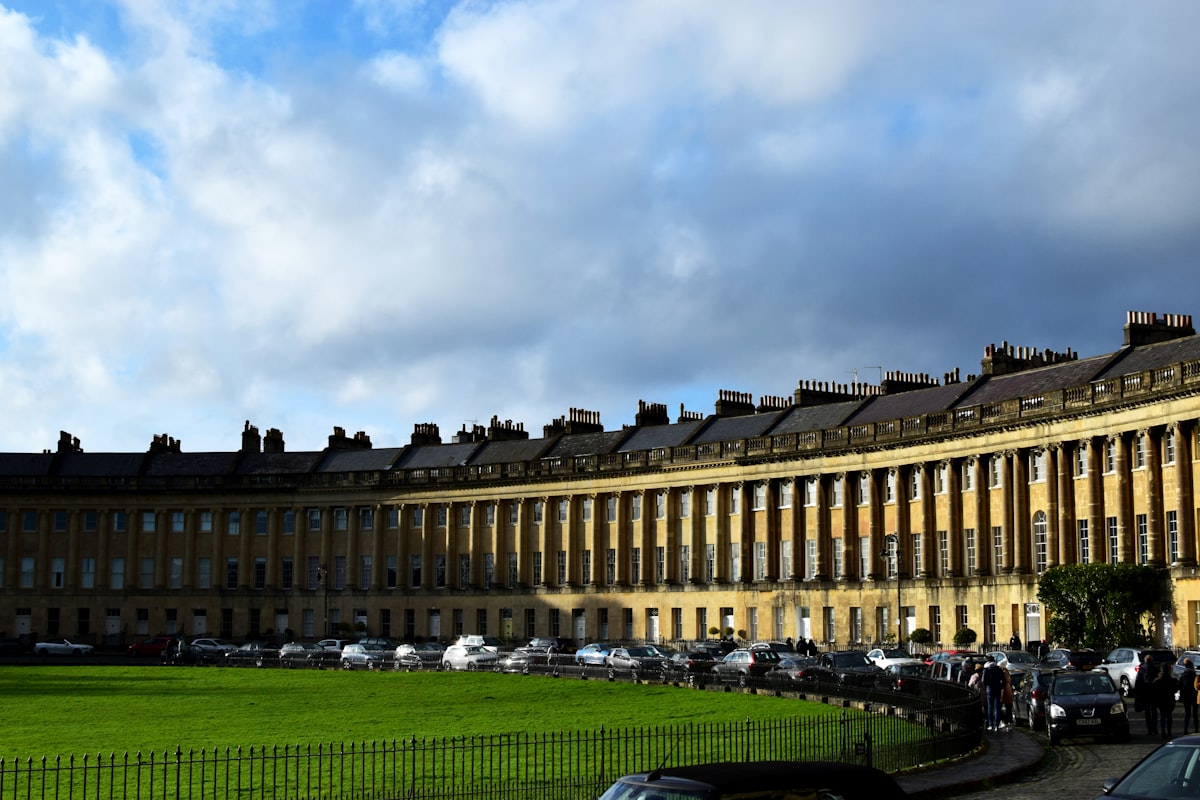
Few places in England combine sensitivity to design and a demanding development context quite like Bath and North East Somerset. With the City of Bath inscribed as a UNESCO World Heritage Site, the authority handles proposals where the relationship between buildings, light and historic character is examined closely. Getting the daylight requirements in Bath and North East Somerset right from the outset can make the difference between a smooth determination and a refusal.
This guide explains the adopted policies, the World Heritage dimension, and the technical standards that a daylight and sunlight assessment should meet in the district.
Which plan applies in Bath and North East Somerset?
Bath and North East Somerset Council is a unitary authority and the local planning authority for the area. Its adopted Development Plan is made up of three principal documents:
- the Core Strategy, adopted in 2014, which sets the strategic framework;
- the Placemaking Plan, adopted on 13 July 2017, which contains the detailed development-management policies;
- the Local Plan (Core Strategy and Placemaking Plan) Partial Update, adopted on 19 January 2023, which updated parts of both documents, particularly in response to the climate and ecological emergencies.
For convenience the Council publishes these as combined composite documents. A new Local Plan covering 2022 to 2042 is being prepared, so applicants should always confirm the position before submitting.
Policy D6: Amenity
The policy that most directly governs daylight and sunlight is Placemaking Plan Policy D6 (Amenity). It requires development to provide appropriate levels of amenity and, among other things, to:
Allow existing and proposed development to achieve appropriate levels of privacy, outlook and natural light; and not cause significant harm to the amenities of existing or proposed occupiers of, or visitors to, residential or other sensitive premises by reason of loss of light, increased noise, smell, overlooking, traffic or other disturbance.
This sets out the two sides of any assessment: protecting natural light for neighbours, and ensuring new accommodation itself enjoys adequate light and outlook.
Design and infill policies
Several related policies are usually engaged alongside Policy D6:
- Policy D2 (Local Character & Distinctiveness) and Policy D5 (Building Design) – requiring development to respond to its context, which in a dense historic city influences height, massing and the spacing between buildings;
- Policy D7 (Infill & Backland Development) – of particular relevance to tight plots, where overshadowing and overlooking are common concerns;
- Policy D8 (Lighting) – covering external lighting and light pollution.
The World Heritage Site and the Bath skyline
What sets this district apart is the weight given to the historic setting. Core Strategy Policy B4 (The World Heritage Site and its Setting) seeks to prevent harm to the Outstanding Universal Value of the City of Bath World Heritage Site, and the supporting policies protect the undeveloped, often wooded, skylines and ridgelines seen from within the city. Policy HE1 (Historic Environment) adds further detail on heritage assets. In practice this means a scheme may need to reconcile daylight and sunlight performance with strict limits on building height and massing – the two considerations cannot be looked at in isolation.
Does the Council set its own daylight figures?
Bath and North East Somerset does not publish a bespoke numerical daylight and sunlight methodology. Instead, Policy D6 and the design policies are applied using the established national technical standards, read together with the National Planning Policy Framework. For a credible assessment those standards are:
- BRE BR 209 (2022), Site Layout Planning for Daylight and Sunlight, which provides the Vertical Sky Component, daylight distribution (No Sky Line) and Annual Probable Sunlight Hours tests for judging impact on neighbours;
- BS EN 17037, Daylight in Buildings, used to demonstrate the adequacy of daylight inside new homes;
- the National Planning Policy Framework, which requires a high standard of amenity for existing and future users and supports making effective use of land.
What a Bath and North East Somerset assessment usually contains
A proportionate report for a site in the district normally works on two fronts. For neighbours, it measures the Vertical Sky Component and daylight distribution at affected windows and, where relevant, the Annual Probable Sunlight Hours for south-facing windows, comparing the results to the BRE targets. For the proposed homes themselves, it checks that habitable rooms receive adequate daylight and that gardens or communal spaces enjoy reasonable sunlight. Crucially in this authority, the report is read in the round with the height and massing constraints flowing from Policy B4 and the World Heritage setting: a scheme cannot simply grow taller to improve internal light if that would harm a protected skyline. Where the BRE numerical targets are not fully achieved, an honest report explains the established context – for example the tight spacing of a historic terrace – so that the officer can make a balanced judgement under Policy D6 rather than a mechanical one.
When an assessment is worth preparing
In Bath and North East Somerset, daylight and sunlight evidence is frequently useful where:
- an extension or roof alteration could overshadow a closely spaced neighbour, common in the city's Georgian terraces;
- an infill or backland scheme is proposed under Policy D7;
- a flatted development needs to show that new homes receive adequate light;
- a proposal in or near the World Heritage Site must balance height and massing against amenity;
- a neighbour or the case officer has raised a loss-of-light concern.
An objective, BRE-based report lets the planning officer weigh the evidence fairly. It cannot promise a particular result, but it gives a well-designed scheme its best opportunity and helps avoid avoidable delay.
How Fortress Associates can help
Fortress Associates provides our daylight and sunlight report service prepared to BRE BR 209 (2022) and BS EN 17037, and written with the policies of Bath and North East Somerset in mind. We operate nationwide, typically turn work around in four to five working days, and ask for no advance payment. We can also prepare Building Regulations drawings when a project moves towards construction. To talk through a site, please contact us. For a contrasting metropolitan example, see our guide to daylight requirements in Wolverhampton.
Sources & further reading
Need help with a UK planning project?
Fixed-fee daylight reports and Building Regulations drawings — delivered in 4–5 working days. No advance payment.
Request a free quote