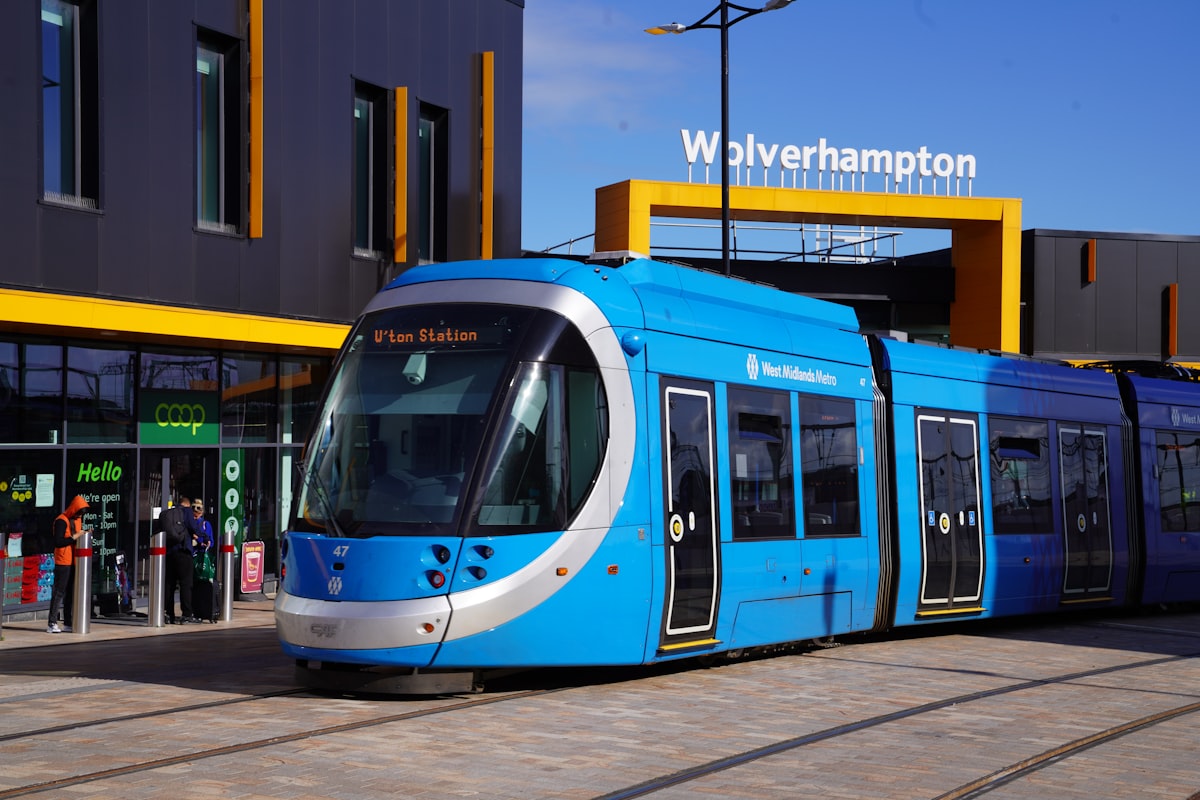
Understanding the daylight requirements in Wolverhampton is essential for anyone bringing forward a residential extension, an infill plot or a higher-density scheme in the city centre. The City of Wolverhampton Council is the local planning authority for this metropolitan borough, and it weighs the effect of new development on daylight, sunlight and overshadowing whenever those matters could harm the living conditions of neighbours or the quality of accommodation for future occupiers.
This article sets out the development plan that applies in Wolverhampton, the specific policies that engage daylight and sunlight, and the technical standards an assessment is expected to follow.
The development plan for Wolverhampton
Wolverhampton does not have a single, modern Local Plan document. Instead the adopted development plan is made up of several parts:
- the Black Country Core Strategy (2011), prepared jointly with Dudley, Sandwell and Walsall;
- three Area Action Plans adopted in 2014 and 2016 covering the main regeneration areas, including the city centre;
- the saved policies of the Wolverhampton Unitary Development Plan (2006) that did not expire on adoption of the Core Strategy.
A new Wolverhampton Local Plan was submitted to the Secretary of State on 7 March 2025 and is currently under independent examination. Until that plan is adopted, decisions continue to be taken against the documents listed above, read alongside the National Planning Policy Framework. Applicants should always check the current position before submitting.
Core Strategy: place-making and design quality
At the strategic level, Black Country Core Strategy Policy CSP4 (Place-Making) requires development across the four boroughs to achieve high-quality design that responds to local character. Good place-making includes the relationship between buildings and the amenity of those who live in and around them, which is where daylight and sunlight enter the assessment.
Saved UDP policies on design and amenity
The detailed development-management criteria sit in the saved Wolverhampton Unitary Development Plan (2006). The design chapter retains policies D2 to D14, and the relevant ones for daylight and sunlight include:
- Policy D2 (Design Statement) – setting the expectation that proposals demonstrate how they respond to context;
- Policy D7 (Scale – Height) and Policy D8 (Scale – Massing) – controlling the height and bulk of buildings, which directly govern overshadowing and loss of light;
- Policy D9 (Appearance) – covering the wider design relationship between a proposal and its neighbours.
The UDP is explicit that, in considering the scale and massing of new development, the Council will assess the degree of overlooking and overshadowing of other buildings, and loss of daylight, sunlight and privacy. On the housing side, saved Policy H6 (Design of Housing Development) requires new homes to be designed to a high standard with an attractive residential environment, which extends to adequate internal daylight and useable, well-lit amenity space.
Is there specific daylight guidance in Wolverhampton?
The Council has adopted a Residential Development Supplementary Planning Document, which provides design guidance supporting the saved UDP housing and design policies and is a useful reference for extensions and new homes. Wolverhampton does not, however, publish its own numerical daylight and sunlight methodology. In practice this means that the recognised national technical standards are applied through the Local Plan and the NPPF.
For a robust assessment, those standards are:
- BRE BR 209 (2022) – the Building Research Establishment guide Site Layout Planning for Daylight and Sunlight, which sets out the Vertical Sky Component (VSC), No Sky Line / daylight distribution, and the Annual Probable Sunlight Hours (APSH) tests used to judge impact on neighbours;
- BS EN 17037 – the British/European standard Daylight in Buildings, increasingly used to demonstrate the adequacy of daylight within new accommodation;
- the National Planning Policy Framework, which expects new development to provide a high standard of amenity for existing and future occupiers and supports the efficient use of land.
Daylight in the city centre and regeneration areas
Wolverhampton's regeneration agenda, supported through the City Centre Area Action Plan, encourages higher-density and taller residential schemes on brownfield land. These are exactly the situations where daylight and sunlight analysis carries the most weight: the BRE guidance recognises that town-centre and high-density contexts may justify a contextual approach, but the supporting evidence still needs to be presented transparently so the Council can balance regeneration benefits against amenity.
What a Wolverhampton assessment typically covers
A proportionate report for a Wolverhampton site usually addresses two questions. First, the effect on neighbouring properties: VSC and daylight distribution at affected windows, and APSH for any south-facing windows, compared against the BRE targets. Second, where new homes are created, the quality of daylight and sunlight that future occupiers will receive, including the adequacy of habitable rooms and the sunlight reaching gardens and communal amenity space. Drawings, window mapping and a clear summary of results allow the case officer to weigh the findings against saved UDP Policies D7, D8 and D9 and Core Strategy Policy CSP4. Where targets are not fully met, the report explains the context honestly – for example the established pattern of a dense urban street – rather than overstating compliance.
When you are likely to need a daylight and sunlight report
A daylight and sunlight assessment is commonly requested or advisable in Wolverhampton where:
- a two-storey or rear extension could overshadow a neighbour's windows or garden;
- an infill or backland plot sits close to existing dwellings;
- a flatted or apartment scheme is proposed, particularly in or near the city centre;
- a neighbour has objected on grounds of loss of light, or the case officer has raised amenity concerns.
A clear, BRE-based report helps the planning officer reach a decision and can reduce the risk of refusal or delay. No assessment can promise a particular outcome, but objective evidence measured against recognised standards gives a proposal the best chance of a fair determination.
How Fortress Associates can help
Fortress Associates prepares our daylight and sunlight report service to BRE BR 209 (2022) and BS EN 17037, tailored to the policies that apply in Wolverhampton. We work nationwide with a typical turnaround of four to five working days and ask for no advance payment. We can also assist with Building Regulations drawings where a scheme is moving towards construction. To discuss a site, get in touch with our team. You may also find our guide to daylight requirements in Bath and North East Somerset useful for comparison.
Sources & further reading
Need help with a UK planning project?
Fixed-fee daylight reports and Building Regulations drawings — delivered in 4–5 working days. No advance payment.
Request a free quote