Anyone preparing a planning application in the borough soon discovers that daylight requirements in Burnley are taken seriously by the local planning authority. Burnley Borough Council is the local planning authority here (Lancashire County Council is not), so it is the borough's own adopted policies, supplementary guidance and validation requirements that determine how daylight and sunlight are assessed. This article explains the framework that applies across the borough, from the Weavers' Triangle and the town centre out to Padiham, and how a professional daylight and sunlight report fits into it.
The planning framework: daylight requirements in Burnley
The starting point is the adopted development plan. Burnley's Local Plan was adopted on 31 July 2018 and covers the plan period 2012 to 2032. It is the document against which planning applications in the borough are determined, alongside the National Planning Policy Framework (NPPF) and, for daylight and sunlight specifically, the established BRE methodology.
Several Local Plan policies are directly relevant to amenity, design and the protection of light:
- Policy SP5 (Development Quality and Sustainability) is the borough's overarching design policy. Among its requirements, it expects development to avoid a detrimental impact on the amenity reasonably expected to be enjoyed by the occupants of neighbouring properties, including through reduction of daylight and outlook.
- Policy HS4 (Housing Developments) requires new housing to be well laid out so that habitable rooms receive adequate levels of daylight. It also sets specific separation, or "privacy", distances: no less than 20 metres between facing windows of habitable rooms, and no less than 15 metres where windows face a blank gable or non-habitable rooms, with additional set-back for storeys above two.
- Policy HS5 (House Extensions and Alterations) requires that extensions do not have a detrimental impact on neighbours' amenity through overlooking, loss of privacy, or reduction of outlook or daylight.
These policies translate the general principles of the NPPF into measurable, locally-specific standards. That combination of a numeric privacy distance and a qualitative amenity test is characteristic of how Burnley approaches the issue.
The Residential Extensions SPD and the 45-degree rule
For householder and smaller residential schemes, Burnley provides detailed guidance through its Residential Extensions Supplementary Planning Document (SPD), adopted by the Council on 26 October 2022. The SPD expands on Policies SP5, HS4 and HS5 and is one of the most useful documents for understanding how officers will actually assess a proposal.
The SPD sets out the borough's interpretation of the 45-degree rule. An extension should not cross a 45-degree line, taken in both the horizontal and vertical plane, measured from the mid-point of the principal window of a neighbour's habitable room, with the zone of restriction applied up to a distance of 12 metres. The SPD is explicit that the purpose of this rule of thumb is to ensure an extension does not take away too much daylight, sunlight or outlook.
Importantly, the SPD recognises that the 45-degree rule and privacy distances do not cover every case. Where sunlight to a neighbour's amenity space or garden could be affected, the SPD states that the applicant will be required to provide an assessment of existing and expected levels of sunlight having regard to the BRE Good Practice Guide, Site Layout Planning for Daylight and Sunlight (BR 209). The SPD also helpfully reminds applicants that the private-law "right to light" is a separate matter from the planning assessment.
Validation: when a daylight and sunlight assessment is required
Burnley's adopted validation checklist includes a specific Daylight/Sunlight Assessment as a local requirement. The checklist explains that such an assessment is required where buildings are in close proximity, or where there is a difference in storey heights between buildings, that may lead to an impact on daylight or sunlight into habitable rooms or gardens and amenity space. It confirms that the development must be laid out so that both existing and proposed dwellings' habitable rooms receive adequate levels of daylight, and it cross-refers to Policies SP5 and HS4 and to the BRE good practice guide.
In practice this means that if your scheme sits close to neighbours, raises ridge or eaves heights, or introduces taller massing than the surrounding terraces, you should expect a daylight and sunlight assessment to be a validation, not just a decision-stage, requirement. Submitting it up front avoids delay.
How the BRE methodology applies in Burnley
While Burnley's policies set the local thresholds, the technical method for measuring daylight and sunlight follows the national standard. The current edition is BRE BR 209, Site Layout Planning for Daylight and Sunlight: A Guide to Good Practice (2022), which sits alongside BS EN 17037 on daylight in buildings. A compliant assessment will typically consider:
- Vertical Sky Component (VSC) at neighbouring windows, with the familiar 27% benchmark and the test of whether retained light falls to less than 0.8 times its former value.
- No Sky Line / Daylight Distribution within affected rooms.
- Annual Probable Sunlight Hours (APSH) for windows with a southerly aspect, and overshadowing of gardens and amenity space using the sun-on-ground test referenced in the SPD.
Because much of Burnley's housing stock is tightly-packed Victorian and Edwardian terraced and stone-built property, on sloping Pennine ground, the interaction of close separation distances and changes in level often makes the numerical BRE analysis decisive. The SPD itself notes that differences in ground levels are an important consideration. A robust, well-presented report that engages with both the borough's privacy distances and the BR 209 figures gives a case officer the evidence needed to support a recommendation.
Local context that affects daylight in Burnley
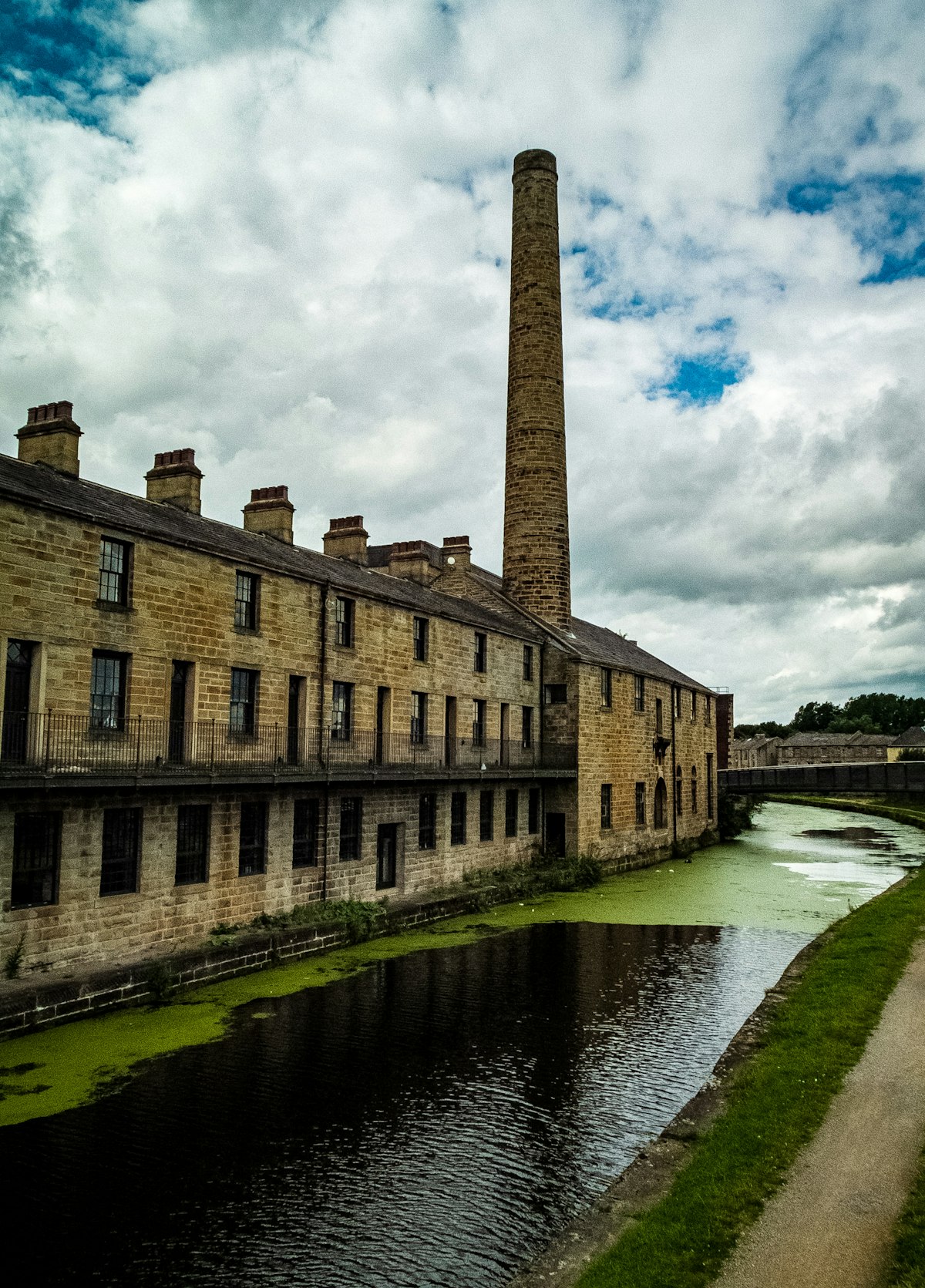
Two local specifics are worth keeping in mind. First, the borough contains substantial heritage interest, including the Weavers' Triangle conservation area near the Leeds and Liverpool Canal, where the SPD even flags the canal towpath as a sensitive context for sunlight and shading. Schemes here must reconcile daylight performance with conservation-led design. Second, the market town of Padiham, with its own conservation area and historic core, presents similar tight-grain layouts where careful daylight modelling pays dividends. In both areas, demonstrating BRE compliance helps separate the daylight question from the heritage and design questions and keeps each on its own footing.
How Fortress Associates can help
Fortress Associates prepares clear, council-ready our daylight and sunlight report service assessments to BRE BR 209 (2022), BS EN 17037 and the NPPF, interpreted through Burnley's adopted Local Plan and Residential Extensions SPD. We work UK-wide with a 4 to 5 working day turnaround and ask for no advance payment. We also produce Building Regulations drawings where a scheme is moving towards construction. To discuss a Burnley site, please get in touch or see how we can support your application.
Sources & further reading
Need help with a UK planning project?
Fixed-fee daylight reports and Building Regulations drawings — delivered in 4–5 working days. No advance payment.
Request a free quote