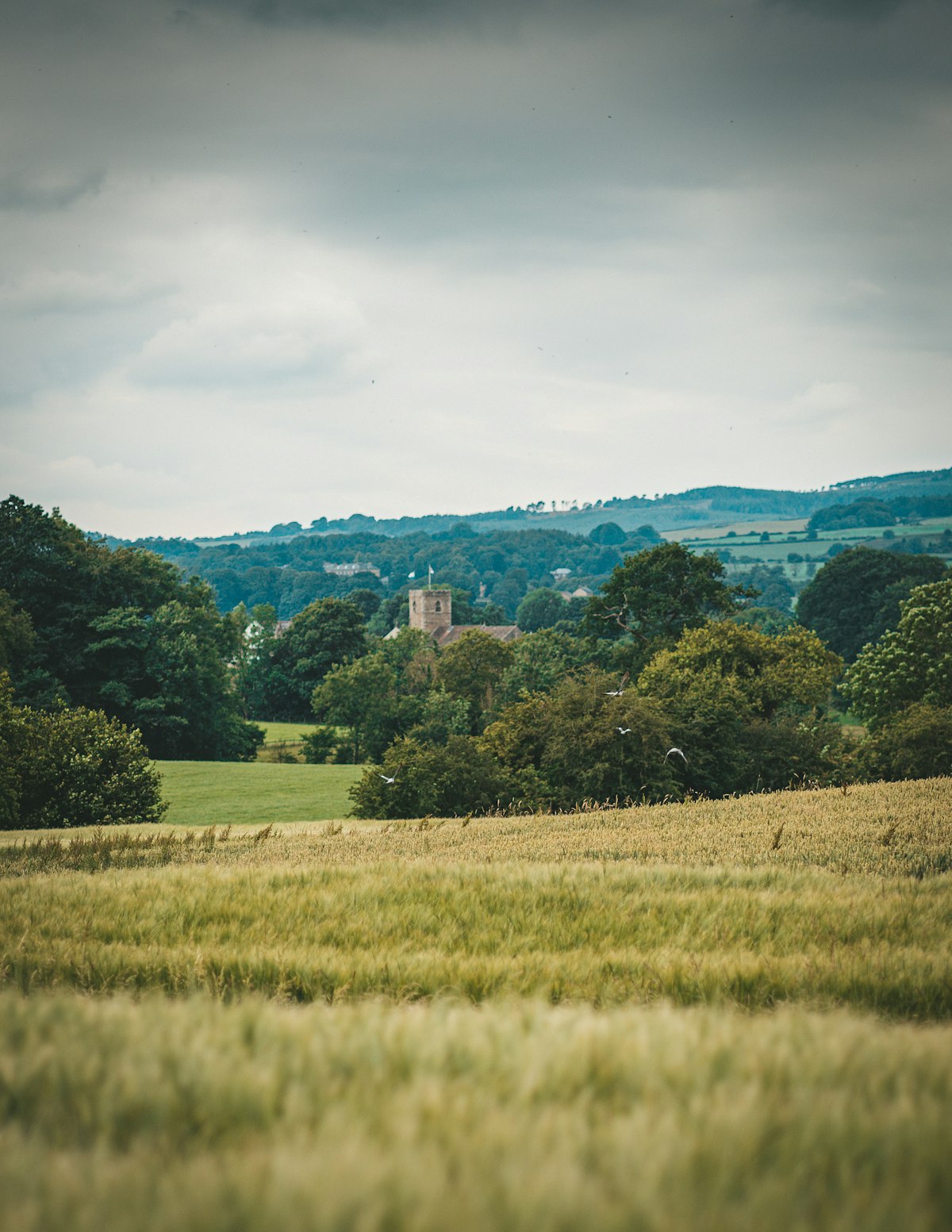
If you are designing a home extension or a new development in the Rossendale valley, getting to grips with the daylight requirements in Rossendale early will save time and reduce risk. Rossendale Borough Council is the local planning authority for the area (not Lancashire County Council), so applications in Rawtenstall, Bacup, Haslingden, Waterfoot and the surrounding Pennine settlements are decided against the borough's own adopted Local Plan, its supplementary guidance and the established BRE methodology. This article sets out the framework and how a professional daylight and sunlight report fits in.
The planning framework: daylight requirements in Rossendale
The principal document is the Rossendale Local Plan 2019 to 2036, which was adopted on 15 December 2021. It replaced the earlier Core Strategy and is now the development plan against which proposals are assessed, alongside the National Planning Policy Framework (NPPF). Several policies bear directly on amenity, design and the protection of daylight and sunlight:
- Strategic Policy ENV1 (High Quality Development in the Borough) is the overarching design policy. It requires development not to harm neighbouring development by being over-bearing or oppressive, by overlooking, or by resulting in an unacceptable loss of light, and it expects a high quality design and a good standard of amenity for existing and future occupants.
- Policy HS9 (House Extensions) permits extensions where, among other criteria, there is no unacceptable adverse effect on the amenity of neighbouring properties through overlooking, loss of privacy or reduction of daylight.
- Policy HS8 (Private Outdoor Amenity Space) requires new residential development to provide useable private amenity space with an adequate level of privacy, which in practice ties into how overshadowing and sunlight to gardens are considered.
Taken together, these policies set Rossendale's local amenity tests, while the BRE guidance supplies the numerical method used to demonstrate compliance.
Residential extensions guidance and the 45-degree rule
For householder and smaller schemes, Rossendale has long provided detailed advice through its Alterations and Extensions to Residential Properties SPD. The council consulted on a draft updated version of this SPD in 2025, and the guidance continues to apply the well-established design tools that local applicants will recognise.
The guidance places significant weight on separation distances, explaining that the distance between dwellings is an important consideration to maintain privacy while avoiding over-bearing relationships and undue loss of light and outlook. It also includes a specific allowance for changes in level, which matter greatly on Rossendale's steep valley sides: where there is a significant change in levels, or new accommodation at a higher storey gives a single-storey extension the same effect as a two-storey one, an extra 3 metres of separation is required for each 2.5 metres, or one storey, of height difference.
The guidance also applies the 45-degree rule (set out in an appendix), designed to ensure that proposals do not harm a neighbour's daylight and sunlight by avoiding unacceptable levels of overshadowing. It states that larger extensions, generally those projecting more than 3 metres, will not normally be permitted unless it can be demonstrated that the amount of daylight and sunlight enjoyed by neighbouring properties would not be significantly reduced when assessed against the 45-degree rule. A clear amenity criterion runs through the guidance: the amount of daylight and sunlight enjoyed by neighbouring properties should not be significantly reduced during daylight hours.
When a daylight and sunlight assessment is needed
Rossendale does not set out an entirely separate numeric daylight standard of its own; instead its policies and SPD apply the rule-of-thumb tests above, with the national BRE methodology used where a fuller technical assessment is warranted. In practice you should anticipate needing a daylight and sunlight report where:
- an extension projects beyond the limits that the 45-degree rule comfortably accommodates;
- the site sits on sloping ground with notable level differences between properties, common throughout the valley;
- a proposal introduces taller massing or additional storeys close to existing habitable windows; or
- overshadowing of a neighbour's garden or private amenity space is in question under Policy HS8.
Submitting a robust assessment up front gives the case officer the evidence to weigh the proposal against Policies ENV1 and HS9 rather than refusing for want of information.
How the BRE methodology applies in Rossendale
The recognised technical reference is BRE BR 209, Site Layout Planning for Daylight and Sunlight: A Guide to Good Practice (2022), used alongside BS EN 17037. A compliant report will typically test:
- Vertical Sky Component (VSC) at affected neighbouring windows, including the 27% benchmark and the 0.8-times-former-value test;
- No Sky Line / Daylight Distribution within rooms behind those windows;
- Annual Probable Sunlight Hours (APSH) for windows with a southerly aspect; and
- overshadowing of gardens and amenity spaces using the sun-on-ground test, which is particularly relevant to Policy HS8.
Rossendale's topography makes this analysis especially valuable. The borough is a classic Pennine river valley: settlements such as Rawtenstall and Bacup sit on steep slopes either side of the River Irwell, and the historic terraced and stone-built stock is often tightly packed and stepped down hillsides. The interaction between separation distances, level differences and orientation means a numerical BRE assessment frequently provides the clearest evidence of compliance. The valley also contains substantial heritage interest, including conservation areas in both Rawtenstall and Bacup, where daylight performance has to be reconciled with conservation-led design.
How Fortress Associates can help
Fortress Associates prepares clear, council-ready assessments through our daylight and sunlight report service, produced to BRE BR 209 (2022), BS EN 17037 and the NPPF and interpreted through the adopted Rossendale Local Plan and the council's residential extensions guidance. We work UK-wide with a 4 to 5 working day turnaround and ask for no advance payment. We can also prepare Building Regulations drawings for schemes heading to construction. To talk through a Rossendale site, please get in touch.
Sources & further reading
- Rossendale Borough Council – Rossendale Local Plan 2019 to 2036 (adopted 2021)
- Rossendale Borough Council – Supplementary Planning Documents
- BRE – BR 209 Site Layout Planning for Daylight and Sunlight (2022)
- GOV.UK – National Planning Policy Framework
- Related reading: Daylight Requirements in Burnley
Need help with a UK planning project?
Fixed-fee daylight reports and Building Regulations drawings — delivered in 4–5 working days. No advance payment.
Request a free quote