Anyone planning an extension, infill home or larger scheme in the district needs to get to grips with the daylight requirements in Canterbury early. Canterbury City Council is the local planning authority (LPA) for the district — not Kent County Council — and it assesses how new development affects the daylight and sunlight reaching neighbouring homes, gardens and habitable rooms. Get this wrong and an otherwise reasonable proposal can be refused on amenity grounds. This guide explains the policy framework that applies locally, the national technical guidance councils rely on, and how a professional daylight and sunlight assessment fits into a Canterbury planning application.
The local planning framework: daylight requirements in Canterbury
The adopted development plan for the district is the Canterbury District Local Plan, adopted in July 2017 and covering the period to 2031. At the time of writing it remains the adopted plan against which applications are determined, while a new district-wide Local Plan continues to progress through draft and examination stages. Until any successor plan is formally adopted, the 2017 plan and its policies carry full weight.
Two policies in particular govern amenity and the protection of daylight and sunlight:
- Policy DBE3 (Principles of Design) requires development to be of high quality and to be assessed against amenity, visual, landscape, accessibility and highways criteria. Protecting the living conditions of existing and future occupiers — including adequate light — is central to how the council judges design quality.
- Policy DBE6 (Alterations and Extensions) permits alterations and extensions that are compatible with the original building and that do not result in unacceptable loss of privacy, overlooking or overshadowing to neighbouring properties, and that are not detrimental to the amenity and character of the locality and streetscape. Overshadowing is named explicitly, which is why daylight and sunlight impacts are a recurring theme in Canterbury householder and residential decisions.
Because the Local Plan does not set out a numerical daylight or sunlight standard of its own, the council relies on established national technical guidance to give substance to the words “overshadowing” and “loss of amenity”. That is where the BRE guidance comes in.
What technical standards apply?
Canterbury does not have a dedicated daylight and sunlight Supplementary Planning Document. Instead, daylight and sunlight is assessed by reference to the recognised national framework, applied through the Local Plan and the National Planning Policy Framework (NPPF), which expects new development to secure a good standard of amenity for existing and future occupiers. In practice this means:
- BRE BR 209 — Site Layout Planning for Daylight and Sunlight: A Guide to Good Practice (2022 edition), the standard reference for assessing impacts on neighbours (VSC, daylight distribution and the APSH sunlight test) and for daylight within new homes. You can read about it on the BRE website.
- BS EN 17037 (Daylight in Buildings), the European standard now widely used to test daylight provision and sunlight within proposed dwellings.
Alongside these, the Kent Design Guide — referenced among Canterbury's adopted design guidance — promotes well-designed places where layout, orientation and spacing protect amenity. Several area-specific design guides also apply locally, including those for Herne Bay and individual parishes such as Chartham and Hackington.
Why daylight matters in the Canterbury district
Canterbury is an unusually sensitive environment for daylight and sunlight, for reasons specific to the district:
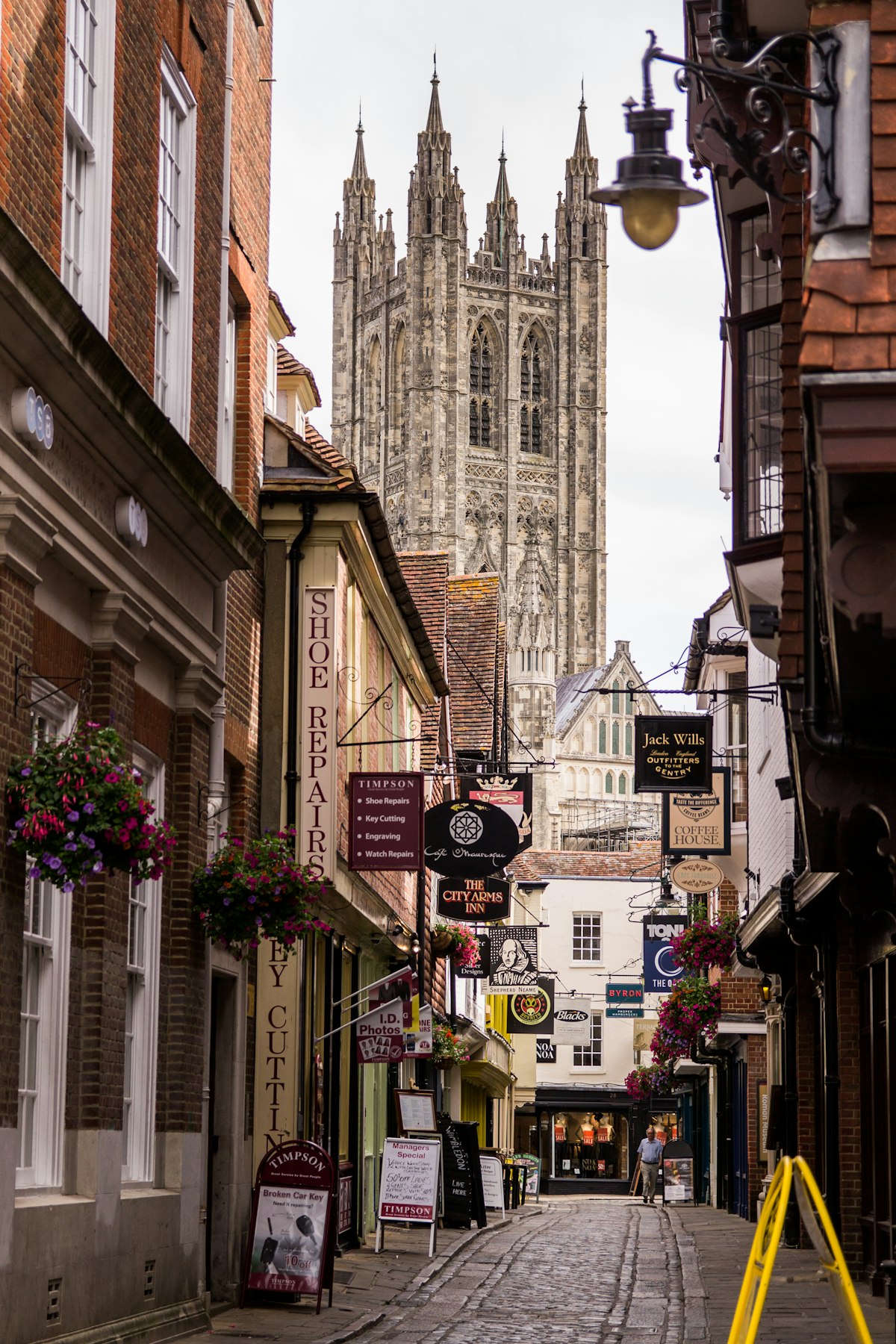
- Canterbury Cathedral and its World Heritage Site, together with the medieval city walls and a tightly grained historic core, mean many sites sit within or close to conservation areas. Tight plot sizes and close-set buildings make daylight and overshadowing impacts more acute and more closely scrutinised.
- Two universities — the University of Kent and Canterbury Christ Church University — drive sustained demand for student and shared housing, which often involves intensification, taller massing and back-land development where the effect on neighbouring daylight is a frequent point of objection.
- The wider district includes the coastal town of Herne Bay and rural parishes, each with their own character and design expectations, so the standard of amenity expected can vary from one part of the district to another.
For applicants, the practical consequence is that a clear, BRE-based daylight and sunlight report can be the difference between a smooth approval and a refusal — particularly for two-storey rear extensions, dormers, roof additions and any scheme that raises ridge heights close to a boundary.
Common situations that trigger a daylight assessment
- Rear or side extensions close to a shared boundary, where the “45-degree” and “25-degree” daylight checks may be applied to neighbouring windows.
- New infill dwellings on garden land or back-land plots, common across Canterbury's suburban streets.
- Conversions and intensification near the universities, where additional bulk can reduce light to adjoining homes.
- Flatted or higher-density schemes where both the impact on neighbours and the internal daylight of the new homes must be demonstrated.
How a daylight and sunlight report supports your application
A professional report does two things. First, it tests the impact on neighbouring properties using the BRE BR 209 methods — Vertical Sky Component, the daylight distribution (no-sky line) test, and the Annual Probable Sunlight Hours test for sunlight. Second, where new dwellings are proposed, it checks the internal daylight and sunlight of those new homes against BS EN 17037 and BR 209 targets. The findings are set against the relevant Local Plan policies (DBE3 and DBE6) so that the council's case officer can see, clearly and objectively, whether the proposal protects amenity.
Submitting this evidence up front — rather than waiting for an objection — tends to reduce delay, focus negotiation and give a stronger basis for approval. It is also the document most likely to be requested if a neighbour raises overshadowing or loss of light.
How Fortress Associates can help
Fortress Associates provides our daylight and sunlight report service to homeowners, architects and developers across Canterbury and the wider district. We prepare clear, robust assessments to BRE BR 209 (2022) and BS EN 17037, written to address Policies DBE3 and DBE6 directly. We work UK-wide with a 4–5 working day turnaround and no advance payment. We also produce Building Regulations drawings where a scheme needs them. To discuss your project, get in touch with our team.
Sources & further reading
Need help with a UK planning project?
Fixed-fee daylight reports and Building Regulations drawings — delivered in 4–5 working days. No advance payment.
Request a free quote