If you are designing an extension, a new home or a larger residential scheme in the district, it pays to understand the daylight requirements in Dover before you submit. Dover District Council is the local planning authority (LPA) for the area — covering Dover, Deal, Sandwich and the surrounding villages — not Kent County Council. The council assesses how new development affects the daylight and sunlight reaching neighbouring homes and amenity spaces, and this is now governed by a recently adopted plan with detailed design policies. This guide sets out the local framework, the national technical standards that apply, and how a professional daylight and sunlight assessment fits into a Dover application.
The local planning framework: daylight requirements in Dover
The adopted development plan is the Dover District Local Plan to 2040, formally adopted on 16 October 2024. This is an up-to-date, recently examined plan, so its policies carry full weight in decision-making. Several of its policies bear directly on daylight, sunlight and residential amenity:
- Policy PM1 (Achieving High Quality Design, Place Making and the provision of Design Codes) sets the design framework. It requires development to understand its context, to be well designed in terms of scale and massing, and to be compatible with neighbouring buildings and spaces. For major or sensitive proposals, the council can require a design code and may refer schemes to a Design Review Panel.
- Policy PM2 (Quality of Residential Accommodation) is the key amenity test. It requires development to be compatible with neighbouring buildings and uses and “not lead to unacceptable living conditions through overlooking, noise or vibration, odour, light pollution, overshadowing, loss of natural light or sense of enclosure.” The explicit mention of overshadowing and loss of natural light is precisely what a daylight and sunlight assessment addresses.
- Policy H6 (Residential Extensions and Annexes) applies the same amenity test to householder works, requiring extensions and annexes to avoid unacceptable overshadowing or loss of natural light to neighbours, and to comply with the relevant parts of PM1.
The plan's wording sets the expectation in qualitative terms; the technical detail of how “overshadowing” and “loss of natural light” are measured comes from established national guidance.
What technical standards apply?
Dover District Council does not operate a dedicated daylight and sunlight Supplementary Planning Document with its own numerical targets. Instead, the assessment of daylight and sunlight follows the recognised national framework, applied through the Local Plan and the National Planning Policy Framework (NPPF), which requires a good standard of amenity for existing and future occupiers. In practice that means:
- BRE BR 209 — Site Layout Planning for Daylight and Sunlight: A Guide to Good Practice (2022 edition), the standard method for testing impacts on neighbours (Vertical Sky Component, daylight distribution and the Annual Probable Sunlight Hours sunlight test) and daylight within new homes. The guide is published on the BRE website.
- BS EN 17037 (Daylight in Buildings), used to assess daylight and sunlight provision within proposed dwellings.
The Kent Design Guide also informs design quality across the county, supporting layouts and spacing that protect amenity.
Why daylight matters in the Dover district
Dover is a distinctive coastal district where daylight and sunlight considerations carry particular weight:
- The district takes in three contrasting towns — Dover with its working port and seafront, the elegant Georgian and Victorian streets of Deal, and the historic Cinque Port town of Sandwich with its tightly packed medieval core. Close-set, historic townscapes make overshadowing and loss of light to neighbours a frequent and closely examined issue.
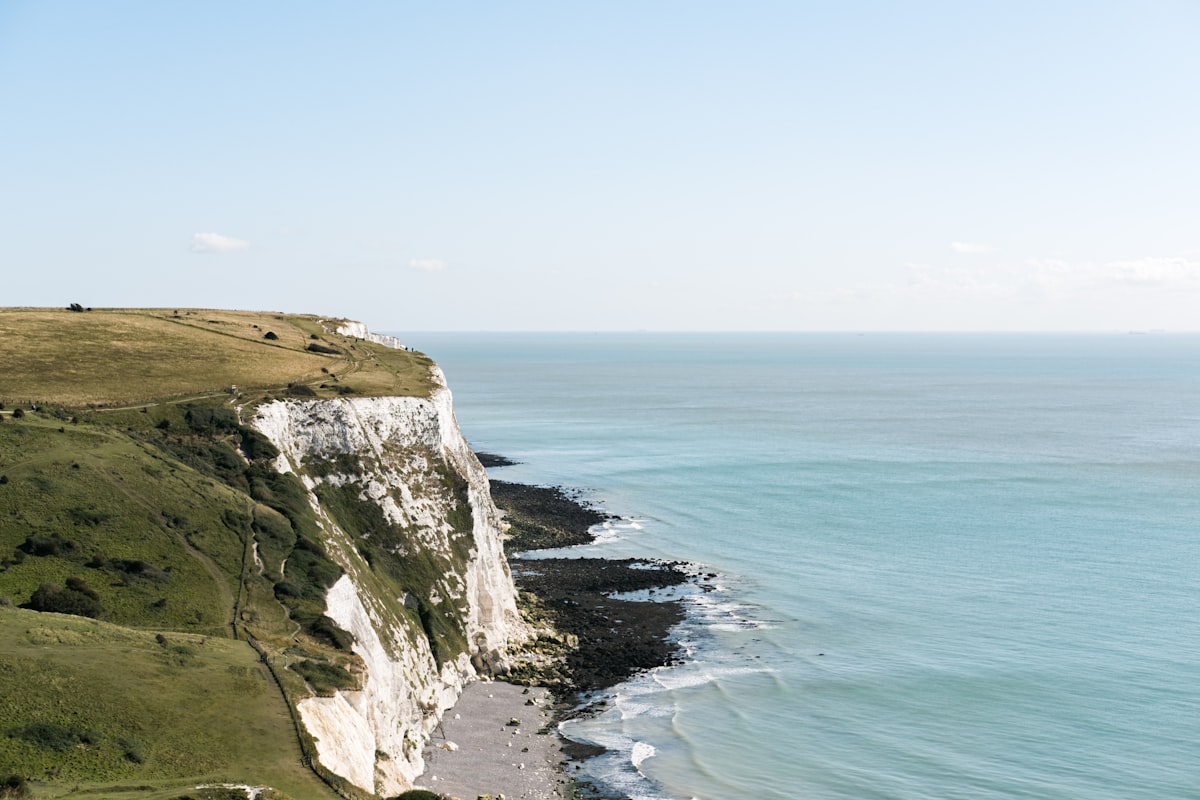
- The iconic White Cliffs and the proximity of the Kent Downs National Landscape (AONB) mean landscape and setting are sensitive, and the council pays close attention to massing and design — factors that also influence daylight impacts.
- The council's willingness to use design codes and a Design Review Panel for major proposals (under Policy PM1) means design and amenity issues, including daylight, are scrutinised early and rigorously.
For applicants, this makes a clear, BRE-based daylight and sunlight report a valuable part of the submission — especially for two-storey rear extensions, schemes close to a shared boundary, and infill or higher-density housing within the towns.
Common situations that trigger a daylight assessment
- Rear or side extensions near a boundary, where neighbouring windows may be tested against the BRE daylight checks.
- Annexes and outbuildings under Policy H6 that could overshadow an adjoining garden or window.
- Infill and back-land dwellings on tight urban plots in Dover, Deal or Sandwich.
- Flatted or higher-density schemes, where both the impact on neighbours and the internal daylight of new homes must be demonstrated.
How a daylight and sunlight report supports your application
A professional assessment tackles two questions. First, the impact on neighbouring properties — using the BRE BR 209 methods of Vertical Sky Component, the daylight distribution (no-sky line) test, and Annual Probable Sunlight Hours for sunlight. Second, where new homes are proposed, the internal daylight and sunlight of those homes against BS EN 17037 and BR 209 targets. The findings are presented against Policies PM1, PM2 and H6 so the case officer can judge, objectively, whether the proposal protects amenity. Submitting this evidence early helps avoid delay, supports negotiation, and is the document most likely to be requested if a neighbour raises overshadowing or loss of light.
How Fortress Associates can help
Fortress Associates provides our daylight and sunlight report service to homeowners, architects and developers across Dover, Deal, Sandwich and the wider district. Our assessments are prepared to BRE BR 209 (2022) and BS EN 17037 and written to address Policies PM1, PM2 and H6 directly. We work UK-wide with a 4–5 working day turnaround and no advance payment, and we also produce Building Regulations drawings when a project needs them. To discuss your scheme, get in touch with our team.
Sources & further reading
Need help with a UK planning project?
Fixed-fee daylight reports and Building Regulations drawings — delivered in 4–5 working days. No advance payment.
Request a free quote