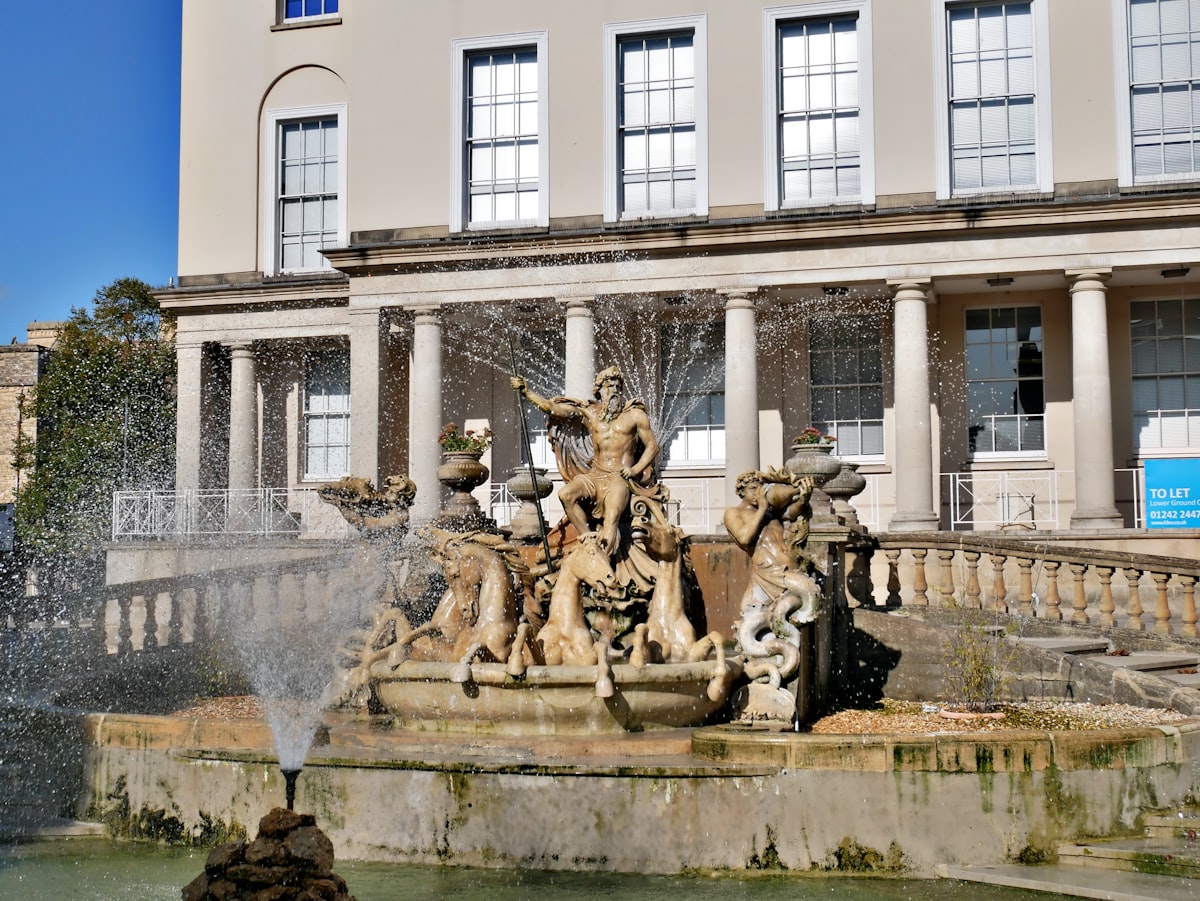
The daylight requirements in Cheltenham sit within a planning context shaped by one of the finest Regency townscapes in England. Cheltenham Borough Council is the local planning authority (LPA) for the town, and it assesses daylight, sunlight and amenity through its adopted development plan and a dedicated householder design guide. Gloucestershire County Council is not the planning authority for these decisions. This guide explains the policies and guidance that apply, and how a BRE-based assessment supports a smooth application.
Who decides daylight matters in Cheltenham
Cheltenham is a shire district within Gloucestershire, and Cheltenham Borough Council determines householder, residential and most other planning applications within the borough. Like its neighbours, Cheltenham has a two-part development plan.
The borough shares a strategic plan, the Gloucester, Cheltenham and Tewkesbury Joint Core Strategy (JCS), with two adjoining authorities; the JCS was adopted in December 2017 and provides the strategic policy framework across all three areas. Sitting beneath it is the borough's own local plan, the Cheltenham Plan, adopted on 20 July 2020, which contains the detailed development management policies. Saved policies from the earlier Cheltenham Borough Local Plan also remain in limited use. Daylight and amenity decisions are taken under these documents together.
The Local Plan policies that govern daylight and amenity
Daylight and sunlight in Cheltenham are assessed within the broader tests on residential amenity and design quality. The two most directly relevant adopted policies are:
- Cheltenham Plan Policy SL1 (Safe and Sustainable Living) — the borough's principal amenity policy, used to assess the impact of development on the living conditions of existing and future occupiers, including light, outlook, overlooking and overbearing impacts.
- Cheltenham Plan Policy D1 (Design) — requires development to be of high design quality that responds to its context and respects neighbouring amenity.
- JCS Policy SD4 (Design Requirements) and JCS Policy SD14 (Health and Environmental Quality) — the strategic design and environmental quality policies that underpin the local plan tests.
Loss of daylight to neighbouring windows, and overshadowing of gardens and amenity space, are weighed under Policy SL1's living-conditions test. Because that test calls for a judgement about whether harm is "unacceptable", a measurable BRE assessment is often the most persuasive evidence an applicant can provide.
Cheltenham's daylight guidance: the Residential Alterations and Extensions SPD
Cheltenham is better served than many authorities here, because it has a dedicated, adopted Residential Alterations and Extensions Supplementary Planning Document — a design guide for householders that the council still applies to extension proposals.
The SPD addresses daylight and sunlight head-on. It advises that an extension should not deprive neighbours of daylight, sets out the well-known 45-degree rule of thumb for assessing loss of daylight to adjacent windows, and explains the cross-hatched area method: where the centre point of a habitable-room window falls within the 45-degree splay, it is likely to suffer significant loss of daylight. The guidance expressly directs readers to the relevant Building Research Establishment (BRE) guidance on site layout and planning for daylight for fuller assessment.
The BRE methodology referenced in the SPD has since been updated; the current edition is BRE BR 209 (2022), which together with the daylight standard BS EN 17037 and the amenity expectations of the National Planning Policy Framework (NPPF) forms the modern technical basis applied through the Cheltenham Plan. For larger or more sensitive schemes — particularly flats, conversions and infill — the council will expect a daylight and sunlight assessment to this current standard rather than the rule-of-thumb splay alone.
Local specifics worth knowing in Cheltenham
Two characteristics of the town make daylight cases here distinctive:
- Regency terraces and the spa-town townscape. Cheltenham is renowned for its early-nineteenth-century Regency architecture — long stucco terraces, tall sash windows, crescents and villas set around squares and gardens. These tall, closely spaced facades with large windows are inherently sensitive to loss of light, and the proportions of the original buildings strongly influence what an acceptable extension or neighbouring development looks like.
- Extensive conservation areas. Much of central Cheltenham lies within designated conservation areas, where the design and scale of alterations are tightly controlled. Schemes must reconcile the need to protect daylight and amenity with the duty to preserve or enhance the character and appearance of these historic areas — a balance the Residential Alterations and Extensions SPD is specifically written to help navigate.
Given this combination of tall historic buildings and protected settings, a clear, BRE-compliant daylight and sunlight assessment is often the most effective way to demonstrate that a proposal respects neighbouring amenity.
How Fortress Associates can help
Fortress Associates provides a focused our daylight and sunlight report service for projects in Cheltenham and across the country. We prepare assessments to BRE BR 209 (2022) and BS EN 17037, written to support your application under the JCS and the Cheltenham Plan and to sit comfortably alongside the council's householder SPD. We work UK-wide with a 4–5 working day turnaround and ask for no advance payment. We also produce Building Regulations drawings where a scheme needs them. To discuss your site, get in touch. If your project is nearby, you may also find our guide to daylight requirements in Tewkesbury helpful, as both areas share the same Joint Core Strategy.
Sources & further reading
Need help with a UK planning project?
Fixed-fee daylight reports and Building Regulations drawings — delivered in 4–5 working days. No advance payment.
Request a free quote