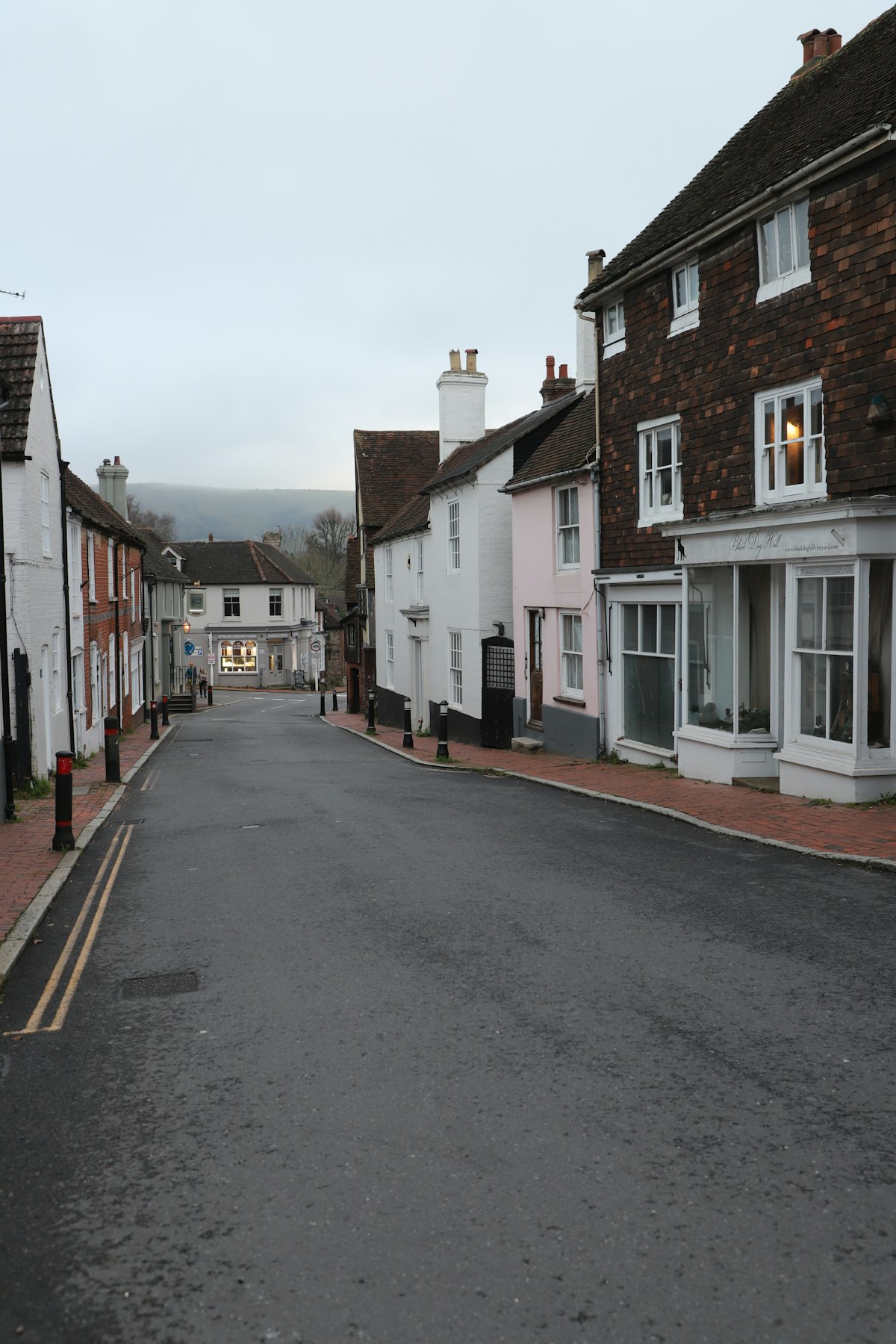
For anyone planning a house extension, an infill plot or a larger residential or mixed-use scheme in the town, understanding the daylight requirements in Chesterfield is a sensible first step. The local planning authority is Chesterfield Borough Council — not Derbyshire County Council — and it is the borough that determines how the daylight, sunlight and amenity impacts of development are assessed, whether the site is near the famous Crooked Spire in the town centre or in one of the surrounding neighbourhoods. This guide explains the council’s policy position and how a technical daylight and sunlight report supports a planning application.
The planning policy framework in Chesterfield
The relevant development plan is the Chesterfield Borough Local Plan 2018-2035, which the council formally adopted on 15 July 2020. Chesterfield is an important sub-regional centre for northern Derbyshire and parts of South Yorkshire, and the plan supports significant town-centre and brownfield regeneration, including major sites such as the Staveley Town Deal area. That regeneration emphasis means schemes are often proposed on constrained or previously developed land, where the relationship to neighbouring properties — and therefore daylight and sunlight — is a live planning issue.
Two policies are central to daylight and sunlight. The first is Policy CLP14 (A Healthy Environment), which is unusually explicit on the point. It requires that:
“All developments will be required to have an acceptable impact on the amenity of users and adjoining occupiers, taking into account noise and disturbance, dust, odour, air quality, traffic, outlook, overlooking, shading (daylight and sunlight) and glare and other environmental impacts.”
The second is Policy CLP20 (Design), which requires all development to respond positively to the character of the site and surroundings and to respect their context “by virtue of its function, appearance and architectural style, landscaping, scale, massing, detailing, height and materials”. Together, these policies establish that loss of light, overshadowing and overbearing impacts are material considerations in Chesterfield.
Daylight and sunlight guidance: the Chesterfield position
While Policy CLP14 expressly references daylight and sunlight, the Local Plan does not set out numerical thresholds for VSC, daylight distribution or sunlight hours. The council determines the acceptable degree of impact on a case-by-case basis, drawing on the recognised national technical methodology and on design guidance. Chesterfield is also a partner in shared design and town-and-country-planning guidance prepared with neighbouring north Derbyshire authorities, which supports applicants in preparing well-considered residential proposals. None of this guidance replaces a quantified light assessment where a neighbour relationship is in question.
In practice, where a proposal is close to a boundary, sits behind or alongside neighbouring habitable-room windows, or has attracted a loss-of-light objection, the council will expect the impact to be demonstrated objectively. That is the role of a BRE-based daylight and sunlight report.
How BRE BR 209 and BS EN 17037 apply
The established technical benchmarks apply through Policies CLP14 and CLP20 and through national policy:
- BRE BR 209 – Site Layout Planning for Daylight and Sunlight: A Guide to Good Practice (2022 edition), which sets out the Vertical Sky Component (VSC), No Sky Line / daylight distribution and Annual Probable Sunlight Hours (APSH) tests for assessing impact on neighbours, plus the overshadowing test for gardens and amenity spaces;
- BS EN 17037 (Daylight in Buildings), which informs the daylight provision designed into the proposed dwellings themselves;
- The National Planning Policy Framework (NPPF), which requires a good standard of amenity for existing and future occupiers while making efficient use of land — a balance that is especially relevant on the higher-density town-centre sites Chesterfield is seeking to bring forward.
A BR 209 report turns the “acceptable impact” test in Policy CLP14 into measurable figures, showing that a scheme complies or that any shortfall is modest and justified in its urban context.
When is a daylight and sunlight report needed in Chesterfield?
An assessment is most useful where a two-storey extension or new dwelling sits close to a neighbour’s habitable-room windows or private garden; where a town-centre or brownfield scheme proposes higher densities near existing homes; where a development could overshadow an adjoining garden or amenity area; or where an objection raises overlooking, shading or an overbearing relationship. Submitting a BRE-based report with the application can speed determination and reduce the risk of refusal under Policies CLP14 and CLP20.
How Fortress Associates can help
Fortress Associates prepares our daylight and sunlight report service to the BRE BR 209 (2022) methodology and BS EN 17037, aligned to Chesterfield’s adopted Local Plan. We work UK-wide with a 4–5 working day turnaround and no advance payment. We also prepare Building Regulations drawings to Approved Documents A–S. For a site in Chesterfield town centre, Staveley or anywhere in the borough, get in touch and we will advise whether an assessment is required.
Sources & further reading
- Chesterfield Borough Council – Development Plan (Adopted Local Plan 2018-2035)
- Chesterfield Borough Local Plan 2018-2035 (adopted July 2020) – full document
- BRE – BR 209: Site Layout Planning for Daylight and Sunlight (2022)
- GOV.UK – National Planning Policy Framework
- See also our guide to daylight requirements in North East Derbyshire and daylight requirements in Amber Valley.
Need help with a UK planning project?
Fixed-fee daylight reports and Building Regulations drawings — delivered in 4–5 working days. No advance payment.
Request a free quote