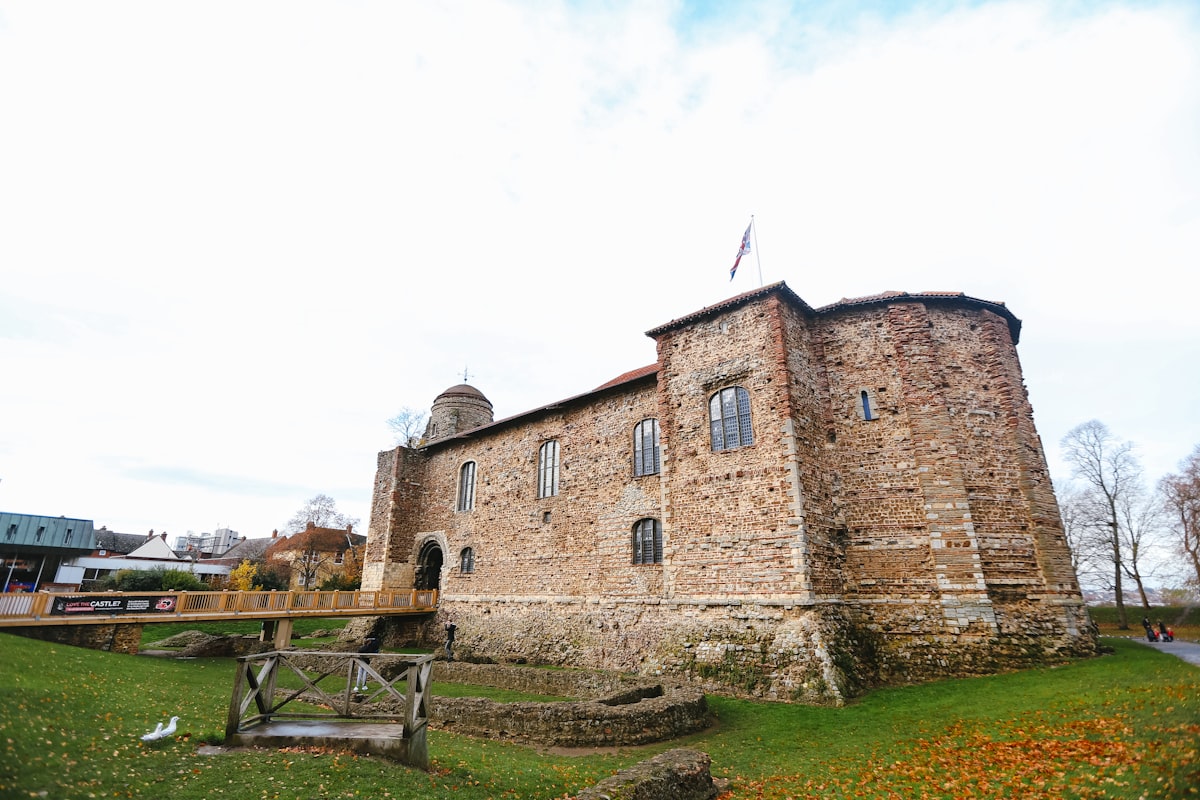
If you are planning an extension, a backland plot or a larger residential scheme in Colchester, understanding the daylight requirements in Colchester early can save weeks of delay. Colchester City Council is the local planning authority for England's oldest recorded town, which gained city status in 2022, and it assesses the effect of development on light and amenity against its adopted Local Plan supported by national technical standards. This guide explains which policies and documents apply, and how a daylight and sunlight assessment supports a Colchester planning application.
The development plan for Colchester
Colchester sits within the North Essex group of authorities alongside Braintree and Tendring, so the adopted development plan has two parts. The first is the North Essex Authorities' Shared Strategic (Section 1) Plan, adopted in February 2021, which sets the strategic framework across all three districts. The second is the Colchester City Local Plan 2017–2033 (Section 2), formally adopted on 4 July 2022, which contains the local development management policies used to decide applications.
These documents are the statutory starting point for decisions. Colchester's compact, historic urban grain — including its Roman walls and conservation areas — means that the relationship between buildings, and the light reaching neighbours, is examined closely on many sites in and around the city centre.
Key Colchester policies on daylight, sunlight and amenity
Two Section 2 policies do most of the work on light and amenity:
- Policy DM15 – Design and Amenity: requires development to protect and promote public and residential amenity, expressly listing privacy, overlooking, security, noise and disturbance, pollution, and daylight and sunlight among the matters to be safeguarded.
- Policy DM12 – Housing Standards: sets standards for new homes and domestic development, requiring buildings and extensions to be designed to minimise the overshadowing of neighbouring properties, to provide acceptable levels of daylight to all habitable rooms, to avoid single-aspect north-facing homes, and to maintain acceptable privacy for rear-facing habitable rooms and sitting-out areas.
Read together, DM15 and DM12 are the clearest hook for daylight and sunlight matters in Colchester. A technical assessment is what turns their qualitative language — overshadowing, acceptable daylight, single-aspect homes — into figures an officer can weigh.
Daylight requirements in Colchester: the guidance that applies
Colchester does not publish a standalone numerical daylight and sunlight supplementary planning document with its own thresholds. Instead, the policies above are applied using nationally recognised technical guidance. The recognised benchmark is the Building Research Establishment guide, BRE BR 209 (2022), "Site layout planning for daylight and sunlight: a guide to good practice". It is read alongside the British Standard BS EN 17037 on daylight in buildings and the National Planning Policy Framework (NPPF), which requires a good standard of amenity for existing and future occupiers. Because the Local Plan does not set its own daylight figures, these standards are applied through Policies DM12 and DM15 rather than as a separate local target.
On the procedural side, the council operates a Scheme of Local Validation (SoLV) 2024, which sets out the National and Local information requirements for each application type. While daylight and sunlight reports are not demanded for every application, the council's adopted guidance and the SoLV mean a report should be provided where loss of light or overshadowing is a likely issue.
What a BRE BR 209 assessment measures
Depending on the situation, a BRE-based assessment will consider:
- Vertical Sky Component (VSC) – skylight reaching a neighbour's window, with 27% as the benchmark for good daylight.
- Daylight Distribution / No Sky Line – how far daylight reaches into a room.
- Annual Probable Sunlight Hours (APSH) – sunlight to windows, particularly those facing within 90 degrees of due south.
- Overshadowing of gardens and amenity spaces – the 21 March sun-on-ground test.
When a daylight and sunlight assessment is needed in Colchester
In practice, an assessment is most valuable where:
- a two-storey or rear extension is close to a shared boundary in a dense terrace, common across central Colchester;
- a backland or infill plot introduces a new dwelling between existing homes;
- a flatted scheme must demonstrate adequate internal daylight under DM12, including the avoidance of single-aspect north-facing units; or
- development sits within or adjacent to a conservation area where massing is sensitive.
Submitting a clear BRE BR 209 (2022) assessment up front demonstrates compliance with DM12 and DM15 and can head off overshadowing objections before they delay a decision.
How Fortress Associates can help
Fortress Associates provides our daylight and sunlight report service to BRE BR 209 (2022), BS EN 17037 and the relevant Local Plan policies, so your Colchester submission addresses DM12 and DM15 directly. We work UK-wide with a typical turnaround of four to five working days, and we ask for no advance payment. We also prepare Building Regulations drawings where a project is heading to construction. To discuss a specific Colchester site, please get in touch. Our companion guide on daylight requirements in Braintree covers the neighbouring North Essex authority.
Sources & further reading
Need help with a UK planning project?
Fixed-fee daylight reports and Building Regulations drawings — delivered in 4–5 working days. No advance payment.
Request a free quote