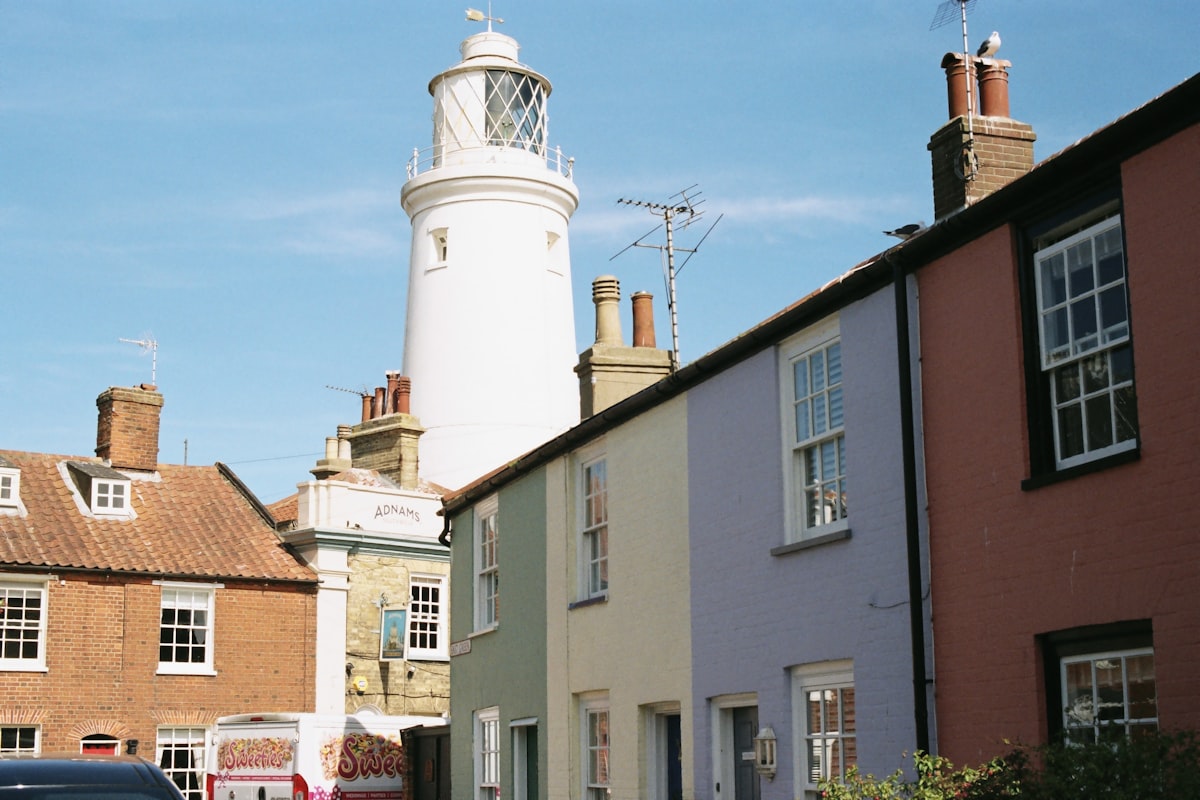
The daylight requirements in East Suffolk are shaped by an unusual feature of the district's planning system: it is governed by not one but two adopted local plans. Whether you are extending a home in Woodbridge, building near Felixstowe's port, or developing in Lowestoft — the most easterly town in the United Kingdom — the policy that applies depends on which part of the district your site sits in. This guide explains how that works and what daylight and sunlight standards you can expect.
The planning framework for daylight requirements in East Suffolk
The local planning authority is East Suffolk Council, a shire district authority created on 1 April 2019 by merging the former Suffolk Coastal and Waveney district councils. Although East Suffolk lies within the county of Suffolk, the county council is not the local planning authority for most development management decisions, so it is East Suffolk's adopted policies that govern daylight, sunlight and amenity.
Why East Suffolk has two local plans
When the two former councils merged, their separate development plans were not immediately replaced by a single new plan. As a result, East Suffolk currently determines applications using two adopted local plans, each covering a different part of the district:
- The Suffolk Coastal Local Plan, adopted on 23 September 2020, applies to the former Suffolk Coastal area — covering Felixstowe, Woodbridge, the coast around Aldeburgh and the Sizewell area.
- The Waveney Local Plan, adopted on 20 March 2019, applies to the former Waveney area — covering Lowestoft, Beccles, Bungay, Halesworth and Southwold.
The first step in any East Suffolk assessment is therefore to establish which plan applies to the site, because the relevant policy references differ between the two areas.
Amenity and design policies in each plan
In the Suffolk Coastal Local Plan (2020), the key policies are Policy SCLP11.1 (Design Quality) and Policy SCLP11.2 (Residential Amenity). Policy SCLP11.2 requires development to provide adequate living conditions for future occupants and to avoid causing an unacceptable loss of amenity for existing or future occupants of development in the vicinity — the test under which loss of light, overshadowing and overlooking are weighed.
In the Waveney Local Plan (2019), design and amenity are addressed principally through Policy WLP8.29 (Design), under which all development is expected to have regard to the amenity of neighbouring occupiers and future occupiers. Major residential schemes of ten or more homes are also assessed against the Building for Life 12 guidelines.
Is there a dedicated daylight SPD?
East Suffolk does not operate a single, district-wide daylight and sunlight Supplementary Planning Document setting bespoke numerical light targets. Where loss of light or overshadowing is a material consideration, the established national methodology — BRE BR 209 (2022), BS EN 17037 and the National Planning Policy Framework (NPPF) — is applied through the relevant amenity policy (SCLP11.2 or WLP8.29). Applicants should also consult the council's Local Validation List for the supporting information expected with an application.
How daylight and sunlight are technically assessed
The recognised reference for these assessments is BRE BR 209, Site Layout Planning for Daylight and Sunlight: A Guide to Good Practice (2022 edition). A typical report examines:
- Vertical Sky Component (VSC) — skylight reaching neighbouring windows, using the 27% benchmark and the 0.8-times rule.
- No Sky Line / Daylight Distribution — how daylight is distributed across affected rooms.
- Annual Probable Sunlight Hours (APSH) — sunlight to windows facing within 90 degrees of due south.
- Overshadowing of gardens and amenity areas — the BRE 21 March sun-on-ground test.
For the daylight and sunlight achieved within new dwellings, BS EN 17037 (Daylight in Buildings) provides target illuminance criteria. The NPPF asks decision-makers to secure a good standard of amenity while avoiding an unjustifiably rigid application of daylight and sunlight guidelines, especially where this would inhibit the efficient use of suitable sites.
Why East Suffolk sites need careful assessment
Several local characteristics make daylight a frequent point of negotiation here:
- The town centres of Lowestoft and Felixstowe contain dense, close-set housing where extensions and infill can readily affect a neighbour's light or privacy.
- Historic and tourist towns such as Southwold, Woodbridge and Aldeburgh combine tight plots with conservation-area sensitivity, so massing must satisfy both heritage and amenity considerations.
- Larger coastal and regeneration schemes — from Lowestoft's seafront to development associated with the Sizewell area — raise mutual daylight and overshadowing issues between buildings.
How Fortress Associates can help
Fortress Associates prepares clear, robust daylight and sunlight assessments for sites across East Suffolk and the rest of the UK. Our our daylight and sunlight report service delivers reports to BRE BR 209 (2022) and BS EN 17037, written to suit whichever plan applies to your site — the Suffolk Coastal Local Plan or the Waveney Local Plan. We work nationwide with a 4–5 working day turnaround and no advance payment required, and we can also prepare Building Regulations drawings for your project. To discuss your scheme, please get in touch, or see our related guide on daylight requirements in Babergh.
Sources & further reading
Need help with a UK planning project?
Fixed-fee daylight reports and Building Regulations drawings — delivered in 4–5 working days. No advance payment.
Request a free quote