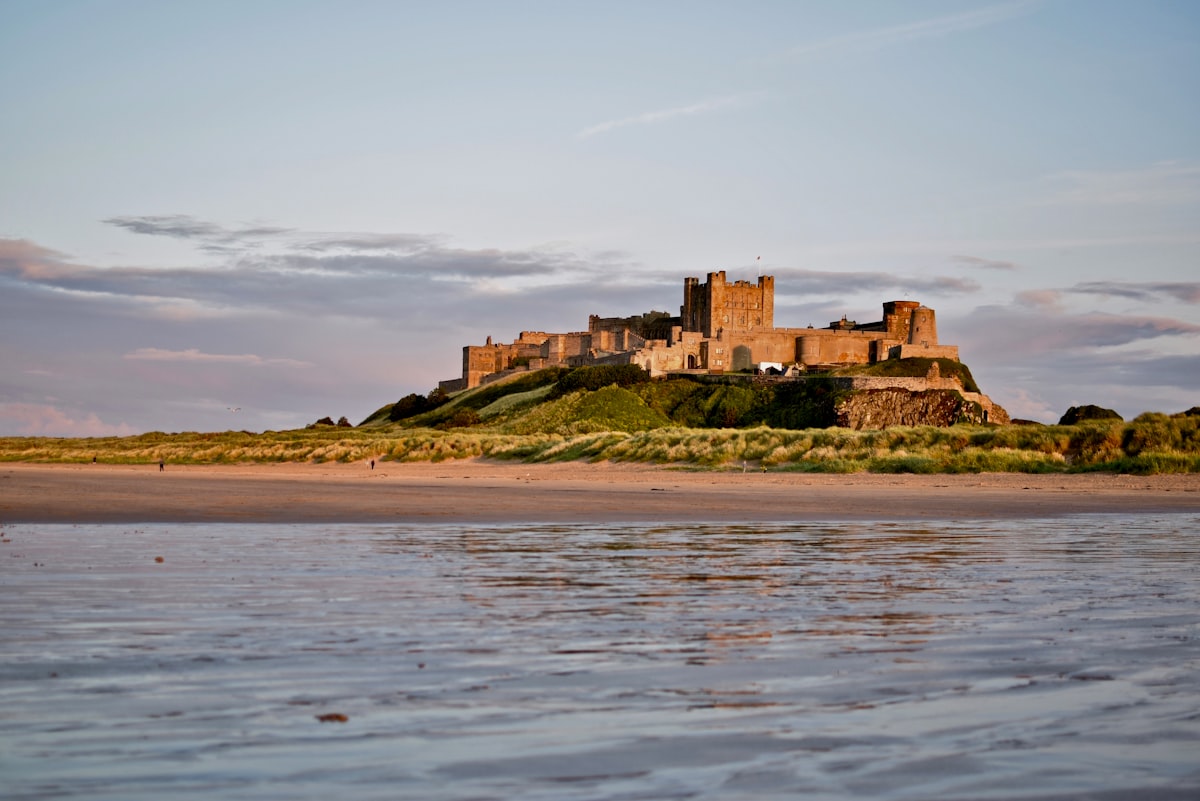
Understanding the daylight requirements in Northumberland is essential for anyone planning a house extension, infill plot or larger residential development in England's most northerly county. Whether your site sits in the market town of Hexham, on the Alnwick fringe, in the former coalfield communities around Ashington and Blyth, or within sight of the Northumberland coast, the council expects new development to protect the daylight, sunlight and amenity of neighbouring homes. This guide explains how those expectations are framed locally and how a robust assessment helps your application progress smoothly.
The planning framework for daylight in Northumberland
Northumberland County Council is a unitary authority, which means it is the single local planning authority (LPA) for the whole county outside the separately administered Northumberland National Park. The development plan that governs most planning decisions is the Northumberland Local Plan 2016–2036, which was adopted on 31 March 2022 following examination by an independent Planning Inspector. An early review in 2025 confirmed the plan remained up to date and effective, so its policies carry full weight in decision-making.
Two policies are particularly relevant when daylight and sunlight are in question:
- Policy QOP1 (Good Design) – sets out the design principles that should underpin all new development, requiring schemes to contribute positively to the people, places and natural environment of Northumberland.
- Policy QOP2 (Good Amenity) – requires development to provide a high standard of amenity for existing and future occupiers, and to preserve the amenity of those living, working in or visiting the local area. The policy specifically addresses privacy, outlook and light conditions within habitable areas, and resists development that would have an overbearing or visually obtrusive impact on neighbouring uses.
In practice, an application that would cause an unacceptable loss of daylight or sunlight to a neighbour, or that would feel oppressive and overbearing from their windows or garden, runs directly against Policy QOP2. Demonstrating compliance with a credible technical assessment is therefore the most reliable way to support your proposal.
Is there a daylight-specific design guide in Northumberland?
Northumberland does not currently have a single, county-wide adopted Supplementary Planning Document (SPD) dedicated to daylight and sunlight. When the 2022 Local Plan was adopted, previously adopted SPDs from the former district councils were retained as Supplementary Planning Guidance rather than statutory documents. Among these legacy materials is the Wansbeck Residential Extension Design guidance, which still offers useful design principles for extensions in the south-east of the county.
The council has also given notice of its intention to prepare a Northumberland Housing Design Standards Supplementary Plan, which is expected to consolidate design and amenity guidance in the future. Until that document is in force, the assessment of daylight and sunlight is driven by the Local Plan policies above, applied alongside nationally recognised technical standards.
How daylight and sunlight are actually assessed
Because there is no bespoke local numerical standard, Northumberland planning officers rely on the established national methodology. The key reference is the Building Research Establishment guide BRE BR 209 – Site Layout Planning for Daylight and Sunlight: A Guide to Good Practice (third edition, 2022). This is the document that defines the recognised tests, including:
- Vertical Sky Component (VSC) – the proportion of sky visible at a neighbour's window, with a guideline value of around 27%, or no worse than 0.8 times the former value where there is a reduction;
- No-Sky Line / Daylight Distribution – how much of a room still receives direct sky light;
- Annual Probable Sunlight Hours (APSH) – the sunlight reaching windows that face within 90 degrees of due south, relevant for a coastal and rural county where outlook and sun are highly valued.
Internal daylight provision for new homes is increasingly judged against BS EN 17037 (Daylight in Buildings), which sets target illuminance levels for habitable rooms. The National Planning Policy Framework (NPPF) supports this approach, asking authorities to secure a high standard of amenity for existing and future occupiers while applying daylight and sunlight guidance flexibly where it would otherwise prevent suitable development. Northumberland's QOP2 policy is the local hook through which these national standards are applied.
When is a daylight and sunlight report needed?
A formal assessment is most often expected where development is close to a boundary, taller than its neighbours, or proposes new windows and habitable rooms. Typical triggers in Northumberland include:
- Two-storey or rear extensions near a shared boundary in the denser terraces of Ashington, Blyth, Bedlington or Cramlington;
- Backland and infill plots in established residential streets;
- Flatted and apartment schemes in Morpeth, Hexham and other market towns;
- Proposals where a neighbour has objected on grounds of loss of light or an overbearing impact.
Submitting a clear report with your application allows the case officer to weigh the scheme against Policy QOP2 without having to request further information, which can otherwise delay validation and determination.
Northumberland's local context
Northumberland is a county of contrasts, and that variety shapes how amenity is judged. The historic centres of Alnwick, Hexham and Morpeth contain conservation areas and listed buildings where the form of an extension is closely scrutinised. The coastline running up to Bamburgh and Lindisfarne, together with Hadrian's Wall in the south, sits within designated and heritage-sensitive landscapes. By contrast, the south-east of the county around Ashington, Blyth and Cramlington has tighter urban grain inherited from its industrial past, where back-to-back relationships make daylight and overshadowing assessments particularly important. A report that reflects the specific character of your part of Northumberland is far more persuasive than a generic submission.
How Fortress Associates can help
Fortress Associates prepares our daylight and sunlight report service to BRE BR 209 (2022), BS EN 17037 and the NPPF, applied through the relevant Northumberland Local Plan policies. We work nationwide, complete most reports within a 4–5 working day turnaround, and ask for no advance payment. We also provide Building Regulations drawings covering Approved Documents A–S to support the construction stage of your project. To discuss a Northumberland site, please get in touch with our team.
Sources & further reading
- Northumberland County Council – Northumberland Local Plan 2016–2036
- BRE – BR 209 Site Layout Planning for Daylight and Sunlight (2022)
- National Planning Policy Framework (gov.uk)
- Daylight Requirements in Nottingham – our companion guide for Nottingham City Council.
Need help with a UK planning project?
Fixed-fee daylight reports and Building Regulations drawings — delivered in 4–5 working days. No advance payment.
Request a free quote