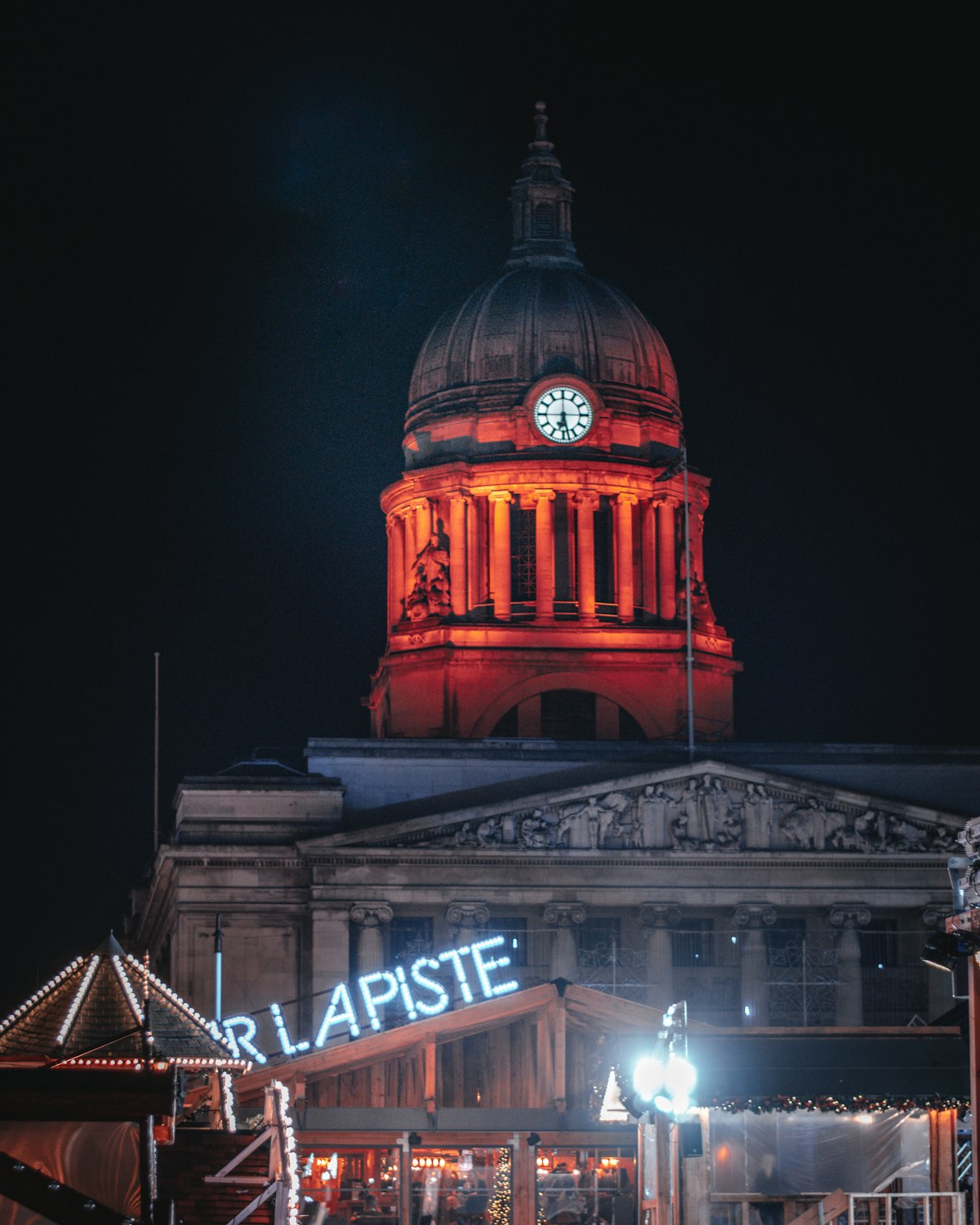
If you are developing in the city, getting to grips with the daylight requirements in Nottingham early will save you time and reduce planning risk. Nottingham is a compact, intensely built city of tall buildings, terraced streets, two large universities and a tightly knit historic core, so the daylight, sunlight and amenity relationships between buildings are scrutinised closely. This guide sets out how Nottingham City Council frames those expectations and how a sound technical assessment supports your application.
The planning framework for daylight in Nottingham
Nottingham City Council is a unitary authority and the sole local planning authority (LPA) for the city. Its adopted development plan is made up of two parts:
- Nottingham City Aligned Core Strategy (Local Plan Part 1) – adopted 8 September 2014, setting the strategic framework. Policy 10 (Design and Enhancing Local Identity) requires development to be of high design quality and to respond to local character, while Policy 11 (The Historic Environment) protects the city's heritage assets.
- Land and Planning Policies Document – the LAPP (Local Plan Part 2) – adopted 13 January 2020, providing the detailed development management policies used to determine most applications.
It is worth noting that the emerging Greater Nottingham Strategic Plan, prepared jointly with Broxtowe and Rushcliffe, was submitted for examination in December 2025 but has not yet been adopted. Until it is, the Aligned Core Strategy and the LAPP remain the documents that carry full weight in planning decisions.
Policy DE1 and the daylight test
The most directly relevant policy is Policy DE1 (Building Design and Use) in the LAPP. In assessing the impact of development, the policy expressly states that consideration will be given to issues such as privacy, daylight, sunlight, outlook, scale and massing, security, odour, dust, noise, vibration and nuisance. This makes daylight and sunlight a named, material consideration for Nottingham proposals rather than an afterthought. Policy DE2 (Context and Place Making) reinforces this by requiring development to respond positively to its surroundings.
Because Policy DE1 lists daylight, sunlight, outlook and overlooking together, a scheme that would noticeably darken a neighbour's habitable rooms, block their sky view or feel overbearing is vulnerable to refusal. Providing a clear assessment up front lets the case officer weigh the proposal against DE1 without delay.
Is there a daylight-specific design guide in Nottingham?
Nottingham does not have an adopted Supplementary Planning Document (SPD) that sets bespoke numerical daylight or sunlight thresholds. The council's adopted SPDs cover matters such as open space, education contributions, the Eastside area and carbon, rather than residential light. Design quality is instead supported by the Design Quality Framework, a suite of online guides, and the LAPP itself notes the intention to prepare a Neighbourhood Design Guide for further detail. In the absence of a local numerical standard, daylight and sunlight are assessed through Policy DE1 applied alongside the recognised national technical guidance.
How daylight and sunlight are actually assessed
The accepted methodology is the Building Research Establishment guide BRE BR 209 – Site Layout Planning for Daylight and Sunlight: A Guide to Good Practice (third edition, 2022). Its principal tests are:
- Vertical Sky Component (VSC) – the amount of sky visible at a neighbouring window, with a guideline of around 27%, or no worse than 0.8 times the previous value where there is a reduction;
- No-Sky Line / Daylight Distribution – how far daylight penetrates into a room;
- Annual Probable Sunlight Hours (APSH) – sunlight received by windows facing within 90 degrees of due south.
For daylight inside new homes and student accommodation, BS EN 17037 (Daylight in Buildings) provides target illuminance levels for habitable rooms. The National Planning Policy Framework (NPPF) underpins this, requiring a high standard of amenity for existing and future occupiers while encouraging authorities to apply daylight and sunlight guidance flexibly where rigid application would unreasonably restrict suitable development. Policy DE1 is the local route through which these standards are applied in Nottingham.
When is a daylight and sunlight report needed in Nottingham?
Nottingham's density and the prevalence of taller buildings mean assessments are commonly expected. Typical triggers include:
- Apartment, build-to-rent and tall building proposals in and around the city centre, where light to existing residential windows must be protected;
- Purpose-built student accommodation serving the University of Nottingham and Nottingham Trent University, where both impact on neighbours and internal daylight matter;
- Schemes affecting the Lace Market and other conservation areas, where massing and the historic streetscape are sensitive;
- Rear and two-storey extensions in the city's dense Victorian terraces, where boundary relationships are tight.
Nottingham's local context
Few English cities pack as much variety into a small area as Nottingham. The Council House and Old Market Square anchor a city centre that is steadily growing upwards, while the historic Lace Market conservation area preserves a grain of tall warehouse buildings and narrow streets where overshadowing is an immediate concern. Two major universities generate sustained demand for student housing, and regeneration areas such as the Eastside and the former Broadmarsh site are bringing forward dense, mixed-use development. In this setting, a daylight and sunlight assessment that reflects the real geometry of neighbouring buildings is far more convincing than a generic statement, and it directly addresses the matters Policy DE1 requires officers to consider.
How Fortress Associates can help
Fortress Associates provides our daylight and sunlight report service prepared to BRE BR 209 (2022), BS EN 17037 and the NPPF, applied through the relevant Nottingham Local Plan policies. We work nationwide, complete most reports within a 4–5 working day turnaround, and request no advance payment. We also produce Building Regulations drawings to Approved Documents A–S for the construction stage. To discuss a Nottingham site, please get in touch with our team.
Sources & further reading
- Nottingham City Council – The Adopted Local Plan
- BRE – BR 209 Site Layout Planning for Daylight and Sunlight (2022)
- National Planning Policy Framework (gov.uk)
- Daylight Requirements in Northumberland – our companion guide for Northumberland County Council.
Need help with a UK planning project?
Fixed-fee daylight reports and Building Regulations drawings — delivered in 4–5 working days. No advance payment.
Request a free quote