Whether you are extending a terraced house in the Golden Triangle, converting a building in the Lanes or bringing forward a larger scheme near the city centre, understanding the daylight requirements in Norwich is key to a successful application. Norwich City Council is the local planning authority (LPA) for the city — not Norfolk County Council — and it is the city's planners who decide whether your proposal protects the daylight, sunlight and living conditions of neighbouring properties. This article explains the adopted policy framework, when a daylight and sunlight assessment is expected, and the local factors that make Norwich distinctive.
Who decides planning applications in Norwich?
Norwich is a non-metropolitan district within Norfolk, and Norwich City Council is the planning authority for householder and residential development inside the city boundary. The county council handles highways, education, minerals and waste, but questions such as whether a new extension overshadows a neighbour's garden, reduces light to a habitable-room window, or causes overlooking are matters for Norwich City Council, judged against its adopted development plan.
The development plan: Greater Norwich Local Plan plus Norwich's own policies
The plan for Norwich has two main parts working together.
- The Greater Norwich Local Plan (GNLP), adopted in March 2024. This strategic plan was prepared jointly by Norwich City Council, Broadland District Council and South Norfolk Council through the Greater Norwich Development Partnership, and it covers the period 2018 to 2038. Its Policy 2 (Sustainable Communities) sets the high-level expectation that development is of high quality design, including appropriate densities and well-designed places — the strategic umbrella under which amenity is considered.
- The Norwich Development Management Policies Local Plan (adopted December 2014). This remains part of the development plan and contains the detailed, decision-level policies that planners apply day to day for the city.
For daylight, sunlight and neighbour amenity, the decisive city-level policy is Policy DM2 – Ensuring satisfactory living and working conditions, supported by DM3 (Delivering high quality design) and DM12 (Ensuring well-planned housing development).
Policy DM2 in detail
Policy DM2 is the heart of daylight and sunlight decisions in Norwich. It requires that development must not cause an unacceptable impact on the amenity of the area or the living or working conditions of neighbouring occupants, with particular regard to:
- the prevention of overlooking and the loss of privacy;
- the prevention of overshadowing and loss of light and outlook;
- the prevention of disturbance from noise, odour, vibration, air or artificial light pollution.
For the occupiers of the new development itself, DM2 requires “a high standard of amenity, satisfactory living and working conditions, adequate protection from noise and pollution and adequate levels of light and outlook”, and that provision is made for appropriate external private or communal amenity space. The explicit references to overshadowing, loss of light and outlook are what give daylight and sunlight real weight in Norwich decisions.
Policy DM12 adds that proposals “should have no detrimental impacts upon the character and amenity of the surrounding area”, while DM3 governs height, massing, scale and form — all of which influence how a building affects a neighbour's light.
When is a daylight and sunlight assessment needed?
Neither the GNLP nor the Norwich DM policies set a fixed numerical daylight standard, and Norwich does not publish a dedicated daylight Supplementary Planning Document. Instead, daylight and sunlight assessments are commonly requested as part of the council's validation requirements and are judged using the recognised national methodology: BRE BR 209, “Site layout planning for daylight and sunlight: a guide to good practice” (2022), together with BS EN 17037 for the daylight of new homes, applied through Policy DM2 and consistent with the National Planning Policy Framework.
Larger and more sensitive schemes in the city have routinely been assessed this way — the major Anglia Square regeneration, for instance, was supported by detailed BRE-based daylight and sunlight reporting on the impact to neighbouring properties. For householders, an assessment is sensible whenever a two-storey extension, a backland plot or a taller proposal sits close to neighbouring windows or gardens.
A robust assessment for a Norwich application will typically report:
- Vertical Sky Component (VSC) at affected neighbouring windows (27% guideline, with the 0.8×-former-value test);
- Daylight distribution (No Sky Line) within affected rooms;
- Annual Probable Sunlight Hours (APSH) for windows facing within 90° of due south;
- Overshadowing of gardens and amenity space, usually shown on 21 March.
Local context that shapes daylight decisions in Norwich
- A dense medieval core. Norwich retains one of the most complete medieval street patterns in England, with the narrow Lanes, Elm Hill and tightly packed historic plots. In such fine-grained streets even a modest extension can materially reduce a neighbour's light, so VSC and overshadowing analysis is frequently decisive.
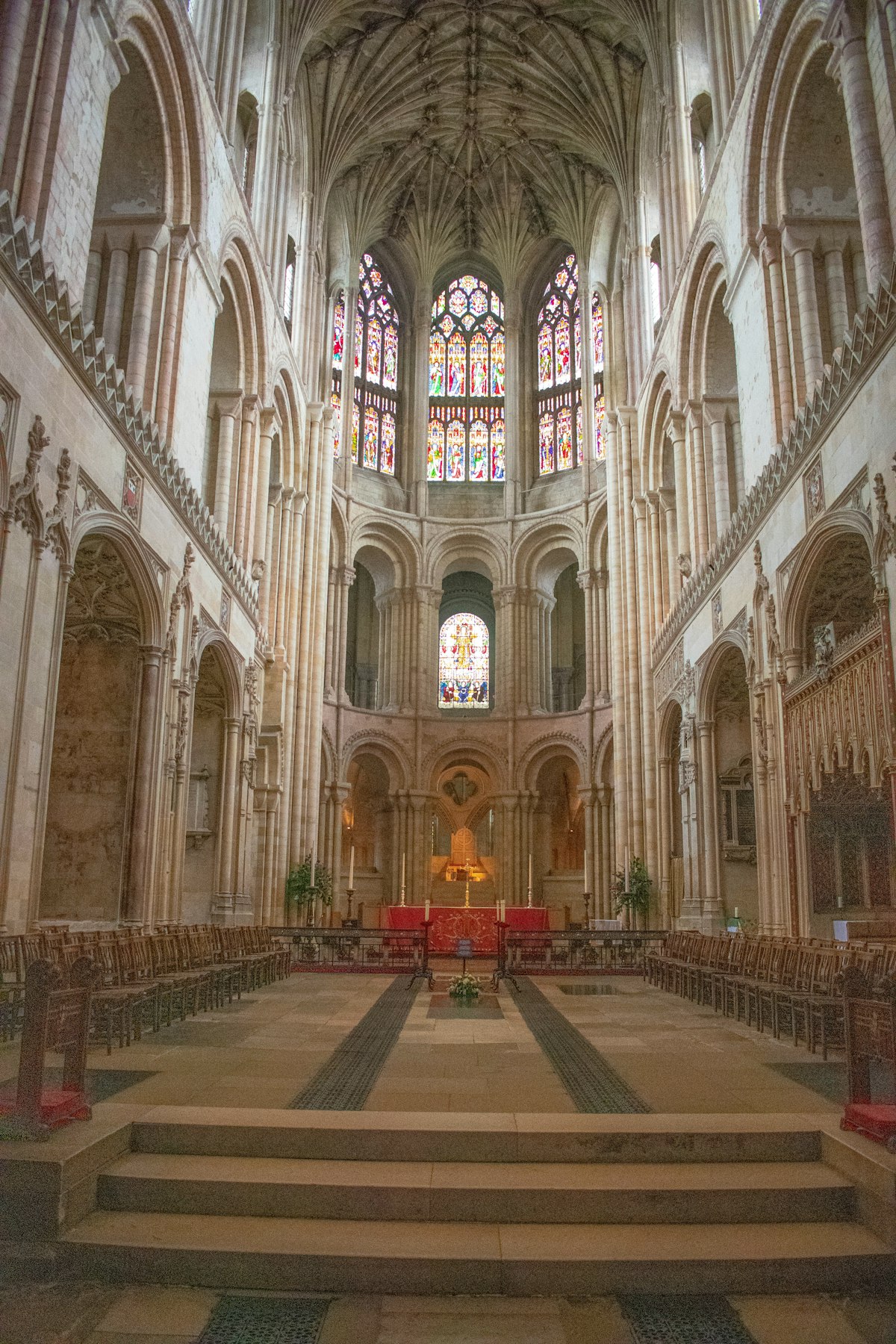
- Heritage constraints around the Cathedral and Castle. The setting of Norwich Cathedral, the Norman castle and the city's numerous conservation areas and listed buildings means height and massing are tightly controlled under DM3, which in turn limits the scope to build upwards and keeps daylight relationships closely scrutinised.
How Fortress Associates can help
Fortress Associates prepares our daylight and sunlight report service to BRE BR 209 (2022), BS EN 17037 and the relevant Local Plan, so a Norwich submission addresses Policy DM2 directly and anticipates a case officer's questions. We work nationwide with a 4–5 working day turnaround and no advance payment, and we also produce Building Regulations drawings when you need them. To discuss a Norwich scheme, get in touch. You may also find our companion guide to daylight requirements in West Lindsey a useful comparison.
Sources & further reading
Need help with a UK planning project?
Fixed-fee daylight reports and Building Regulations drawings — delivered in 4–5 working days. No advance payment.
Request a free quote