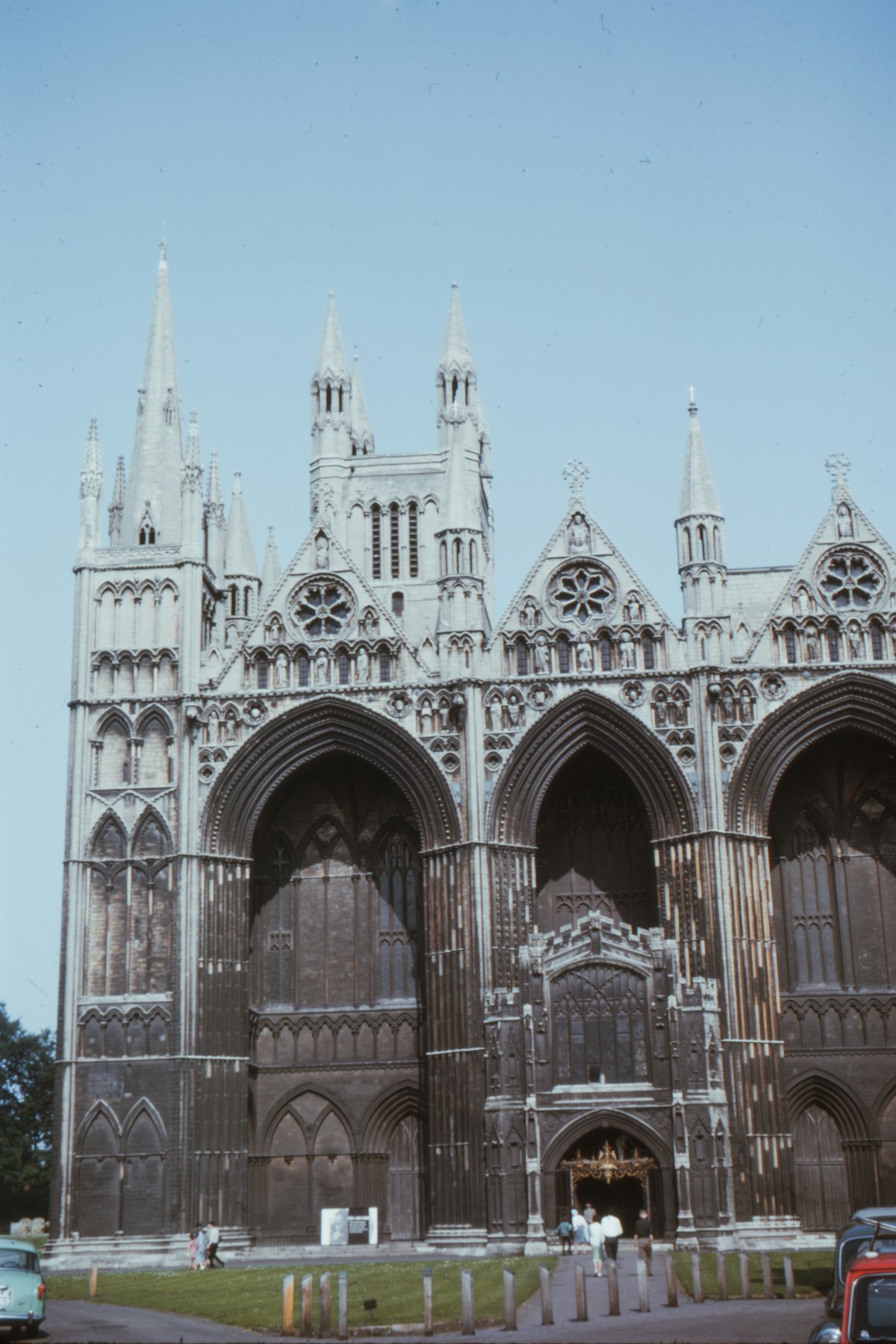
Understanding the daylight requirements in Peterborough is essential for anyone proposing a home extension, an infill plot, a conversion or a larger residential scheme across the city and its surrounding villages. Peterborough is a fast-growing cathedral city with a strong programme of new-town style expansion, and its planning framework places real weight on protecting the daylight, sunlight and amenity of both existing neighbours and future occupiers. This guide sets out which adopted policies apply, what national and British Standard guidance the council relies upon, and how a professional daylight and sunlight assessment supports a robust application.
The planning framework: the Peterborough Local Plan (2019)
The development plan for the area is the Peterborough Local Plan, adopted by Peterborough City Council on 24 July 2019. It sets out the overall approach to growth and regeneration across Peterborough and the surrounding villages up to 2036 and beyond. Two adopted policies are particularly relevant to daylight and sunlight matters.
Policy LP16 – Urban Design and the Public Realm
Policy LP16 contains the council's generic design expectations. Although titled around the public realm, it applies to development in all locations, not only the city centre. It requires schemes to be well designed in relation to their context, which in practice includes the relationship between buildings, the spacing between dwellings and the effect of massing and layout on the living conditions of nearby occupiers. Daylight, sunlight and overshadowing are part of how the council judges whether a design responds appropriately to its surroundings.
Policy LP17 – Amenity Provision
Policy LP17 deals directly with amenity. It expects that new development should not result in an unacceptable impact on the amenity of existing occupiers, and that proposals are designed so that the needs of future occupiers are properly provided for — including, in the case of flats and apartments, suitable communal amenity space. The council frames a good standard of living conditions in terms of "liveability", which expressly covers daylight, sunlight and privacy. In other words, a scheme that materially reduces the daylight reaching a neighbour's habitable rooms, or that delivers poor internal daylight to its own future residents, runs directly against Policy LP17.
Read together, LP16 and LP17 give the council a clear basis to ask for evidence that a proposal will not cause unacceptable loss of light, and to refuse schemes where that evidence is missing or unconvincing.
Is there a Peterborough daylight SPD?
Peterborough City Council does not publish a dedicated daylight and sunlight supplementary planning document or a numerical daylight calculator of its own. Instead, the council's published guidance lists the impact on the amenities of adjoining properties — in terms of privacy and daylight, including overshadowing or overlooking — as a material planning consideration assessed against the adopted Local Plan policies above.
Because there is no local numerical standard, the recognised national benchmark fills the gap. In practice this means daylight and sunlight effects in Peterborough are assessed using:
- BRE BR 209 (2022), Site Layout Planning for Daylight and Sunlight: A Guide to Good Practice — the standard methodology UK planning authorities use for daylight to neighbouring windows, sunlight and overshadowing of gardens and amenity space;
- BS EN 17037 Daylight in Buildings — the British and European Standard for internal daylight provision within new dwellings;
- the National Planning Policy Framework (NPPF), which requires good design and a high standard of amenity, applied locally through the Local Plan.
This is a common and entirely proper position for an authority without a bespoke daylight document: the adopted Local Plan supplies the policy hook, and BRE BR 209 (2022) and BS EN 17037 supply the technical method.
What the BRE method actually tests
A BRE-based assessment is not a single number. It examines several distinct effects, and a well-prepared report explains which apply to your scheme:
- Vertical Sky Component (VSC) — the amount of skylight reaching the centre of a neighbour's window. The BRE guidance treats a reduction below 0.8 times the former value as potentially noticeable.
- No Sky Line / daylight distribution — how far daylight penetrates into the room behind the window.
- Annual Probable Sunlight Hours (APSH) — sunlight to windows with a southerly aspect, tested for both annual and winter sunlight.
- Overshadowing of gardens and amenity areas — typically assessed so that at least half of an amenity space receives some sun on the spring equinox.
- Internal daylight to the proposed dwellings themselves, increasingly addressed through BS EN 17037.
Crucially, the BRE document is guidance, not a rigid rule. It explicitly allows for context. In a tighter urban setting — such as plots near Peterborough city centre, the cathedral precinct or established Victorian terraces — the council and an experienced consultant can reasonably expect lower absolute values than would apply on a spacious suburban plot in one of the township expansions. Presenting the figures with that local context is often what makes the difference between a refusal and an approval.
Local context that affects daylight in Peterborough
Two features of Peterborough genuinely shape how daylight is assessed locally:
- A historic, dense core around the cathedral. The medieval and Georgian grain of the city centre means closely spaced buildings and constrained back-land plots, where strict suburban daylight targets are rarely achievable and a contextual BRE appraisal is essential.
- Large-scale planned expansion. Peterborough's growth as a designated expansion area has produced extensive newer residential townships on the city's edge. Here, layout and spacing are more generous, so the council can fairly expect new development and extensions to meet daylight and sunlight benchmarks more closely, and a shortfall is harder to justify.
A credible report acknowledges which of these situations your site falls into rather than applying a single template — exactly the kind of judgement the council looks for when weighing LP16 and LP17.
When you are likely to need a daylight and sunlight report
You should consider a BRE BR 209 (2022) assessment where:
- a rear, side or two-storey extension could overshadow a neighbour's windows or garden;
- an infill dwelling or backland plot sits close to existing homes;
- a flatted or apartment scheme needs to demonstrate acceptable internal daylight under BS EN 17037;
- a neighbour or the case officer has raised loss of light as a concern;
- you are responding to a refusal or preparing an appeal and need objective evidence.
Providing a clear assessment up front helps the case officer apply LP17 with confidence and reduces the risk of delay, conditions or refusal.
How Fortress Associates can help
Fortress Associates is a UK daylight and sunlight consultancy working nationwide, including across Peterborough and the surrounding villages. We prepare our daylight and sunlight report service to BRE BR 209 (2022) and BS EN 17037, written to address the adopted Local Plan policies your application will be judged against. We also produce Building Regulations drawings to the Approved Documents (Parts A–S) where a scheme is moving towards construction. Our typical turnaround is 4–5 working days, and we ask for no advance payment. To discuss a Peterborough site, please get in touch. You may also find our guide to daylight requirements in Plymouth useful for comparison if you work across more than one authority.
Sources & further reading
Need help with a UK planning project?
Fixed-fee daylight reports and Building Regulations drawings — delivered in 4–5 working days. No advance payment.
Request a free quote