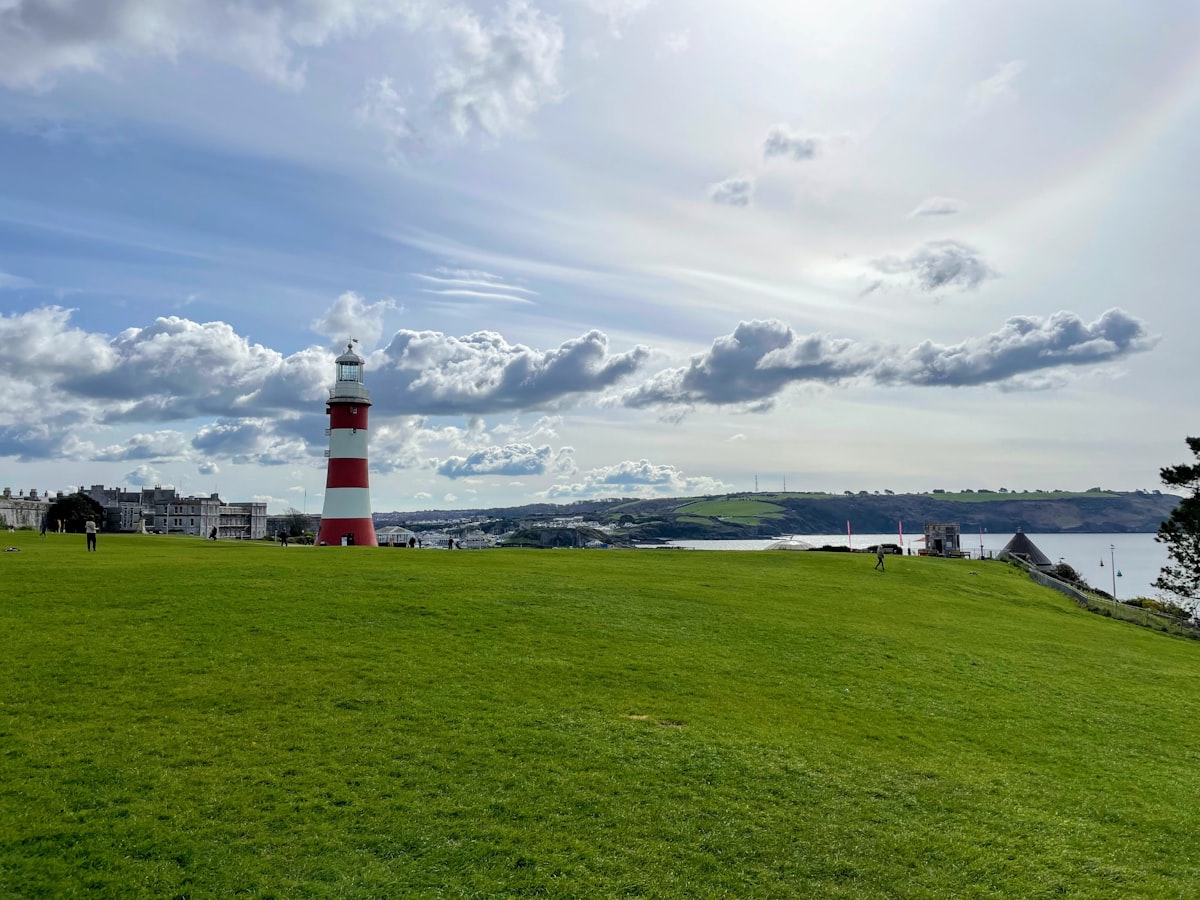
Understanding the daylight requirements in Plymouth matters for anyone planning a home extension, a flat conversion, an infill plot or a larger residential or mixed-use scheme. Plymouth is a waterfront city with a distinctive post-war reconstructed centre, a steeply sloping topography around the Hoe and Barbican, and a growing appetite for taller buildings. All of these factors affect how light reaches existing and proposed homes — and, unusually for an English authority, Plymouth and its joint-plan partners have published clear, numerical daylight and sunlight guidance. This article explains the adopted policies, the local guidance and how a professional assessment supports an application.
The planning framework: the Plymouth and South West Devon Joint Local Plan
The development plan for the city is the Plymouth and South West Devon Joint Local Plan (JLP) 2014–2034, adopted in March 2019. It was prepared jointly by Plymouth City Council, West Devon Borough Council and South Hams District Council, so the same core policies apply across all three areas. Two policies are directly relevant to daylight and sunlight.
Policy DEV1 – Protecting health and amenity
Policy DEV1 is the key amenity policy. It requires that new development provides for satisfactory daylight, sunlight, outlook and privacy, together with protection from noise and other disturbance, for both new and existing residents, workers and visitors. It safeguards the health and amenity of local communities, which gives the council a firm basis to expect daylight evidence where a scheme could affect neighbours or deliver poor internal conditions.
Policy DEV2 – Air, water, soil, noise, land and light
Policy DEV2 addresses environmental impacts including light. While it is primarily concerned with light pollution and obtrusive lighting rather than loss of daylight, it forms part of the overall amenity framework that proposals must satisfy.
Plymouth's daylight and sunlight guidance: the Joint Local Plan SPD
Plymouth differs from many authorities in having a detailed adopted Plymouth and South West Devon Joint Local Plan Supplementary Planning Document (SPD), adopted by the three councils in 2020. The SPD provides the practical detail behind DEV1 and the design policies, and it is explicit about daylight and sunlight. Guidance appears under high quality housing (DEV10), place shaping and the quality of the built environment (DEV20), and in Appendix 1: Residential extensions and alterations.
The SPD states plainly that schemes which would result in a harmful loss of daylight or sunlight to a neighbouring property will be refused. To test this it sets out two well-known geometric tools:
- The 45-degree guideline. An imaginary line is drawn at 45 degrees in plan from the centre of the nearest ground-floor habitable-room window of a neighbouring property, across the site of the proposed extension or development. Where a proposal crosses this line, a harmful loss of light may result.
- The 25-degree guideline. Measured in section, a line elevated at 25 degrees above the horizontal from the same window is used to judge whether a facing building or extension is high enough to materially reduce daylight.
The SPD also sets minimum separation distances between habitable-room windows and between windows and blank facing walls, and addresses differences in ground level — particularly relevant on Plymouth's sloping waterfront sites. For new housing it refers to recognised daylight and sunlight metrics, including Vertical Sky Component (VSC) as a measure of access to skylight, and Winter Probable Sunlight Hours (WPSH), with developments encouraged to achieve a minimum of around 10 per cent WPSH to a main window. The SPD asks for a supporting report, with conclusions reflected in the Design and Access Statement.
How this relates to BRE BR 209 and BS EN 17037
The 45-degree and 25-degree tests in the SPD are a simplified, accessible layer of assessment. For anything beyond a modest extension — and certainly for flatted schemes, backland development or proposals where a neighbour raises a concern — the recognised national methodology remains the appropriate basis for detailed analysis:
- BRE BR 209 (2022), Site Layout Planning for Daylight and Sunlight: A Guide to Good Practice — the standard approach for VSC, daylight distribution (the no-sky line), Annual Probable Sunlight Hours and overshadowing of amenity space. The SPD's reliance on VSC and probable sunlight hours sits squarely within this framework.
- BS EN 17037 Daylight in Buildings — the British and European Standard for internal daylight provision within new dwellings, used to demonstrate acceptable living conditions for future occupiers under DEV1 and DEV10.
- the National Planning Policy Framework (NPPF), which requires good design and a high standard of amenity, delivered locally through the JLP.
A well-prepared assessment uses the SPD's 45/25-degree guidelines as a first screen and the full BRE BR 209 (2022) numerical tests where the impact warrants a closer look.
Local context that affects daylight in Plymouth
Several features of Plymouth genuinely change how daylight is assessed here:
- The post-war reconstructed city centre. Plymouth's centre was rebuilt to a bold mid-twentieth-century plan with wide avenues and substantial blocks. New development and upper-floor additions here must respect an established, relatively dense townscape.
- Steep topography around the Hoe and Barbican. Significant differences in ground level between properties are common, which is exactly why the SPD addresses level differences explicitly. Sloping sites can either worsen or relieve overshadowing depending on orientation, so section drawings matter.
- A waterfront with tall-building potential. The desire for taller landmark buildings near the waterfront raises the stakes for sunlight to public spaces and daylight to neighbouring homes, making robust BRE-based evidence increasingly important.
When you are likely to need a daylight and sunlight report
You should consider a BRE BR 209 (2022) assessment, alongside the SPD's 45/25-degree checks, where:
- a rear or two-storey extension could overshadow a neighbour's windows or garden, especially on a sloping plot;
- an infill or backland dwelling sits close to existing homes;
- a flatted scheme must demonstrate acceptable internal daylight under BS EN 17037 and DEV10;
- a taller building near the waterfront or city centre could affect daylight to neighbours or sunlight to public space;
- you are responding to a refusal or preparing an appeal and need objective evidence.
How Fortress Associates can help
Fortress Associates is a UK daylight and sunlight consultancy working nationwide, including across Plymouth and the wider South West Devon area. We prepare our daylight and sunlight report service to BRE BR 209 (2022) and BS EN 17037, written to address Policy DEV1, the Joint Local Plan SPD and the 45/25-degree guidance your application will be judged against. We also produce Building Regulations drawings to the Approved Documents (Parts A–S) when a scheme moves towards construction. Our typical turnaround is 4–5 working days, and we ask for no advance payment. To discuss a Plymouth site, please get in touch. If you also work further east, our guide to daylight requirements in Peterborough offers a useful comparison.
Sources & further reading
Need help with a UK planning project?
Fixed-fee daylight reports and Building Regulations drawings — delivered in 4–5 working days. No advance payment.
Request a free quote