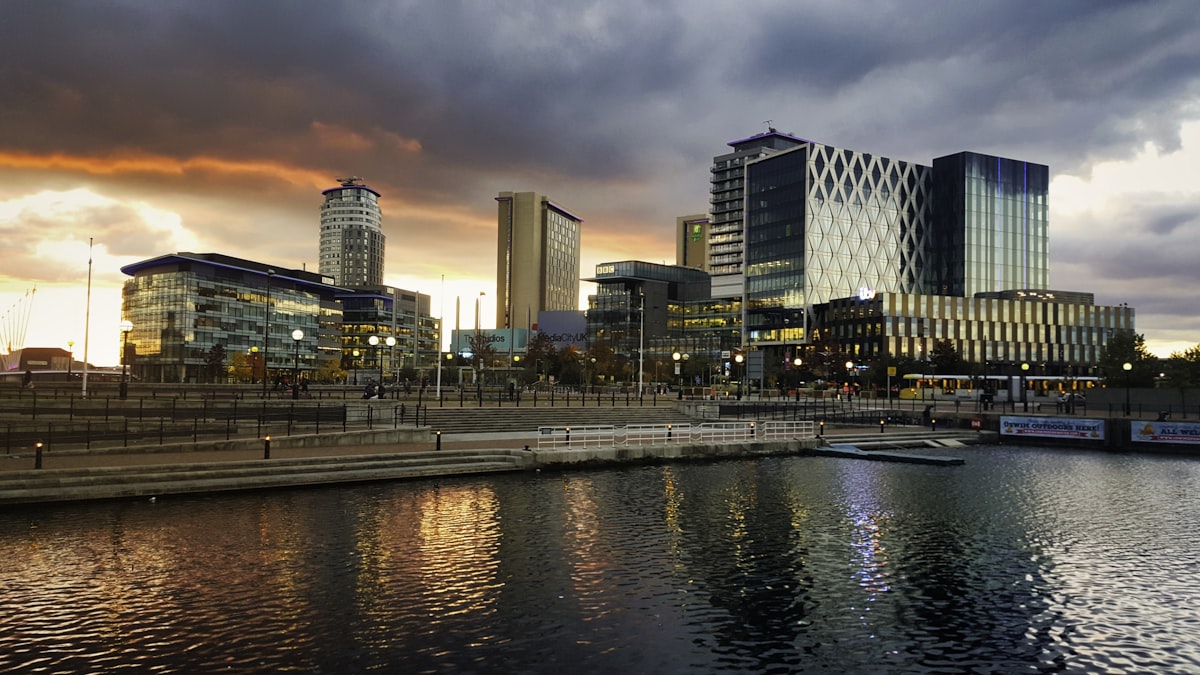
If you are planning a development in Ashton-under-Lyne, Stalybridge, Hyde or any of the towns that make up this Greater Manchester borough, the daylight requirements in Tameside will be one of the amenity issues the council weighs in the balance. Tameside Metropolitan Borough Council, as the local planning authority, judges daylight and sunlight through a combination of a recently adopted strategic plan, a set of saved local policies, a detailed design document and the national technical method. This guide explains each layer.
Tameside's development plan: two documents working together
Tameside is unusual in that its statutory development plan currently sits in two parts:
- Places for Everyone — the joint plan for nine of the Greater Manchester boroughs, which became part of Tameside's statutory development plan with effect from 21 March 2024. It sets the strategic framework for growth, sustainable places and design across the sub-region.
- The saved policies of the Tameside Unitary Development Plan (UDP) — first adopted earlier and 'saved' under the transitional arrangements of the Planning and Compulsory Purchase Act 2004. The UDP still provides the detailed, day-to-day development management policies, and the council is working to review and replace its remaining content following the adoption of Places for Everyone.
For an applicant, this means a daylight and sunlight judgement in Tameside is grounded in the saved UDP policies, read in the context of the newer Places for Everyone strategy.
The saved UDP policies that matter for daylight
Two saved UDP policies are routinely cited where daylight, sunlight and living conditions are at stake:
- Policy H10 (Detailed Design of Housing Developments) requires that the design of proposed housing developments meets the needs of potential occupiers and provides a high standard of amenity — the policy hook for protecting daylight, sunlight, outlook and privacy for both new and existing homes.
- Policy C1 (Townscape and Urban Form) deals with the quality of design and the relationship of buildings to their surroundings, supporting good-quality layouts that, in turn, protect amenity.
These policies set the principle — acceptable amenity and high-quality design — but they do not, on their own, give the numbers a designer needs. For that, Tameside turns to its design SPD.
The Residential Design SPD and its separation distances
Tameside's adopted Residential Design Supplementary Planning Document (SPD) provides the practical detail behind the UDP policies, covering both new residential development and household extensions. Crucially for daylight and privacy, it sets out clear separation standards. Under Policy RD5 of the SPD, the council expects:
- A distance of 21 metres between an elevation containing habitable room windows and a corresponding neighbouring elevation that also contains habitable room windows;
- 10 metres between a habitable room window and a single-storey blank wall; and
- 14 metres between a habitable room window and a two-storey blank wall.
These figures are the council's first test of whether a layout protects privacy and avoids unacceptable overshadowing or loss of outlook. Falling short of them does not automatically mean refusal, but it does mean the proposal must be justified, often with a technical daylight and sunlight assessment.
Where the BRE method fits in
The SPD's separation distances deal with privacy and broad amenity, but they are not a full daylight calculation. For the technical quantification of daylight and sunlight, Tameside applies the same recognised national framework used elsewhere in England:
- BRE BR 209 (2022), Site Layout Planning for Daylight and Sunlight — providing the Vertical Sky Component and no-sky-line (daylight distribution) tests for daylight to neighbours, the Annual and Winter Probable Sunlight Hours tests for sunlight, and the method for assessing overshadowing of gardens and open spaces.
- BS EN 17037 (Daylight in Buildings) — relevant to the daylight enjoyed within new dwellings themselves.
- The National Planning Policy Framework (NPPF) — which seeks good standards of amenity and supports a flexible application of daylight and sunlight guidance where it would otherwise prevent sustainable development, such as in the borough's town centres.
These technical documents are applied through the development plan: the saved UDP policies and the SPD require acceptable amenity, and BR 209 with BS EN 17037 supplies the measurable benchmark.
Local context across the borough
Tameside is a borough of distinct towns rather than a single urban core, and the daylight balance shifts with location. In the historic town centres of Ashton-under-Lyne, Stalybridge and Hyde, where regeneration and higher-density living are encouraged, the NPPF's flexibility and the practicalities of tight Pennine-fringe sites come into play. In the more suburban residential streets around them, the RD5 separation distances and BR 209 tests are applied more strictly to protect established homes. Identifying which context applies to a particular site is essential to preparing a report the council will accept.
How Fortress Associates can help
Fortress Associates provides our daylight and sunlight report service to BRE BR 209 (2022) and BS EN 17037, written around the saved Tameside UDP policies, the Residential Design SPD and Places for Everyone. We work across the UK with a four to five working day turnaround and no advance payment. We also prepare Building Regulations drawings to the Approved Documents. For a site anywhere in Tameside, contact us to discuss what you need. You may also find our guide to daylight requirements in Sunderland useful for comparison.
Sources & further reading
Need help with a UK planning project?
Fixed-fee daylight reports and Building Regulations drawings — delivered in 4–5 working days. No advance payment.
Request a free quote