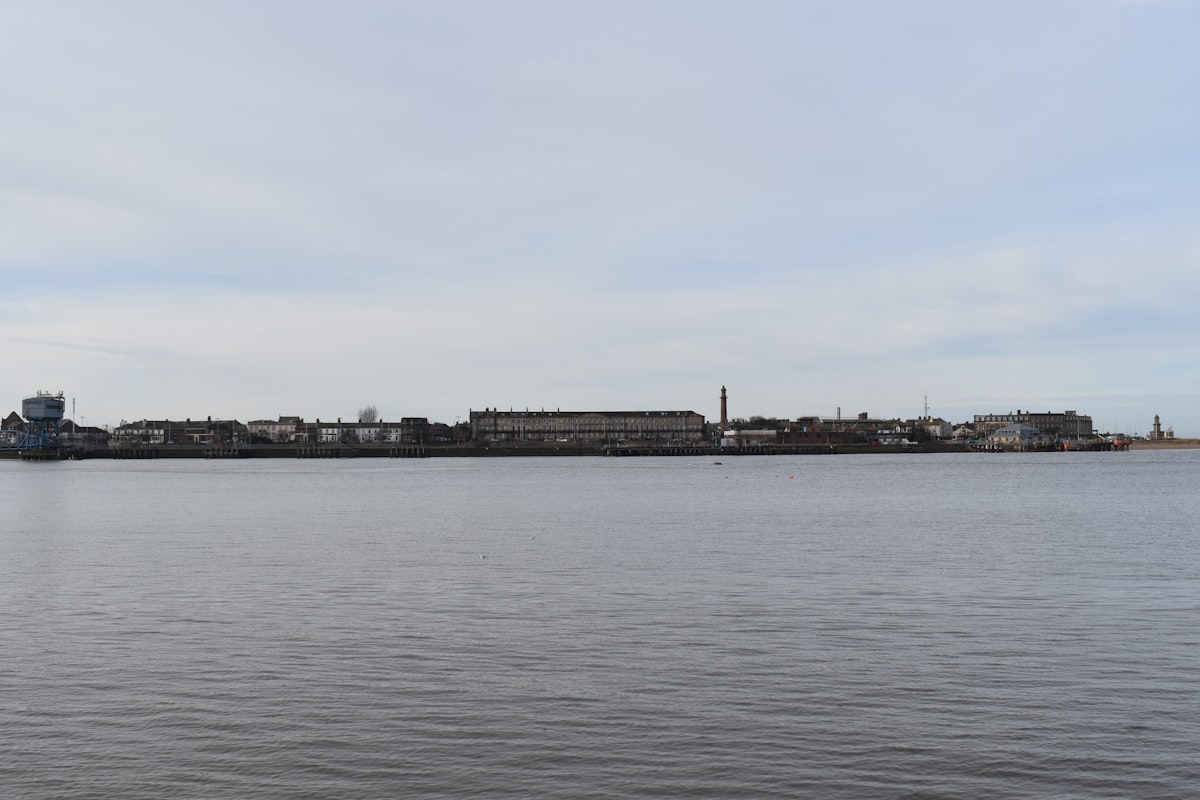
For anyone planning a house extension, a conversion or a new residential scheme in Wyre, getting to grips with the daylight requirements in Wyre at the design stage is the surest way to avoid delay or refusal. Wyre Council is the local planning authority (LPA) that decides these applications — Lancashire County Council is the upper-tier authority but does not determine them — so it is the borough's adopted plan and supplementary guidance that govern how daylight, sunlight and residential amenity are weighed, whether the site is in Fleetwood, Poulton-le-Fylde, Thornton-Cleveleys, Garstang or the rural Wyre estuary villages.
This guide sets out the local policy framework, the council's adopted guidance for householder schemes, and how the recognised national daylight standards apply through Wyre's policies.
Daylight requirements in Wyre: the Local Plan
The development plan for the borough is the Wyre Local Plan (2011–2031), adopted on 28 February 2019. It was subsequently updated by the Wyre Local Plan (2011–2031) incorporating the partial update of 2022, adopted on 26 January 2023. The plan is the starting point for determining planning applications under section 38(6) of the Planning and Compulsory Purchase Act 2004.
The key policy for daylight and amenity is Policy CDMP3 – Design, one of the plan's Core Development Management Policies. Criterion (c) of CDMP3 is the direct test the council applies to overshadowing and loss of light:
Development must not have an unacceptably adverse impact on the amenity of occupants and users of surrounding or nearby properties and must provide a good standard of amenity for the occupants and users of the development itself.
CDMP3 also requires development to respect the character of the area having regard to density, siting, layout, height, scale, massing and orientation — all of which directly influence how much daylight and sunlight neighbouring homes retain. This sits alongside Policy SP8 – Health and Well-Being, which guards against significant adverse effects on health and amenity, and the plan's Standards of Design and Amenity provisions. Together with the National Planning Policy Framework (NPPF), these policies require a high standard of amenity for both existing and future occupiers.
Wyre's daylight and sunlight guidance: the Extending Your Home SPD
For householder development, Wyre applies the Extending Your Home Supplementary Planning Document, adopted in November 2007. This is a joint document produced by Blackpool Council, Fylde Borough Council and Wyre Borough Council, and Wyre's planning team at the Civic Centre in Poulton-le-Fylde was one of the three authors. It remains a material consideration for extensions across the borough and gives the practical detail behind CDMP3.
The SPD contains a dedicated Daylight and Sunlight design note. Its central principle is that any extension should be located and kept to a size which does not cause unacceptable overshadowing of, or loss of natural daylight to, a neighbouring property. It confirms that side-facing habitable room windows in a neighbouring property are afforded the same protection as rear-facing ones, unless they are secondary windows serving a room that already has a larger window. The SPD defines “habitable rooms” as bedrooms, kitchens, living rooms and principal dining areas, and excludes bathrooms, halls, landings, utility rooms, conservatories, porches and garages.
On privacy and separation, the SPD's Design Guidance 1D (Overlooking and Privacy) sets clear figures: first-floor habitable room windows should be a minimum of 21 metres from facing habitable room windows in neighbouring properties, and a minimum of 10.5 metres from boundaries they face where they would overlook neighbouring garden areas. The SPD is explicit that trees, hedges or other soft landscaping will not justify a reduction in these separation distances, as they are not permanent features. Although these distances are framed around privacy, the same massing that triggers them frequently raises overshadowing, so the two are assessed together.
How the national daylight standards apply in Wyre
The SPD is well suited to straightforward householder cases. For flats, conversions, backland plots, taller buildings or any scheme where neighbour daylight is genuinely in question, Wyre expects a technical daylight and sunlight assessment. Because the Local Plan sets the amenity principle rather than the calculation method, the recognised national benchmarks apply through Policy CDMP3 and the NPPF:
- BRE BR 209 (2022), Site Layout Planning for Daylight and Sunlight: A Guide to Good Practice — the standard methodology covering Vertical Sky Component (VSC), the No Sky Line / daylight distribution, Annual Probable Sunlight Hours (APSH) and overshadowing of gardens and amenity space.
- BS EN 17037 (Daylight in Buildings) — used to assess the internal daylight provision of new dwellings.
- The NPPF — which also asks decision-makers to apply daylight guidance flexibly where rigid application would unreasonably inhibit the efficient use of land in areas of high demand.
Local factors that affect daylight schemes in Wyre
Wyre's coastal and estuary geography gives daylight assessments a particular character:
- Fleetwood's planned grid and seafront. Fleetwood was laid out in the 19th century on a distinctive planned street pattern with consistent terraces; rear extensions and dormers in these closely spaced rows regularly engage the SPD's separation distances and overshadowing principle, while seafront and estuary-facing sites raise sunlight-to-amenity-space questions.
- Poulton-le-Fylde's historic core. The market town's conservation area and tight historic plots around the Market Place mean infill and extension proposals are assessed carefully for both character (CDMP3) and the effect on neighbouring light and privacy. Wyre Council's own Civic Centre is in Poulton-le-Fylde.
Because so much of the borough sits along the Wyre estuary and the Fylde coast, orientation and the relationship to open amenity space often matter as much as window-to-window distances, which is where a measured BR 209 assessment proves its worth.
How Fortress Associates can help
Fortress Associates prepares our daylight and sunlight report service to BRE BR 209 (2022) and BS EN 17037, written specifically for the Wyre Local Plan 2011–2031, Policy CDMP3 and the Extending Your Home SPD. We assess VSC, daylight distribution, APSH and overshadowing for neighbouring properties, and internal daylight for proposed dwellings, in the format Wyre Council expects. We also produce Building Regulations drawings to support your application. We work UK-wide, typically deliver reports in 4 to 5 working days, and ask for no advance payment. To discuss a scheme in Fleetwood, Poulton-le-Fylde, Thornton-Cleveleys, Garstang or anywhere in the borough, please get in touch.
You may also find our companion guides useful: daylight requirements in Fylde and daylight requirements in Preston.
Sources & further reading
Need help with a UK planning project?
Fixed-fee daylight reports and Building Regulations drawings — delivered in 4–5 working days. No advance payment.
Request a free quote