For homeowners, architects and developers working in Accrington and across the borough, understanding the daylight requirements in Hyndburn is an essential first step. Hyndburn Borough Council is the local planning authority here (Lancashire County Council is not), so proposals in Accrington, Oswaldtwistle, Great Harwood, Clayton-le-Moors, Rishton, Church and Huncoat are determined against the borough's adopted Local Plan documents, the National Planning Policy Framework (NPPF) and the established BRE methodology. This article explains the framework and how a professional daylight and sunlight report supports an application.
The planning framework: daylight requirements in Hyndburn
Hyndburn's development plan is made up of several documents. The Core Strategy was adopted in January 2012 and sets the strategic policies for the borough, while the Accrington Area Action Plan (AAP), also adopted in 2012, provides additional policies for proposals in Accrington town centre. The detailed development management policies, which are the ones most often used when assessing amenity, daylight and sunlight, are contained in the Development Management DPD, adopted in January 2018. The council has also been progressing an emerging Hyndburn Local Plan to update this framework, but at the time of writing the 2012 Core Strategy and the 2018 DM DPD remain the adopted policies.
The policies most relevant to daylight and sunlight are:
- Policy DM29 (Environmental Amenity) is the key amenity policy. It requires development to ensure adequate privacy, outlook, and, crucially, that occupants benefit from adequate levels of daylight and sunlight. It gives further detail to Core Strategy Policy ENV7 (Environmental Amenity).
- Policy DM10 (New Residential Development) supports housing provided it will not have an unacceptable adverse impact on neighbouring development by being over-bearing or oppressive, through overlooking, or by resulting in an unacceptable loss of light or amenity, expressly cross-referring to Policy DM29.
- Policy DM26 (Design Quality and Materials) sets the borough's wider expectation of high quality, context-sensitive design within which daylight and sunlight performance sits.
The borough's separation distances
What makes Hyndburn's position particularly clear is that Policy DM29 sets specific, numeric external space standards for new residential development. These are worth knowing before you fix a layout:
- at least 21 metres between facing windows of habitable rooms (single and two storey);
- at least 12 metres where habitable-room windows face a blank gable or a wall with only non-habitable-room windows; and
- an additional set-back of 3 metres for each storey above two, or where land levels create an equivalent difference in building heights.
The supporting text explains that roughly 21 metres between habitable-room windows reduces inter-visibility to a level acceptable to most people, while recognising that privacy also depends on design and layout. The level-difference provision is especially relevant in a borough of steep streets and stepped terraces.
BRE assessment as an explicit requirement
Hyndburn is unusually direct about the technical method. Policy DM29 states that the council will expect the impact of all development to be assessed following the methodology set out in the most recent version of the Building Research Establishment's Site Layout Planning for Daylight and Sunlight: A Guide to Good Practice, and that, depending on the scale of the development, a Daylight and Sunlight Report may be required to fully assess the impacts. The supporting text also addresses overshadowing of gardens, noting that open spaces such as gardens and sitting areas should be designed to receive direct sunlight for at least part of the day. The BRE guidance is listed among the policy's reference documents alongside Planning Practice Guidance.
In practice, this means a daylight and sunlight assessment is not an optional extra in Hyndburn for schemes of any meaningful scale or proximity. Where buildings sit close together, where massing increases, or where overshadowing of neighbouring habitable rooms or gardens is in question, you should expect to provide a report and should plan for it from the outset.
How the BRE methodology applies in Hyndburn
The recognised reference is BRE BR 209, Site Layout Planning for Daylight and Sunlight: A Guide to Good Practice (2022), used alongside BS EN 17037. A report prepared to demonstrate compliance with Policy DM29 will typically address:
- Vertical Sky Component (VSC) at affected neighbouring windows, including the 27% benchmark and the test of whether retained light falls below 0.8 times its former value;
- No Sky Line / Daylight Distribution within the rooms served by those windows;
- Annual Probable Sunlight Hours (APSH) for windows with a southerly aspect; and
- overshadowing of gardens and amenity space using the sun-on-ground test, directly relevant to DM29's expectation that gardens receive sunlight for part of the day.
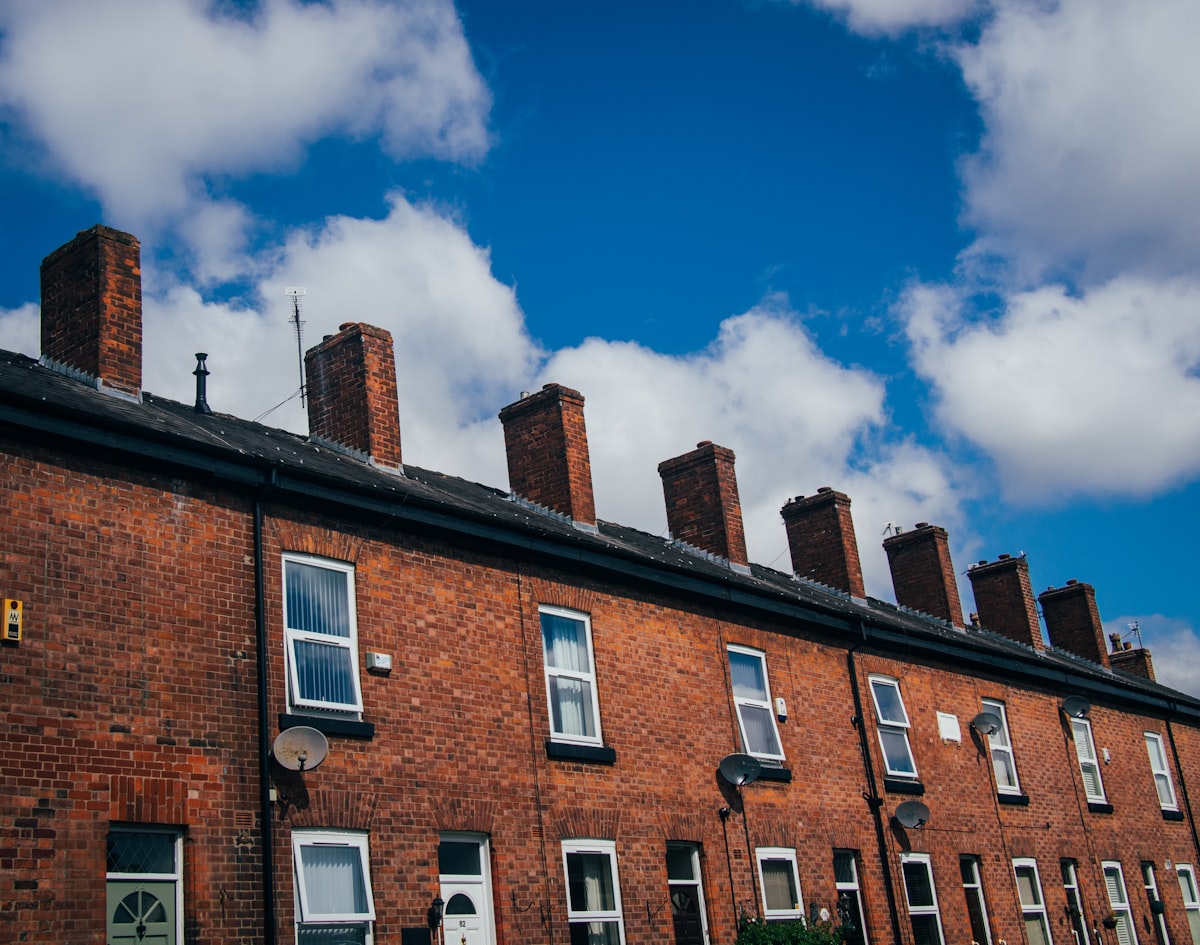
Two local specifics make this analysis particularly important. First, Accrington and the surrounding settlements are characterised by dense, late-Victorian and Edwardian terraced streets, often built tightly on sloping ground; the supporting text to the DM DPD notes that patterns of development in Hyndburn were strongly influenced by the industrial revolution, with housing frequently sitting adjacent to former mills. The combination of close terraces and changes in level means the numerical BRE figures, read alongside the 21-metre separation standard, frequently provide the decisive evidence. Second, proposals in Accrington town centre must be read in conjunction with the Accrington Area Action Plan, so daylight performance there is assessed within an additional layer of place-specific policy.
How Fortress Associates can help
Fortress Associates prepares clear, council-ready assessments through our daylight and sunlight report service, produced to BRE BR 209 (2022), BS EN 17037 and the NPPF and interpreted through Hyndburn's adopted Core Strategy and Development Management DPD, including the specific standards in Policy DM29. We work UK-wide with a 4 to 5 working day turnaround and ask for no advance payment. We can also prepare Building Regulations drawings for schemes moving towards construction. To discuss a Hyndburn or Accrington site, please get in touch.
Sources & further reading
- Hyndburn Borough Council – Planning in Hyndburn
- Hyndburn Borough Council – Adopted Core Strategy (2012) and Local Plan documents
- BRE – BR 209 Site Layout Planning for Daylight and Sunlight (2022)
- GOV.UK – National Planning Policy Framework
- Related reading: Daylight Requirements in Burnley and Daylight Requirements in Rossendale
Need help with a UK planning project?
Fixed-fee daylight reports and Building Regulations drawings — delivered in 4–5 working days. No advance payment.
Request a free quote